- professional-nursing-adult-nursing-bsc-b74a
- anthropology-sociology-ba
- chemistry-study-abroad-mchem-f106
- irish-history-ba-qv51
- professional-nursing-children-young-people-bsc-b73a
- dentistry-bds-a200
- midwifery-bsc-b720
- professional-nursing-learning-disabilities-nursing-bsc-b761
- professional-nursing-mental-health-nursing-bsc-b760
- professional-nursing-children-young-people-bsc-b730
- professional-nursing-adult-nursing-bsc-b740
- medicine-mb-a100
- computer-science-meng-g402
- business-information-technology-incl-professional-experience-bsc-gn51
- software-engineering-placement-meng-g605
- computer-science-incl-professional-experience-meng-g405
- software-engineering-meng-g602
- data-science-year-professional-experience-bsc-g420
- software-engineering-placement-beng-g604
- modern-languages-business-ba
- social-work-relevant-degree-entry-bsw-l501
- social-work-bsw-l500
- criminology-sociology-ba-ml93
- psychology-bsc-c800
- spanish-ba-r410
- spanish-portuguese-ba-rr45
- criminology-ba-m900
- social-policy-sociology-ba-ll43
- sociology-ba-l300
- criminology-social-policy-ba-ml94
- pharmaceutical-biotechnology-sandwich-bsc-b213
- pharmaceutical-sciences-sandwich-bsc-b211
- pharmaceutical-biotechnology-bsc-b212
- pharmacy-mpharm-b230
- politics-sociology-ba-ll23
- politics-philosophy-economics-ba-lv00
- politics-spanish-ba-lr24
- politics-ba-l200
- pharmaceutical-sciences-bsc-b210
- accounting-major-french-bsc-n4r1
- accounting-major-spanish-bsc-n4r4
- actuarial-science-risk-management-bsc-n323
- advanced-accounting-placement-macc-n400
- aerospace-engineering-beng-h400
- aerospace-engineering-meng-h402
- aerospace-engineering-sandwich-beng-h404
- aerospace-engineering-sandwich-meng-h405
- agricultural-sciences-bsc-d700
- agricultural-sciences-bsc-d704
- anthropology-archaeology-ba-lv64
- anthropology-ba-l600
- anthropology-english-ba-ql36
- anthropology-french-ba-rl16
- anthropology-history-ba-vl16
- anthropology-international-relations-ba-ll6f
- anthropology-irish-ba-ql56
- anthropology-philosophy-ba-lv65
- anthropology-politics-ba-ll62
- anthropology-spanish-ba-lr64
- applied-mathematics-physics-bsc-gf13
- applied-mathematics-physics-msci-gfc3
- archaeology-ba-v402
- archaeology-french-ba-v4r1
- archaeology-history-ba-vv41
- archaeology-irish-ba-vq45
- archaeology-portuguese-ba-v4r5
- archaeology-spanish-ba-v4r4
- archaeologypalaeoecology-bsc-v400
- archaeologypalaeoecology-geography-bsc-vf48
- architecture-bsc-k100
- audio-engineering-bsc-j930
- biochemistry-bsc-c700
- biochemistry-bsc-c704
- biochemistry-msci-c702
- biochemistry-msci-c705
- biological-sciences-bsc-c100
- biological-sciences-bsc-c104
- biological-sciences-msci-c102
- biological-sciences-msci-c105
- biomedical-science-bsc-b940
- business-economics-bsc-l110
- business-management-placement-bsc-n202
- chemical-engineering-beng-h800
- chemical-engineering-meng-h802
- chemical-engineering-year-industry-meng-h805
- chemistry-bsc-f100
- chemistry-mchem-f105
- chemistry-year-industry-bsc-f104
- chemistry-year-industry-mchem-f107
- civil-engineering-beng-h200
- civil-engineering-meng-h202
- civil-engineering-year-industry-beng-h204
- civil-engineering-year-industry-meng-h205
- computer-engineering-beng-gh6p
- computer-engineering-meng-gh6q
- computer-engineering-year-industry-beng-gh67
- computer-engineering-year-industry-meng-gh68
- computer-science-professional-experience-bsc-g400
- computing-information-technology-incl-professional-experience-bsc-gg45
- drama-ba-w400
- drama-english-ba-wq43
- economics-accounting-bsc-ln14
- economics-bsc-l100
- economics-major-finance-bsc-l1n3
- economics-major-french-bsc-l1r1
- economics-major-spanish-bsc-l1r4
- education-studies-ba-x200
- education-studies-social-policy-ba-xl24
- education-studies-sociology-ba-xl23
- electrical-electronic-engineering-beng-h600
- electrical-electronic-engineering-meng-h602
- electrical-electronic-engineering-sandwich-beng-h604
- electrical-electronic-engineering-sandwich-meng-h605
- english-ba-q300
- english-creative-writing-ba-q3w8
- english-film-studies-ba-qw36
- english-french-ba-qr31
- english-history-ba-qv31
- english-irish-ba-qq53
- english-linguistics-ba-qq31
- english-philosophy-ba-qv35
- english-politics-ba-ql32
- english-sociology-ba-ql33
- english-spanish-ba-qr34
- environmental-civil-engineering-meng-h252
- environmental-civil-engineering-year-industry-meng-h255
- environmental-management-bsc-f850
- environmental-management-bsc-f854
- european-planning-mplan-k490
- film-studies-production-ba-w600
- film-theatre-making-ba-ww65
- finance-year-industry-bsc-n300
- financial-risk-management-year-industry-bsc-n390
- food-science-nutrition-bsc-bdk6
- food-science-nutrition-bsc-db6k
- food-science-nutrition-msci-bd46
- food-science-nutrition-msci-db64
- french-ba-r120
- french-history-ba-rv11
- french-international-relations-ba-rlc2
- french-irish-ba-qr51
- french-politics-ba-rl12
- french-portuguese-ba-rr15
- french-spanish-ba-rr14
- games-technologies-bsc-g455
- geography-ba-l800
- geography-bsc-f800
- geography-language-bsc-f8rx
- history-ba-v140
- history-international-relations-ba-lv21
- history-philosophy-ba-vv1m
- history-politics-ba-vl12
- history-sociology-ba-vl13
- history-spanish-ba-rv41
- human-biology-bsc-b100
- international-business-major-french-bsc-n1r1
- international-business-major-german-bsc-n2r2
- international-business-major-mandarin-bsc-n1r9
- international-business-major-portuguese-bsc-n2r5
- international-business-major-spanish-bsc-n1r4
- international-relations-conflict-studies-ba-l253
- international-relations-irish-ba-lqf5
- international-relations-politics-ba-l290
- international-relations-spanish-ba-lrf4
- irish-ba-q504
- irish-broadcast-production-ba-qp53
- irish-politics-ba-ql52
- irish-portuguese-ba-qr55
- irish-spanish-ba-qr54
- law-llb-m100
- law-major-french-llb-m2r1
- law-major-irish-llb-m2q5
- law-major-politics-llb-m1l2
- law-major-spanish-llb-m2r4
- law-senior-status-llb-m101
- liberal-arts-blibarts-y301
- liberal-arts-mlibarts-y300
- marine-biology-bsc-c160
- marine-biology-bsc-c164
- marine-biology-msci-c162
- marine-biology-msci-c165
- mathematics-bsc-g100
- mathematics-computer-science-bsc-gg41
- mathematics-computer-science-msci-ggk1
- mathematics-finance-bsc-g1n3
- mathematics-french-bsc-g1r1
- mathematics-mmath-g103
- mathematics-spanish-bsc-g1r4
- mathematics-statistics-op-research-bsc-gg13
- mathematics-statistics-op-research-mmath-ggc3
- mechanical-engineering-beng-h300
- mechanical-engineering-meng-h303
- mechanical-engineering-sandwich-beng-h304
- mechanical-engineering-sandwich-meng-h305
- media-broadcast-production-ba-p310
- medicinal-chemistry-bsc-f150
- medicinal-chemistry-mchem-f15a
- medicinal-chemistry-year-industry-bsc-f154
- medicinal-chemistry-year-industry-mchem-f15c
- microbiology-bsc-c500
- microbiology-bsc-c504
- microbiology-msci-c502
- microbiology-msci-c505
- music-audio-production-ba-w374
- music-bmus-w302
- music-performance-ba-w310
- music-sound-design-ba-w371
- philosophy-ba-v500
- philosophy-politics-ba-vlm2
- physics-astrophysics-bsc-f3f5
- physics-astrophysics-mphys-f3fm
- physics-bsc-f300
- physics-french-bsc-f3r1
- physics-french-mphys-f3rc
- physics-medical-applications-bsc-f3b9
- physics-medical-applications-mphys-f3bx
- physics-mphys-f303
- physics-spanish-bsc-f3r4
- physics-spanish-mphys-f3rq
- planning-environment-development-bsc-k430
- structural-engineering-architecture-meng-h2k1
- structural-engineering-architecture-year-industry-meng-h2kc
- theoretical-physics-bsc-f340
- theoretical-physics-mphys-f344
- veterinary-biosciences-bsc-d300
- veterinary-biosciences-bsc-d304
- veterinary-biosciences-msci-d302
- veterinary-biosciences-msci-d305
- zoology-bsc-c300
- zoology-bsc-c301
- zoology-msci-c302
- zoology-msci-c305
BA | Postgraduate Taught
Spanish

Spanish at Queen’s introduces students to the literatures, histories, cultures and language of the Spanish-speaking world. We are proud to offer students the opportunity to learn more about Spain and Latin America and to study different periods from early modern (Golden Age) Spain and colonial Latin America to twenty-first century Spain and contemporary Latin America.
Students can start to learn Spanish as beginners if they do not have an A or AS level in Spanish.
All students follow core modules in Spanish language which enable students to develop skills in written and spoken Spanish and translation from Spanish to English. The degree takes four years to complete and includes a study abroad year which many of our students say is a highlight of their degree. All our classes are taught in small groups by a dedicated team of staff, giving students the opportunity to be part of a close-knit community, participate fully in discussions and receive detailed, personalised feedback on their work.
In the 2024 National Student Survey, Iberian Studies was 2nd in the UK for Student experience and 4th in the UK for teaching Quality.
Course highlights
Global Opportunities
After stage 2, you will spend an academic year working or studying in a Spanish-speaking country. Students have the possibility of acquiring valuable professional experience by teaching in a school, undertaking a work placement, or doing voluntary work; they may also elect to study at a Spanish university. Queen's University Belfast is committed to providing a range of international opportunities to its students during their degree programme.
Industry Links
Graduates in Spanish have risen to the top in a number of fields, including media, journalism, translation, marketing, local government, fast-stream Civil Service, and a very wide range of local, national and international companies.
QUB Languages and Careers Festival
https://www.youtube.com/live/BSeWzcAiLpo
World Class Facilities
Queen’s Library has an outstanding collection of resources relating to Spain and Latin America. The Language Centre has state-of-the-art facilities for language learning, and the IT provision more generally is excellent.
Internationally Renowned Experts
Spanish at QUB has world leading experts in Spanish and Latin American literatures and cultures. Thanks to the breadth of staff expertise we are able to offer students the opportunity to study countries across the Spanish speaking world and different time periods. Research in Languages at Queen’s was ranked 3rd in the UK in REF 2014 for Research Intensity and 5th for Grade Point Average.
Student Experience
Students run a lively Spanish and Portuguese Society, and staff offer support through a personal tutoring system, skills development programme and a structured framework for feedback.
• Spanish and Portuguese Society: Students can get involved in a vibrant student network that organizes activities throughout the year (e.g. tapas nights, language intercambios) and includes many ERASMUS students at Queen’s as well.
In the 2024 National Student Survey, Iberian Studies was 2nd in the UK for Student experience and 4th in the UK for teaching Quality. 98% of students said that staff are good at explaining things. 92% said that the course developed knowledge and skills needed for the future.
Further Study Opportunities
Students can continue to study for an MRes with a specialism in Spanish, which will be tailored to a student’s particular interests, and will involve a combination of guided study and independent research. The MRes allows students to explore their chosen topic in depth and provides an ideal preparation for careers which require research skills or for continuing postgraduate study. Other PG courses of possible interest for graduates of Spanish include the MA in Translation and the MA in Arts Management
http://www.qub.ac.uk/courses/postgraduate-taught/arts-humanities-mres/
‘Learning Spanish and Portuguese at university gave me a structured understanding and plan for dealing with new tasks, giving me the ability to write and be more coherent in my reporting in English. Translation studies in university gave me a unique skill in problem solving, finding a solution that not only is correct but one that fits appropriately; you can literally translate something, however there is always a better way to convey a message or an option that is much more appropriate to the situation you are in. My final year of university was full of fantastic memories, as our year group were much closer after having experienced an Erasmus year together, while we all also attended the many cultural events held by the Erasmus Society and the Spanish & Portuguese Society.” (Tiernan McGowan, BA Hons Spanish and Portuguese)
- Start Date
- September 2027
- Duration
- 4 years (Full-time)
- Places Available
- 40 (Full Time)
Course Structure
This programme is carefully curated to develop students' skills in Spanish language and culture across the 4 years. Students progress from introductory modules that embed the key skills, to a wide range of specialist modules that allow them to deepen their interests. An academic year working or studying abroad in a Spanish speaking country provides an immersive language experience.
Stage 1
In year 1, students undertake 4 core modules, and can choose a further two from a wide range available on this programme. These introduce key concepts in Spanish language, literature and culture. They will also develop critical and writing skills necessary in order to make the transition to studying at university level.
Stage 2
In their second year, students build on the learning and skills gained in year 1, developing fluency and sophistication in their use of the language, and deepening their knowledge of Hispanic cultures.
Stage 3 - Year Abroad
In Year 3 students spend around 8 months in a Spanish speaking country, undertaking a work placement and gaining skills that support employability.
Stage 4
In the final year of the programme, students continue to develop their knowledge of Spanish, and select from a wide range of modules which are rooted in staff research expertise.
-
People Teaching You
Subject Lead
Arts, English & Languages
Senior Lecturer in Brazilian Studies
Before joining Queen’s in 2015, Dr Lawless worked as a lecturer at the University of Strathclyde and the University of Sheffield. She is one of the founders of the International Network for Nineteenth-Century Hispanists. She teaches language classes at all levels, as well as optional modules on Spanish literature and culture from the nineteenth and twentieth centuries.
Professor of Spanish and Portuguese Studies
Dr Holmes is one of the founders of REBRAC, the European Network of Brazilianists Working in Cultural Analysis, and a member of the Interdisciplinary Research Advisory Panel for the Research Excellence Framework 2021. In 2016 Dr Holmes was awarded an AHRC Cultural Engagement FellowshipArts, English and Languages
Professor of Latin American StudiesArts, English and Languages
-
Contact Teaching Hours
Personal Study
25 (hours maximum)
hours preparing and revisingMedium Group Teaching
11 (hours maximum)
hours -
Learning and Teaching
At Queen’s, we aim to deliver a high quality learning environment that embeds intellectual curiosity, innovation and best practice in learning, teaching and student support to enable our students to achieve their full academic potential.
On the BA in Spanish we do this by providing a range of learning experiences which enable our students to engage with subject experts, develop attributes and perspectives that will equip them for life and work in a global society and make use of innovative technologies and a world class library that enhances their development as independent, lifelong learners. We create a supportive environment in which we get to know each of our students individually. Examples of the opportunities provided for learning on this course are:E-Learning technologies
Information associated with lectures and assignments is communicated via a Virtual Learning Environment (VLE) called Canvas. A range of e-learning experiences are also embedded in the degree through, for example: computer-based grammar learning packages; interactive web-based learning activities; opportunities to use IT programmes in project- based work and for presentations etc.
Lectures
These introduce basic information about new topics as a starting point for further self-directed private study/reading. Lectures also provide opportunities to ask questions, gain some feedback and advice on assessments (normally delivered in larger groups of approximately 40 students). Only a few of our modules are delivered in this way, e.g. Introduction to Latin American Studies and Introduction to Iberian Studies, both at Level 1.
Oral classes
Students will have opportunities to develop oral skills and apply grammar and vocabulary in real-life, practical contexts. All these classes are taught in small groups (typically 6-12 students) and are facilitated by a native speaker (from Spain or Latin America). Students will be expected to attend 1 oral class per week as part of their core language module.
Personal Tutor
Students are allocated a Personal Tutor who meets with them on several occasions during the year to support their academic development. This gives students one identified contact to discuss any difficulties they might encounter and who can answer any queries they might have.
Self-directed study
This is an essential part of life as a Queen’s student when important private reading, engagement with e-learning resources, reflection on feedback to date and assignment research and preparation work is carried out.
Seminars/tutorials
Almost all of the teaching in Spanish and Portuguese Studies is carried out in small groups (typically 10-20 students) in both English and Spanish. These provide significant opportunity for students to engage with academic staff who have specialist knowledge of the topic, to ask questions of them and to assess their own progress and understanding with the support of peers. Students should also expect to make presentations and offer other contributions to these groups. All of our language teaching and the vast majority of our other modules are delivered through small-group seminars.
Year Abroad
Students taking a BA in Spanish undertake a year abroad in a Spanish-speaking country after Level 2. This is a significant learning and employability enhancement opportunity during which students can study in a Spanish University, work as an English-Language Teacher, undertake a paid work placement etc. This feature of our degree programme gives students the opportunity for personal and professional development, further develops communication and language skills, and the challenges of living abroad come to be a unique (and unforgettable) stage in their own personal development.
-
Assessment
Details of assessments associated with this course are outlined below:
- The way in which students are assessed will vary according to the Learning objectives of each module. Some modules are assessed solely through project work or written assignments. Others are assessed through a combination of coursework and end of the year examinations. Details of how each module is assessed are provided in the course materials which are made available online at the beginning of the semester. All assessment, apart from home language assignments, year abroad portfolio, and oral exams, is marked and returned anonymously.
-
Facilities
Queen’s has an excellent library with an outstanding range of resources in Peninsular Spanish and Hispanic cultures. The Language Centre has state-of-the-art facilities for language learning, and IT provision more generally is excellent.
Apply via UCAS
All students on the BA Spanish programme follow an intensive language course designed to develop a high level of grammatical accuracy as well as core skills in translation, composition and spoken Spanish. These courses include a strand designed to help our students to develop the skills they will need during their year abroad and in their future careers. Alongside the language course students will study modules about the rich and diverse literatures, cultures, societies, and history of Spain and Latin America which reflect the wide-ranging expertise of the staff in the department. For many of our students their third year is one of the highlights of their degree as students on the BA spend an academic year in a Spanish-speaking country either on a work placement or studying at one of our partner universities. Students with appropriate qualifications can start to study Spanish as a beginner and we will work with you to accelerate your learning so that you can join the post A-level cohort at Level 2." Professor Sarah Bowskill
Modules
The information provided in this Course Finder reflects the module details for the current year of study (2025/26). Please note that modules are subject to annual review and changes may occur in response to various factors, including student feedback and academic developments. Prospective students will be notified of any significant changes to module offerings before the start of the new academic year.
Entrance requirements
A level requirements
Post A-level Spanish
ABB including A-level Spanish.
Note: for applicants who have not studied A-level Spanish then AS-level Spanish grade B would be acceptable in lieu of A-level Spanish.
Beginners Spanish
ABB + GCSE Spanish grade B or evidence of linguistic ability in another language.
Note: the Beginners' option is not available to those who have studied A-level or AS-level Spanish.
A maximum of one BTEC/OCR Single Award or AQA Extended Certificate will be accepted as part of an applicant's portfolio of qualifications with a Distinction* being equated to a grade A at A-level and a Distinction being equated to a grade B at A-level.
Irish leaving certificate requirements
H3H3H3H3H3H3/H2H3H3H3H3 including Higher Level grade H3 in Spanish
International Baccalaureate Diploma
33 points overall, including 6(Spanish),5,5 at Higher Level
Graduate
A minimum of a 2:2 Honours Degree, provided any subject requirement is also met
Note
All applicants must have GCSE English Language grade C/4 or an equivalent qualification acceptable to the University.
-
How we choose our students
Applications are dealt with centrally by the Admissions and Access Service rather than by individual University Schools. Once your on-line form has been processed by UCAS and forwarded to Queen's, an acknowledgement is normally sent within two weeks of its receipt at the University.
Selection is on the basis of the information provided on your UCAS form. Decisions are made on an ongoing basis and will be notified to you via UCAS.
For last year's intake, applicants for this BA programme offering A-level/BTEC Level 3 qualifications must have had, or been able to achieve, a minimum of five GCSE passes at grade C/4 or better (to include English Language). Performance in any AS or A-level examinations already completed would also have been taken into account and the Selector checks that any specific entry requirements in terms of GCSE and/or A-level subjects can be fulfilled.
For applicants offering Irish Leaving Certificate, please note that performance at Irish Junior Certificate (IJC) is taken into account. For last year’s entry applicants for this degree must have had, a minimum of 5 IJC grades C/Merit. The Selector also checks that any specific entry requirements in terms of Leaving Certificate subjects can be satisfied.
Offers are normally made on the basis of three A-levels. Two subjects at A-level plus two at AS would also be considered. The offer for repeat candidates is set in terms of three A-levels and may be one grade higher than that asked from first time applicants. Grades may be held from the previous year.
Applicants offering two A-levels and one BTEC Subsidiary Diploma/National Extended Certificate (or equivalent qualification), or one A-level and a BTEC Diploma/National Diploma (or equivalent qualification) will also be considered. Offers will be made in terms of the overall BTEC grade(s) awarded. Please note that a maximum of one BTEC Subsidiary Diploma/National Extended Certificate (or equivalent) will be counted as part of an applicant’s portfolio of qualifications. The normal GCSE profile will be expected.
Access courses, BTEC Extended Diplomas, Higher National Certificates, and Higher National Diplomas can be considered, provided the subject requirements for entry to Spanish are also fulfilled.
The information provided in the personal statement section and the academic reference together with predicted grades are noted but, in the case of BA degrees, these are not the final deciding factors in whether or not a conditional offer can be made. However, they may be reconsidered in a tie break situation in August.
A-level General Studies and A-level Critical Thinking would not normally be considered as part of a three A-level offer and, although they may be excluded where an applicant is taking four A-level subjects, the grade achieved could be taken into account if necessary in August/September.
Candidates are not normally asked to attend for interview.
If you are made an offer then you may be invited to a Faculty/School Visit Day, which is usually held in the second semester. This will allow you the opportunity to visit the University and to find out more about the degree programme of your choice and the facilities on offer. It also gives you a flavour of the academic and social life at Queen's.
If you cannot find the information you need here, please contact the University Admissions and Access Service (admissions@qub.ac.uk), giving full details of your qualifications and educational background. -
International Students
Our country/region pages include information on entry requirements, tuition fees, scholarships, student profiles, upcoming events and contacts for your country/region. Use the dropdown list below for specific information for your country/region.
International students wishing to apply to Queen's University Belfast (and for whom English is not their first language), must be able to demonstrate their proficiency in English in order to benefit fully from their course of study or research. Non-EEA nationals must also satisfy UK Visas and Immigration (UKVI) immigration requirements for English language for visa purposes.
For more information on English Language requirements for EEA and non-EEA nationals see: www.qub.ac.uk/EnglishLanguageReqs.
If you need to improve your English language skills before you enter this degree programme, Queen's University Belfast International Study Centre offers a range of English language courses. These intensive and flexible courses are designed to improve your English ability for admission to this degree.
- Academic English: an intensive English language and study skills course for successful university study at degree level
- Pre-sessional English: a short intensive academic English course for students starting a degree programme at Queen's University Belfast and who need to improve their English.
Apply via UCAS
All students on the BA Spanish programme follow an intensive language course designed to develop a high level of grammatical accuracy as well as core skills in translation, composition and spoken Spanish. These courses include a strand designed to help our students to develop the skills they will need during their year abroad and in their future careers. Alongside the language course students will study modules about the rich and diverse literatures, cultures, societies, and history of Spain and Latin America which reflect the wide-ranging expertise of the staff in the department. For many of our students their third year is one of the highlights of their degree as students on the BA spend an academic year in a Spanish-speaking country either on a work placement or studying at one of our partner universities. Students with appropriate qualifications can start to study Spanish as a beginner and we will work with you to accelerate your learning so that you can join the post A-level cohort at Level 2." Professor Sarah Bowskill
Fees and funding
All tuition fees quoted relate to a single year of study unless stated otherwise. Tuition fees will be subject to an annual inflationary increase, unless explicitly stated otherwise.
Northern Ireland (NI) 1
£4,985
Republic of Ireland (ROI) 2
£4,985
England, Scotland or Wales (GB) 1
£9,535
EU Other 3
£22,400
1EU citizens in the EU Settlement Scheme, with settled status, will be charged the NI or GB tuition fee based on where they are ordinarily resident. Students who are ROI nationals resident in GB will be charged the GB fee.
2 EU students who are ROI nationals resident in ROI are eligible for NI tuition fees.
3 EU Other students (excludes Republic of Ireland nationals living in GB, NI or ROI) are charged tuition fees in line with international fees.
-
Additional course costs
Students have a compulsory year abroad in Year 3. Students who undertake a period of study or work abroad are responsible for funding travel, accommodation and subsistence costs. These costs vary depending on the location and duration of the placement.
A limited amount of funding may be available to contribute towards these additional costs, if the placement takes place through a government student mobility scheme.All Students
Depending on the programme of study, there may be extra costs which are not covered by tuition fees, which students will need to consider when planning their studies.
Students can borrow books and access online learning resources from any Queen's library. If students wish to purchase recommended texts, rather than borrow them from the University Library, prices per text can range from £30 to £100. Students should also budget between £30 to £75 per year for photocopying, memory sticks and printing charges.
Students undertaking a period of work placement or study abroad, as either a compulsory or optional part of their programme, should be aware that they will have to fund additional travel and living costs.
If a programme includes a major project or dissertation, there may be costs associated with transport, accommodation and/or materials. The amount will depend on the project chosen. There may also be additional costs for printing and binding.
Students may wish to consider purchasing an electronic device; costs will vary depending on the specification of the model chosen.
There are also additional charges for graduation ceremonies, examination resits and library fines.
-
How do I fund my study?
The Department for the Economy will provide a tuition fee loan of up to £6,500 per NI / EU student for postgraduate study. Tuition fee loan information.
A postgraduate loans system in the UK offers government-backed student loans of up to £11,836 for taught and research Masters courses in all subject areas (excluding Initial Teacher Education/PGCE, where undergraduate student finance is available). Criteria, eligibility, repayment and application information are available on the UK government website.
More information on funding options and financial assistance - please check this link regularly, even after you have submitted an application, as new scholarships may become available to you.
-
International Scholarships
Information on scholarships for international students, is available at www.qub.ac.uk/Study/international-students/international-scholarships.
Why study at Queen's?
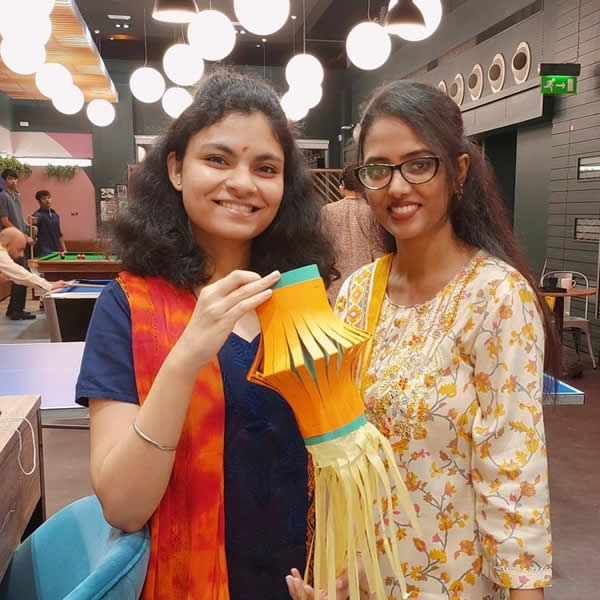
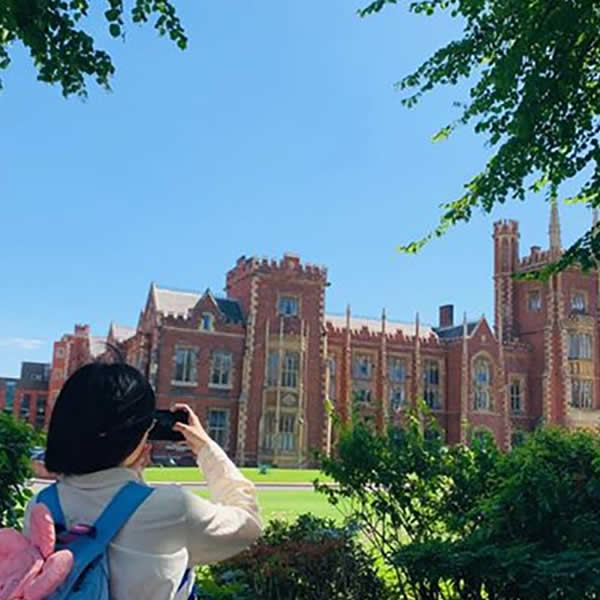
Hear what our students love about living here and tips on what to bring, what you can expect and how to make friends.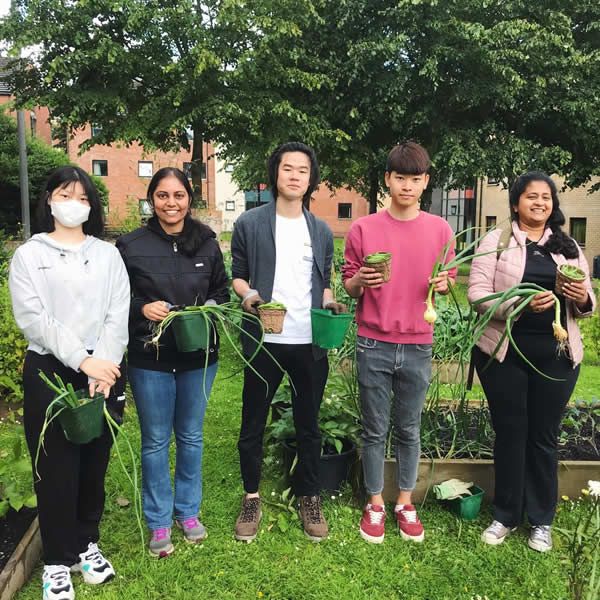




Careers
Career Prospects
Introduction
According to Eimear Callaghan, Head of Experience & Industry Development at Tourism Northern Ireland, “Language students and language graduates are born communicators. They’re adaptable, flexible. They are people people which is increasingly important. There’s a real need to connect with people and to bring global teams along with you on different projects. An article from the World Economic Forum state the top ten skills for the work force of the future and the first one was communication skills. The next one was empathy and emotional intelligence. The third one was active listening. When I looked through those ten skills of the future, nine out of ten of those I had covered in my degree. Language might not be dictated in the job description, but whenever you get into the role, you bring so much value. Language students really have that edge.”
https://www.youtube.com/live/BSeWzcAiLpo
Employment after the Course
Spanish graduates go on to work in a very wide range of sectors, including media and communications, finance, advertising, marketing, journalism, tourism, teaching and translation. They are particularly in demand in careers requiring a high level of communication and presentation skills, as well as strong critical and analytical thinking. 90% of students are in work or further study 6 months after graduation. International companies in which our past students are now employed include: PwC, Ernst and Young, Micro Focus Latin America, Santander, Jameson, Barclays, and Scotiabank.
https://padlet.com/ael14/wi1aefw7780pp3wl
Employment Links
We regularly consult and develop links with a large number of employers including, for example, Santander and the British Council who provide sponsorship for our year abroad placements as well as Rolls Royce, PwC, and Moy Park / MARFRIG who are members of the employer liaison panel for the course.
Our past students have also gained work placement with organisations such as the British Council Assistantships Program, Santander Bank, and PwC Graduate Careers and Achievements Many of our former graduates have risen to the top of their fields and include many famous figures; for example:
Hilary Oliver, Managing Director, Cameo Productions
Carla Leonard, Business Performance Manager, Barclay
Nuala McKeever, Comedian
Niall Donnelly, Reporter, UTV
Alumni Success
Michael, a Spanish graduate, remarked: ‘Studying Spanish at QUB was a very rewarding experience for me personally and one that I would recommend to anyone considering it. The truth is that the 4 years passed in what seemed the blink of an eye, but it is clear to me that I really developed not just in terms of my language, but also my critical thinking, my ability to research independently and work as part of a team, my public speaking and many more valuable skills for entering into the world of employment. I am currently working at an educational technology start-up in Madrid where Spanish is the lingua franca. I know for a fact that being a native English speaker with a degree in Spanish from a renowned institution helped me to get my foot in the door here and I am putting into practice many of the skills I learned studying Spanish at Queen’s on a daily basis.’
https://padlet.com/ael14/ofrm6epdvk9l997
"We are looking for graduates who can be our future leaders who demonstrate qualities of courage, judgement and breadth. Where do we find such qualities? Linguists or arts graduates."
Miles Cowdry, Director of Global Corporate Development, Rolls Royce PLC
Prizes and Awards
Bulletin of Spanish Studies William C. Atkinson Postgraduate Scholarship: This is awarded to the candidate with the highest marks at undergraduate level who has been accepted for Masters-level study in Spanish and/or Lusophone Studies at QUB.
Certificates of Distinction in Spoken Spanish: A Certificate of Distinction in spoken Spanish is awarded to students whose performance is 1st class in their final year oral examinations.
Dr Henry Hutchinson-Stewart Literary Scholarships (Languages): The bequest was set up to fund medical and literary scholarships in the three Universities of Ireland. This is one of the oldest endowments dating back to 1883.
Queen’s Foundation Scholarship: Awarded by the School for the best overall performance in Modern Languages at Levels 1 and 2
The O’Rawe Prize for Academic Progress: This award recognises the achievements of the student at level 2 who has demonstrated the most significant academic improvement..
The Samuel & Sarah Ferguson Travel Prize: is awarded annually to a level 2 student taking any degree including Modern Languages and who will undertake a year abroad. Specific criteria apply.
Xavier Giralt Prize: This prize, which is derived from funds bequeathed by the late Xavier Giralt, will be awarded each year to one or more Final Year candidates in Spanish language, whose exceptional academic performance merits recognition
">
How to Apply
Apply using our online Queen's Portal and follow the step-by-step instructions on how to apply.
Terms and Conditions
The terms and conditions that apply when you accept an offer of a place at the University on a taught programme of study.
Queen's University Belfast Terms and Conditions.