- professional-nursing-adult-nursing-bsc-b74a
- anthropology-sociology-ba
- chemistry-study-abroad-mchem-f106
- irish-history-ba-qv51
- professional-nursing-children-young-people-bsc-b73a
- dentistry-bds-a200
- midwifery-bsc-b720
- professional-nursing-learning-disabilities-nursing-bsc-b761
- professional-nursing-mental-health-nursing-bsc-b760
- professional-nursing-children-young-people-bsc-b730
- professional-nursing-adult-nursing-bsc-b740
- medicine-mb-a100
- computer-science-meng-g402
- business-information-technology-incl-professional-experience-bsc-gn51
- software-engineering-placement-meng-g605
- computer-science-incl-professional-experience-meng-g405
- software-engineering-meng-g602
- data-science-year-professional-experience-bsc-g420
- software-engineering-placement-beng-g604
- modern-languages-business-ba
- social-work-relevant-degree-entry-bsw-l501
- social-work-bsw-l500
- criminology-sociology-ba-ml93
- psychology-bsc-c800
- spanish-ba-r410
- spanish-portuguese-ba-rr45
- criminology-ba-m900
- social-policy-sociology-ba-ll43
- sociology-ba-l300
- criminology-social-policy-ba-ml94
- pharmaceutical-biotechnology-sandwich-bsc-b213
- pharmaceutical-sciences-sandwich-bsc-b211
- pharmaceutical-biotechnology-bsc-b212
- pharmacy-mpharm-b230
- politics-sociology-ba-ll23
- politics-philosophy-economics-ba-lv00
- politics-spanish-ba-lr24
- politics-ba-l200
- pharmaceutical-sciences-bsc-b210
- accounting-major-french-bsc-n4r1
- accounting-major-spanish-bsc-n4r4
- actuarial-science-risk-management-bsc-n323
- advanced-accounting-placement-macc-n400
- aerospace-engineering-beng-h400
- aerospace-engineering-meng-h402
- aerospace-engineering-sandwich-beng-h404
- aerospace-engineering-sandwich-meng-h405
- agricultural-sciences-bsc-d700
- agricultural-sciences-bsc-d704
- anthropology-archaeology-ba-lv64
- anthropology-ba-l600
- anthropology-english-ba-ql36
- anthropology-french-ba-rl16
- anthropology-history-ba-vl16
- anthropology-international-relations-ba-ll6f
- anthropology-irish-ba-ql56
- anthropology-philosophy-ba-lv65
- anthropology-politics-ba-ll62
- anthropology-spanish-ba-lr64
- applied-mathematics-physics-bsc-gf13
- applied-mathematics-physics-msci-gfc3
- archaeology-ba-v402
- archaeology-french-ba-v4r1
- archaeology-history-ba-vv41
- archaeology-irish-ba-vq45
- archaeology-portuguese-ba-v4r5
- archaeology-spanish-ba-v4r4
- archaeologypalaeoecology-bsc-v400
- archaeologypalaeoecology-geography-bsc-vf48
- architecture-bsc-k100
- audio-engineering-bsc-j930
- biochemistry-bsc-c700
- biochemistry-bsc-c704
- biochemistry-msci-c702
- biochemistry-msci-c705
- biological-sciences-bsc-c100
- biological-sciences-bsc-c104
- biological-sciences-msci-c102
- biological-sciences-msci-c105
- biomedical-science-bsc-b940
- business-economics-bsc-l110
- business-management-placement-bsc-n202
- chemical-engineering-beng-h800
- chemical-engineering-meng-h802
- chemical-engineering-year-industry-meng-h805
- chemistry-bsc-f100
- chemistry-mchem-f105
- chemistry-year-industry-bsc-f104
- chemistry-year-industry-mchem-f107
- civil-engineering-beng-h200
- civil-engineering-meng-h202
- civil-engineering-year-industry-beng-h204
- civil-engineering-year-industry-meng-h205
- computer-engineering-beng-gh6p
- computer-engineering-meng-gh6q
- computer-engineering-year-industry-beng-gh67
- computer-engineering-year-industry-meng-gh68
- computer-science-professional-experience-bsc-g400
- computing-information-technology-incl-professional-experience-bsc-gg45
- drama-ba-w400
- drama-english-ba-wq43
- economics-accounting-bsc-ln14
- economics-bsc-l100
- economics-major-finance-bsc-l1n3
- economics-major-french-bsc-l1r1
- economics-major-spanish-bsc-l1r4
- education-studies-ba-x200
- education-studies-social-policy-ba-xl24
- education-studies-sociology-ba-xl23
- electrical-electronic-engineering-beng-h600
- electrical-electronic-engineering-meng-h602
- electrical-electronic-engineering-sandwich-beng-h604
- electrical-electronic-engineering-sandwich-meng-h605
- english-ba-q300
- english-creative-writing-ba-q3w8
- english-film-studies-ba-qw36
- english-french-ba-qr31
- english-history-ba-qv31
- english-irish-ba-qq53
- english-linguistics-ba-qq31
- english-philosophy-ba-qv35
- english-politics-ba-ql32
- english-sociology-ba-ql33
- english-spanish-ba-qr34
- environmental-civil-engineering-meng-h252
- environmental-civil-engineering-year-industry-meng-h255
- environmental-management-bsc-f850
- environmental-management-bsc-f854
- european-planning-mplan-k490
- film-studies-production-ba-w600
- film-theatre-making-ba-ww65
- finance-year-industry-bsc-n300
- financial-risk-management-year-industry-bsc-n390
- food-science-nutrition-bsc-bdk6
- food-science-nutrition-bsc-db6k
- food-science-nutrition-msci-bd46
- food-science-nutrition-msci-db64
- french-ba-r120
- french-history-ba-rv11
- french-international-relations-ba-rlc2
- french-irish-ba-qr51
- french-politics-ba-rl12
- french-portuguese-ba-rr15
- french-spanish-ba-rr14
- games-technologies-bsc-g455
- geography-ba-l800
- geography-bsc-f800
- geography-language-bsc-f8rx
- history-ba-v140
- history-international-relations-ba-lv21
- history-philosophy-ba-vv1m
- history-politics-ba-vl12
- history-sociology-ba-vl13
- history-spanish-ba-rv41
- human-biology-bsc-b100
- international-business-major-french-bsc-n1r1
- international-business-major-german-bsc-n2r2
- international-business-major-mandarin-bsc-n1r9
- international-business-major-portuguese-bsc-n2r5
- international-business-major-spanish-bsc-n1r4
- international-relations-conflict-studies-ba-l253
- international-relations-irish-ba-lqf5
- international-relations-politics-ba-l290
- international-relations-spanish-ba-lrf4
- irish-ba-q504
- irish-broadcast-production-ba-qp53
- irish-politics-ba-ql52
- irish-portuguese-ba-qr55
- irish-spanish-ba-qr54
- law-llb-m100
- law-major-french-llb-m2r1
- law-major-irish-llb-m2q5
- law-major-politics-llb-m1l2
- law-major-spanish-llb-m2r4
- law-senior-status-llb-m101
- liberal-arts-blibarts-y301
- liberal-arts-mlibarts-y300
- marine-biology-bsc-c160
- marine-biology-bsc-c164
- marine-biology-msci-c162
- marine-biology-msci-c165
- mathematics-bsc-g100
- mathematics-computer-science-bsc-gg41
- mathematics-computer-science-msci-ggk1
- mathematics-finance-bsc-g1n3
- mathematics-french-bsc-g1r1
- mathematics-mmath-g103
- mathematics-spanish-bsc-g1r4
- mathematics-statistics-op-research-bsc-gg13
- mathematics-statistics-op-research-mmath-ggc3
- mechanical-engineering-beng-h300
- mechanical-engineering-meng-h303
- mechanical-engineering-sandwich-beng-h304
- mechanical-engineering-sandwich-meng-h305
- media-broadcast-production-ba-p310
- medicinal-chemistry-bsc-f150
- medicinal-chemistry-mchem-f15a
- medicinal-chemistry-year-industry-bsc-f154
- medicinal-chemistry-year-industry-mchem-f15c
- microbiology-bsc-c500
- microbiology-bsc-c504
- microbiology-msci-c502
- microbiology-msci-c505
- music-audio-production-ba-w374
- music-bmus-w302
- music-performance-ba-w310
- music-sound-design-ba-w371
- philosophy-ba-v500
- philosophy-politics-ba-vlm2
- physics-astrophysics-bsc-f3f5
- physics-astrophysics-mphys-f3fm
- physics-bsc-f300
- physics-french-bsc-f3r1
- physics-french-mphys-f3rc
- physics-medical-applications-bsc-f3b9
- physics-medical-applications-mphys-f3bx
- physics-mphys-f303
- physics-spanish-bsc-f3r4
- physics-spanish-mphys-f3rq
- planning-environment-development-bsc-k430
- structural-engineering-architecture-meng-h2k1
- structural-engineering-architecture-year-industry-meng-h2kc
- theoretical-physics-bsc-f340
- theoretical-physics-mphys-f344
- veterinary-biosciences-bsc-d300
- veterinary-biosciences-bsc-d304
- veterinary-biosciences-msci-d302
- veterinary-biosciences-msci-d305
- zoology-bsc-c300
- zoology-bsc-c301
- zoology-msci-c302
- zoology-msci-c305
BA | Postgraduate Taught
Music Performance

The BA in Music Performance is a course that focuses on practice and is aimed primarily at students who wish to pursue a professional career in performance. The degree is distinguished by its inclusive approach and will have broad appeal to musicians who specialise in one or more of a range of performing traditions, including classical, folk, traditional, pop, rock, jazz, singer/songwriter, electronic and experimental. Students gain extensive experience of performing in solo, ensemble and improvised settings in addition to developing skills for performing in the recording studio and the use of technology in performance practice.
Students will have access to world leading facilities and concert spaces, including the Sonic Lab which is housed in the world-renowned SARC facility. Teaching is delivered by a team of dedicated staff with a wide ranging expertise covering music performance, improvisation, composition and audio engineering.
Course highlights
Global Opportunities
Students may opt to spend a semester or a year studying abroad. The School has links with a number of international institutions including Sibelius Academy (University of the Arts Helsinki), University of Groningen, Escola Superior de Música e Artes do Espetáculo do Porto (Instituto Politecnico do Porto), Université Français Rabelais Tours, National and Kapodistrian University of Athens, and Technological Educational Institute of Crete.
http://www.go.qub.ac.uk/Erasmus-StudyAbroad
Professional Accreditations
The School is an Avid Learning Partner with certified instructors in both Media Composer video editing software and Pro Tools audio editing software.
Undergraduates at the school have the opportunity to be certified in editing and notations software used in both the Film and Audio Industries as an additional qualification outside their course. The cost of these courses ranges from £20 to £90 per course.
The school offers the following additional certifications:
MC101 | Media Composer Editing Essentials
MC110 | Media Composer Effects Essentials
PT101 | Pro Tools Fundamentals I
PT110 | Pro Tools Fundamentals II
PT130 | Pro Tools for Game Audio
PT201 | Pro Tools Production I
PT210M | Pro Tools Production II (Music Production)
SB101 | Sibelius Fundamentals I
SB110 | Sibelius Fundamentals II
https://www.avid.com/education/certification
https://www.qub.ac.uk/schools/ael/Discover/AvidTraining/
Industry Links
The School benefits from strong industry partnerships including BBC NI, Ulster Orchestra, Opera NI, Hard Rain Soloist Ensemble, Cathedral Arts Festival, Moving on Music, Diatribe Records, DTS and Dolby.
We currently have a partnership with the Ulster Orchestra that means our performance classes are regularly co-mentored by Ulster Orchestra players.
http://go.qub.ac.uk/PerformanceUOPartnership
World Class Facilities
The School is one of the largest and best equipped institutions in the UK working in the field of music and sound. Students on the BA in Music Performance have access to state-of-the-art audio resources including two dedicated computer suites,
ten sound studios and the world’s first Sonic Laboratory – a unique performance space capable of three-dimensional sound
projection.
StageBox was opened in 2025 as a specialist teaching space for music performance, with staging, sound systems and lighting that resemble a small venue.
The Sonic Laboratory at SARC: Centre for Research in Sound and Music could best be thought of as a 'cinema for the ear' - a specialist acoustic space designed to provide a unique and immersive listening experience - the auditory equivalent of an IMAX cinema. Eighty-four loudspeakers, strategically located, project and move sounds throughout the 360 degrees of the space, including above and underneath the audience. The Sonic Lab was designed with an acoustically transparent, modular grid floor suspended 4m above the basement level. No other auditorium for sonic art performance and experimentation currently exists with this revolutionary feature. The provision of this facility gives Northern Ireland a unique and pioneering role in a rapidly developing field.
The Sonic Lab is a flexible space used for teaching, public concerts, screenings, installations and for developing and implementing cutting edge research linked to the emerging creative industries. As an engineering research facility, the Sonic Laboratory provides unique opportunities to develop and test new ideas relating to virtual reality / augmented reality, immersive media, Dolby Atmos, loudspeaker design, music perception, musical interactions, new instrument design and sound engineering.
Our Music Building was built at the same time as the main Queen's Lanyon Building. It was originally the Student's Union and Canteen.
We have the beautiful Harty Room concert hall, The Old McMordie Hall teaching room, a large Lecture Room, smaller teaching rooms, a basement full of practice rooms, 2 recording studios and social spaces for students to meet.
HARTY ROOM
With a splendid hammer-beam vaulted roof and warm acoustic, the Harty Room (seating 120) is situated within the Music building where the regular lunchtime recitals and evening concerts take place. It is also the main rehearsal space for choirs and orchestras at Queen’s. It houses two full- concert Steinway grand pianos, a double- manual harpsichord, fortepiano, chamber organ and many percussion instruments.
The Harty Room is also equipped with a large projector screen and audio PA system suitable for events such as concerts and seminars.
MCMORDIE HALL
This spacious room with colourful light beaming through its beautiful stained-glass window is one of two main lecturing spaces within the School of Music building. It also houses many of our early keyboard instruments, three small ones on the balcony and the heavier ones on the ground floor.
SIR WILLIAM WHITLA HALL
This is the University’s principal venue for orchestral concerts, conferences and exhibitions and it hosts the graduation ceremonies each June and December. The Whitla Hall also houses a Steinway concert grand and a magnificent three- manual organ by Compton, renovated by Hill, Norman and Beard.
The link below is a student-led video tour of the building.
SARC: Centre for Research in Sound and Music is a custom built state-of-the-art audio resource that includes two dedicated computer suites, ten sound studios and the world’s first Sonic Laboratory – a unique performance space capable of three-dimensional sound projection.
Since its founding in 2001, SARC has become a globally recognised institute for music-based practice and research, broadly conceived. SARC brings together researchers in composition, performance, musicology, computing for musical applications, acoustics and perception, sound recording, interaction design, broadcast, critical improvisation studies, sound art, aesthetics and media theory. A purpose designed building with a state-of-the-art Sonic Laboratory and multichannel studios was opened by Karlheinz Stockhausen in 2004 during the Sonorities Festival, which is hosted biennially by SARC.
SARC also includes associate members based in computer engineering, anthropology, psychology and architecture who are involved in research collaborations and co-supervision of PhD students, to form a research environment with diverse academics and postgraduate students. SARC regularly hosts visiting artists and scholars and has ongoing research collaborations with international institutions including Stanford University, University of São Paulo, IRCAM, Japan Advanced Institute of Science and Technology, McGill University, Bach-Archiv Leipzig, Stony Brook University, Orpheus Institute and University of Oxford. SARC also has formal professional partnerships with high profile local artists and ensembles including the Ulster Orchestra, Hard Rain Soloist Ensemble and Duke Special, of which the latter two are currently employed as Industry Professionals.
The link below is a student-led video tour of the building.
Internationally Renowned Experts
Many of our staff are leading international experts in their fields of research. Additionally, the School employs a number Industry Fellows – internationally renowned professionals in their fields of composition, performance, song-writing, sound engineering and music production.
We also run a series of research seminars and lunchtime concerts with guest speakers/performers joining us each term.
hthttp://go.qub.ac.uk/EventsListings
Student Experience
Northern Ireland has an exceptional track record for producing outstanding musical talent and has a unique identity within the
global music industry. Belfast is the creative hub of the Northern Irish music industry and students on this programme will contribute
to the vibrant musical life of both the University and the wider city.
The Music Department at Queen's is a very welcoming and friendly department. Even though we work across two buildings, both are good venues for a sociable and relaxed student experience.
All BA Music Performance students are awarded a generous performance bursary that covers the cost of ALL practical performance tuition for both solo and ensemble performance modules. These performance bursaries are provided across all three years of the programme.
Download our new Music Programmes Brochure here!
http://go.qub.ac.uk/MusicatQueens
http://go.qub.ac.uk/MusicBrochure
Further Study Opportunities
Further study, including Master's programmes, is also an option; see the School website for further information. Graduates of this degree will be eligible to undertake the postgraduate study such as the MRes and PhD programmes.
http://www.qub.ac.uk/courses/postgraduate-taught/arts-humanities-mres/
- Start Date
- September 2027
- Duration
- 3 years (Full-time)
- Places Available
- 20 (Full Time)
Course Structure
This programme is carefully curated to develop students' skills in Music theory and practice across the 3 years. Students progress from introductory modules that embed the key skills, to a wide range of specialist modules that allow them to deepen their interests and gain experience in music performance.
BA Music Performance Presentation
To view a presentation on this course please go to
http://go.qub.ac.uk/MusicPerformancetalk
Level 1
Level 1 of the programme consists of three core modules (two of which focus on performance) and three optional modules. All students receive weekly performance tuition and participate in weekly performance platforms – an open session for peer critique of solo and ensemble performances.
Level 2
At Level 2 students continue to develop solo, ensemble and improvised performance practice through individual tuition, group tuition and performance platforms. Student ensembles work in a recording studio setting to create recordings of newly conceived repertoire.
Level 3
The primary focus at Level 3 is further refinement of solo or ensemble performance practice culminating in a double weighted performance module. All students are also asked to complete a project focusing on an aspect of professional practice in musical performance.
- People Teaching You
-
Contact Teaching Hours
Large Group Teaching
6 (hours maximum)
6 hours of lecturesMedium Group Teaching
6 (hours maximum)
6 hours of practical classes, workshops or seminars each weekSmall Group Teaching/Personal Tutorial
2 (hours maximum)
hours of tutorials (orator, project supervision) each week.Personal Study
24 (hours maximum)
22–24 hours studying and revising in your own time each week, including guided study, composition, instrumental tuition, performance rehearsal, online activities, etc. -
Learning and Teaching
Examples of the opportunities provided for learning on this courses are:
E-Learning technologies
Information associated with lectures and assignments is often communicated via the Canvas Virtual Learning Environment. A range of e-learning experiences are also embedded in the degree through, for example: interactive group workshops; podcasts and interactive web-based learning activities; on-line assessment; opportunities to use software applications associated with design in practicals and project-based work etc.
Lectures
: introduce basic information about new topics as a starting point for further self-directed private study/reading. Lectures also provide opportunities to ask questions, gain some feedback and advice on assessments (normally delivered in large groups to all year group peers).
Personal Tutor
Undergraduates are allocated a Personal Tutor during Years 1 and 2 who meets with them regularly during the year to support their academic development.
Practicals
provide opportunities for the development of technical skills and the application of theoretical principles to real-life or practical contexts.
Self-directed study
This is an essential part of life as a Queen’s student when important private reading, performance practice, engagement with e-learning resources, reflection on feedback and assignment research and preparation is carried out.
Supervised projects
In final year, all students take a ‘Professional Practice’ module which provides the opportunity to develop a body of artistic work in a professional context. Each individual or group will be assigned a member of staff to act as a mentor. Mentors and students will meet fortnightly to review work in progress and to discuss practical concerns.
Work placements
Students have the opportunity to undertake a work placement in Year 3. This is a significant learning and employability enhancement opportunity.
-
Assessment
Methods of assessment are outlined below:
- The way in which you are assessed will vary according to the learning objectives of each module. Many Music modules are assessed solely through practical project work, continuous assessment or written assignments. Others are assessed through a combination of coursework and end of semester examinations. Details of how each module is assessed are shown in the Module Outline Document which is provided to all students at the beginning of each teaching semester.
-
Facilities
The Music Department at Queen’s is one of the best equipped in the UK. Our music degrees are housed in two striking buildings: the elegant, historical Music building and the world-leading Centre for Research in Sound and Music (SARC). SARC contains the unique Sonic Lab, a concert hall with variable acoustics and facilities for immersion in 360º sound. The Music building houses the Harty Room, a concert hall that is regularly used for public performances. The department also houses state of the art recording studios (for both ‘pop’ and ‘classical’ music), plus studios for surround sound and post production.
Excellent facilities for organists and pianists including the Whitla Hall organ. Students also have access to both grand pianos and baby grands in the practice rooms. The School of Music also has an extensive range of early keyboard instruments, orchestral instruments and percussion instruments.
Situated in the Main Site Tower basement are a suite of four band rooms - three performance and one control room for recording. All the rooms are linked together to allow studio quality audio recordings. Check out the link for a full list of equipment provided in these rooms.
https://www.qub.ac.uk/schools/ael/Discover/facilities/PracticeRoomsandinstruments/Concert venues include the Harty Room, The Sonic Lab, McMordie Hall and Whitla Hall.
https://www.qub.ac.uk/schools/ael/Discover/facilities/concertvenues/The SARC building contains seven purpose-built studio spaces designed and acoustically treated by ARUP acoustics
https://www.qub.ac.uk/schools/ael/Discover/facilities/studios/The School is one of the largest and best-equipped institutions in the UK working in the field of music and sound. Students have access to state-of-the-art audio resources including:
The Sonic Lab: a unique performance space with variable acoustics, an acoustically transparent grid floor and 84 studio quality loudspeakers to facilitate three dimensional sound projection and wave-field synthesis. The Sonic Lab is capable of projecting multichannel audio in a range of spatial formats including ambisonics and Dolby Atmos.
Studios: The School has 10 studio spaces used for recording, mixing, sound design, composition, foley recording, audio post production and spatialisation. The studios feature a range of active monitoring from Genelec, PMC, ATC, Dynaudio and the larger studio spaces use large format digital mixing consoles from Studer, AMS-Neve and Avid. The School also has an extensive microphone collection including a range of popular models from Soundfield, Neumann, DPA, Schoeps, AKG, Sennheiser and Shure.
Additionally, there are a range of study spaces, rehearsal spaces and teaching rooms distributed across our two buildings.
https://www.qub.ac.uk/schools/ael/Discover/facilities/soniclab/SonicLabSpecs/Ensembles include the Queen's University Symphony Orchestra, Queen's Big Band, QUB Ensemble, and Queen's Viol Consort, among others.
https://www.qub.ac.uk/schools/ael/Discover/PerformanceGroups/
Modules
The information provided in this Course Finder reflects the module details for the current year of study (2025/26). Please note that modules are subject to annual review and changes may occur in response to various factors, including student feedback and academic developments. Prospective students will be notified of any significant changes to module offerings before the start of the new academic year.
Entrance requirements
A level requirements
ABB plus successful audition.
A maximum of one BTEC/OCR Single Award or AQA Extended Certificate will be accepted as part of an applicant's portfolio of qualifications with a Distinction* being equated to a grade A at A-level and a Distinction being equated to a grade B at A-level.
Irish leaving certificate requirements
H3H3H3H3H3H3/H2H3H3H3H3 plus successful audition.
Access Course
Successful completion of Access Course with an average of 70% plus successful audition.
International Baccalaureate Diploma
33 points overall including 6,5,5 at Higher Level plus successful audition.
BTEC Level 3 Extended/National Extended Diploma
QCF BTEC Extended Diploma (180 credits at Level 3) with overall grades D*DD plus successful audition.
RQF BTEC National Extended Diploma (1080 GLH at Level 3) with overall grades D*DD plus successful audition.
Graduate
A minimum of a 2:2 Honours Degree plus successful audition
All applicants
There are no specific subject requirements to study Music Performance. However, applicants being considered for entry are required to submit a video audition demonstrating a wide ranging ability of their musical performance style.
Note
All applicants must have GCSE English Language grade C/4 or an equivalent qualification acceptable to the University.
-
How we choose our students
Applications are dealt with centrally by the Admissions and Access Service rather than by individual University Schools. Once your on-line form has been processed by UCAS and forwarded to Queen's, an acknowledgement is normally sent within two weeks of its receipt at the University.
Selection is on the basis of the information provided on your UCAS form. Decisions are made on an ongoing basis and will be notified to you via UCAS.
For last year's intake, applicants for this BA programme offering A-level/BTEC qualifications must have had, or been able to achieve, a minimum of five GCSE passes at grade C/4 or better (to include English Language). Performance in any AS or A-level examinations already completed would also have been taken into account and the Selector checks that any specific entry requirements in terms of GCSE and/or A-level subjects can be fulfilled.
For applicants offering Irish Leaving Certificate, please note that performance at Irish Junior Certificate (IJC) is taken into account. For last year’s entry applicants for this degree must have had, a minimum of 5 IJC grades C/Merit. The Selector also checks that any specific entry requirements in terms of Leaving Certificate subjects can be satisfied.
Applicants being considered for entry are asked to submit a 15-minute video audition to the School of Arts, English and Languages. This should demonstrate a wide ranging ability of the applicant’s musical performance style. Any type of repertoire is welcomed and applicants may include supporting musicians in their audition video. Assessment of this audition by the School forms part of the selection process.
Offers are normally made on the basis of three A-levels. Two subjects at A-level plus two at AS would also be considered. The offer for repeat candidates is set in terms of three A-levels and may be one grade higher than for first time applicants. Grades may be held from the previous year.
Applicants offering two A-levels and one BTEC Subsidiary Diploma/National Extended Certificate (or equivalent qualification), or one A-level and a BTEC Diploma/National Diploma (or equivalent qualification) will also be considered. Offers will be made in terms of the overall BTEC grade(s) awarded. Please note that a maximum of one BTEC Subsidiary Diploma/National Extended Certificate (or equivalent) will be counted as part of an applicant’s portfolio of qualifications. The normal GCSE profile will be expected.
Applicants offering other qualifications, such as Higher National Certificates and Diplomas, will also be considered.
For applicants offering a HNC, the current requirements are successful completion of the HNC with 2 Distinctions and remainder Merits. For those offering a Higher National Diploma, some flexibility may be allowed in terms of GCSE profile but, to be eligible for an offer, the grades obtained in the first year of the HND must allow the overall offer to be achievable. The current entrance requirement for Stage 1 entry is successful completion of the HND with 2 Distinctions, 10 Merits and 4 Passes overall. Applicants with sufficiently high grades in the first year of a relevant HND in Music Production or Music may be considered for entry to Stage 2 and, where offers are made, these are conditional on successful completion of this HND with 3 Distinctions and 13 Merits overall.
The information provided in the personal statement section and the academic reference together with predicted grades are noted but, in the case of BA degrees, these are not the final deciding factors in whether or not a conditional offer can be made. However, they may be reconsidered in a tie break situation in August.
A-level General Studies and A-level Critical Thinking would not normally be considered as part of a three A-level offer and, although they may be excluded where an applicant is taking four A-level subjects, the grade achieved could be taken into account if necessary in August/September.
If you are made an offer then you may be invited to a Faculty/School Visit Day, which is usually held in the second semester. This will allow you the opportunity to visit the University and to find out more about the degree programme of your choice and the facilities on offer. It also gives you a flavour of the academic and social life at Queen's.
If you cannot find the information you need here, please contact the University Admissions Service (admissions@qub.ac.uk), giving full details of your qualifications and educational background. -
International Students
Our country/region pages include information on entry requirements, tuition fees, scholarships, student profiles, upcoming events and contacts for your country/region. Use the dropdown list below for specific information for your country/region.
International students wishing to apply to Queen's University Belfast (and for whom English is not their first language), must be able to demonstrate their proficiency in English in order to benefit fully from their course of study or research. Non-EEA nationals must also satisfy UK Visas and Immigration (UKVI) immigration requirements for English language for visa purposes.
For more information on English Language requirements for EEA and non-EEA nationals see: www.qub.ac.uk/EnglishLanguageReqs.
If you need to improve your English language skills before you enter this degree programme, Queen's University Belfast International Study Centre offers a range of English language courses. These intensive and flexible courses are designed to improve your English ability for admission to this degree.
- Academic English: an intensive English language and study skills course for successful university study at degree level
- Pre-sessional English: a short intensive academic English course for students starting a degree programme at Queen's University Belfast and who need to improve their English.
Fees and funding
All tuition fees quoted relate to a single year of study unless stated otherwise. Tuition fees will be subject to an annual inflationary increase, unless explicitly stated otherwise.
Northern Ireland (NI) 1
£4,985
Republic of Ireland (ROI) 2
£4,985
England, Scotland or Wales (GB) 1
£9,535
EU Other 3
£22,400
1EU citizens in the EU Settlement Scheme, with settled status, will be charged the NI or GB tuition fee based on where they are ordinarily resident. Students who are ROI nationals resident in GB will be charged the GB fee.
2 EU students who are ROI nationals resident in ROI are eligible for NI tuition fees.
3 EU Other students (excludes Republic of Ireland nationals living in GB, NI or ROI) are charged tuition fees in line with international fees.
-
Additional course costs
The School is an Avid Learning Partner and optional courses providing Avid certification in the use of ProTools are available as part of the programme. The cost of these courses ranges from £20 to £90 per course.
All BA Music Performance students are awarded a generous performance bursary that covers the cost of all practical performance tuition for both solo and ensemble performance modules. These performance bursaries are provided across all three years of the programme.All Students
Depending on the programme of study, there may be extra costs which are not covered by tuition fees, which students will need to consider when planning their studies.
Students can borrow books and access online learning resources from any Queen's library. If students wish to purchase recommended texts, rather than borrow them from the University Library, prices per text can range from £30 to £100. Students should also budget between £30 to £75 per year for photocopying, memory sticks and printing charges.
Students undertaking a period of work placement or study abroad, as either a compulsory or optional part of their programme, should be aware that they will have to fund additional travel and living costs.
If a programme includes a major project or dissertation, there may be costs associated with transport, accommodation and/or materials. The amount will depend on the project chosen. There may also be additional costs for printing and binding.
Students may wish to consider purchasing an electronic device; costs will vary depending on the specification of the model chosen.
There are also additional charges for graduation ceremonies, examination resits and library fines.
-
How do I fund my study?
The Department for the Economy will provide a tuition fee loan of up to £6,500 per NI / EU student for postgraduate study. Tuition fee loan information.
A postgraduate loans system in the UK offers government-backed student loans of up to £11,836 for taught and research Masters courses in all subject areas (excluding Initial Teacher Education/PGCE, where undergraduate student finance is available). Criteria, eligibility, repayment and application information are available on the UK government website.
More information on funding options and financial assistance - please check this link regularly, even after you have submitted an application, as new scholarships may become available to you.
-
International Scholarships
Information on scholarships for international students, is available at www.qub.ac.uk/Study/international-students/international-scholarships.
Why study at Queen's?
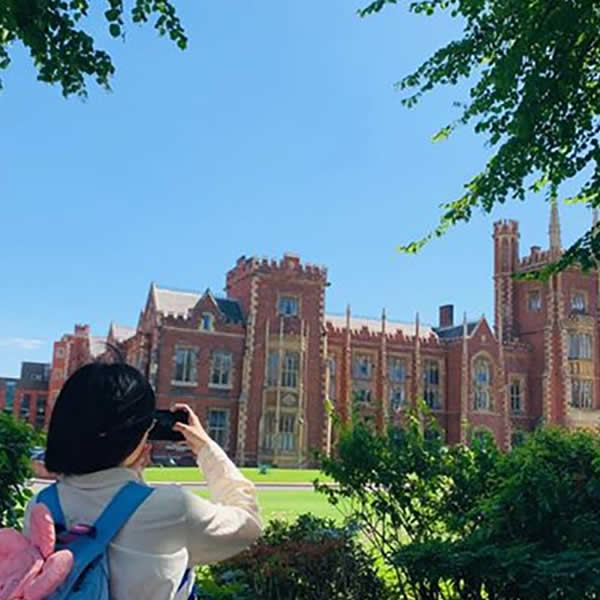
Hear what our students love about living here and tips on what to bring, what you can expect and how to make friends.





Careers
Career Prospects
Introduction
The BA in Music Performance commenced in September 2017. The programme prepares students for a wide range of possible career paths and graduates from Music degrees at Queen's have found success throughout the UK and internationally in both musical and non-musical careers including orchestral playing, opera singing, solo artist careers, performance, composition, teaching, media employment and arts administration.
Alumni Success
Graduates of related programmes at Queen's have been very successful in the area of Music Performance and include;
Marcella Walsh, Operatic Soprano, Scottish Opera
Oisin McAuley, Fiddle Player, Danú
Kitt Philipa, Solo Artist
Joshua Burnside, NI Music Prize Winner 2017
Niamh McGowan, Violinist, Ulster Orchestra
Scott Flannigan, Jazz Pianist
Nathan Morrison, Singer
Chris Day, Professional Trombonist, Germany
Elaine Pelan, Singer
Carol McDonnell, Solo Clarinettist, Juliard School, New York
Colin Stark, Oboe, Ulster Orchestra
Professional Opportunities
The Level 3 Work Placement module is an excellent opportunity for students to gain real-world employment experience. Some of the organisations our students have completed placements with include: The Mac, Crescent Arts Centre, Belfast Music Society, Fleming Fulton Special Needs School, JAM (Junior Academy of Music), and a large number of local secondary and primary schools.
">
How to Apply
Apply using our online Queen's Portal and follow the step-by-step instructions on how to apply.
Terms and Conditions
The terms and conditions that apply when you accept an offer of a place at the University on a taught programme of study.
Queen's University Belfast Terms and Conditions.