- professional-nursing-adult-nursing-bsc-b74a
- anthropology-sociology-ba
- chemistry-study-abroad-mchem-f106
- irish-history-ba-qv51
- professional-nursing-children-young-people-bsc-b73a
- dentistry-bds-a200
- midwifery-bsc-b720
- professional-nursing-learning-disabilities-nursing-bsc-b761
- professional-nursing-mental-health-nursing-bsc-b760
- professional-nursing-children-young-people-bsc-b730
- professional-nursing-adult-nursing-bsc-b740
- medicine-mb-a100
- computer-science-meng-g402
- business-information-technology-incl-professional-experience-bsc-gn51
- software-engineering-placement-meng-g605
- computer-science-incl-professional-experience-meng-g405
- software-engineering-meng-g602
- data-science-year-professional-experience-bsc-g420
- software-engineering-placement-beng-g604
- modern-languages-business-ba
- social-work-relevant-degree-entry-bsw-l501
- social-work-bsw-l500
- criminology-sociology-ba-ml93
- psychology-bsc-c800
- spanish-ba-r410
- spanish-portuguese-ba-rr45
- criminology-ba-m900
- social-policy-sociology-ba-ll43
- sociology-ba-l300
- criminology-social-policy-ba-ml94
- pharmaceutical-biotechnology-sandwich-bsc-b213
- pharmaceutical-sciences-sandwich-bsc-b211
- pharmaceutical-biotechnology-bsc-b212
- pharmacy-mpharm-b230
- politics-sociology-ba-ll23
- politics-philosophy-economics-ba-lv00
- politics-spanish-ba-lr24
- politics-ba-l200
- pharmaceutical-sciences-bsc-b210
- accounting-major-french-bsc-n4r1
- accounting-major-spanish-bsc-n4r4
- actuarial-science-risk-management-bsc-n323
- advanced-accounting-placement-macc-n400
- aerospace-engineering-beng-h400
- aerospace-engineering-meng-h402
- aerospace-engineering-sandwich-beng-h404
- aerospace-engineering-sandwich-meng-h405
- agricultural-sciences-bsc-d700
- agricultural-sciences-bsc-d704
- anthropology-archaeology-ba-lv64
- anthropology-ba-l600
- anthropology-english-ba-ql36
- anthropology-french-ba-rl16
- anthropology-history-ba-vl16
- anthropology-international-relations-ba-ll6f
- anthropology-irish-ba-ql56
- anthropology-philosophy-ba-lv65
- anthropology-politics-ba-ll62
- anthropology-spanish-ba-lr64
- applied-mathematics-physics-bsc-gf13
- applied-mathematics-physics-msci-gfc3
- archaeology-ba-v402
- archaeology-french-ba-v4r1
- archaeology-history-ba-vv41
- archaeology-irish-ba-vq45
- archaeology-portuguese-ba-v4r5
- archaeology-spanish-ba-v4r4
- archaeologypalaeoecology-bsc-v400
- archaeologypalaeoecology-geography-bsc-vf48
- architecture-bsc-k100
- audio-engineering-bsc-j930
- biochemistry-bsc-c700
- biochemistry-bsc-c704
- biochemistry-msci-c702
- biochemistry-msci-c705
- biological-sciences-bsc-c100
- biological-sciences-bsc-c104
- biological-sciences-msci-c102
- biological-sciences-msci-c105
- biomedical-science-bsc-b940
- business-economics-bsc-l110
- business-management-placement-bsc-n202
- chemical-engineering-beng-h800
- chemical-engineering-meng-h802
- chemical-engineering-year-industry-meng-h805
- chemistry-bsc-f100
- chemistry-mchem-f105
- chemistry-year-industry-bsc-f104
- chemistry-year-industry-mchem-f107
- civil-engineering-beng-h200
- civil-engineering-meng-h202
- civil-engineering-year-industry-beng-h204
- civil-engineering-year-industry-meng-h205
- computer-engineering-beng-gh6p
- computer-engineering-meng-gh6q
- computer-engineering-year-industry-beng-gh67
- computer-engineering-year-industry-meng-gh68
- computer-science-professional-experience-bsc-g400
- computing-information-technology-incl-professional-experience-bsc-gg45
- drama-ba-w400
- drama-english-ba-wq43
- economics-accounting-bsc-ln14
- economics-bsc-l100
- economics-major-finance-bsc-l1n3
- economics-major-french-bsc-l1r1
- economics-major-spanish-bsc-l1r4
- education-studies-ba-x200
- education-studies-social-policy-ba-xl24
- education-studies-sociology-ba-xl23
- electrical-electronic-engineering-beng-h600
- electrical-electronic-engineering-meng-h602
- electrical-electronic-engineering-sandwich-beng-h604
- electrical-electronic-engineering-sandwich-meng-h605
- english-ba-q300
- english-creative-writing-ba-q3w8
- english-film-studies-ba-qw36
- english-french-ba-qr31
- english-history-ba-qv31
- english-irish-ba-qq53
- english-linguistics-ba-qq31
- english-philosophy-ba-qv35
- english-politics-ba-ql32
- english-sociology-ba-ql33
- english-spanish-ba-qr34
- environmental-civil-engineering-meng-h252
- environmental-civil-engineering-year-industry-meng-h255
- environmental-management-bsc-f850
- environmental-management-bsc-f854
- european-planning-mplan-k490
- film-studies-production-ba-w600
- film-theatre-making-ba-ww65
- finance-year-industry-bsc-n300
- financial-risk-management-year-industry-bsc-n390
- food-science-nutrition-bsc-bdk6
- food-science-nutrition-bsc-db6k
- food-science-nutrition-msci-bd46
- food-science-nutrition-msci-db64
- french-ba-r120
- french-history-ba-rv11
- french-international-relations-ba-rlc2
- french-irish-ba-qr51
- french-politics-ba-rl12
- french-portuguese-ba-rr15
- french-spanish-ba-rr14
- games-technologies-bsc-g455
- geography-ba-l800
- geography-bsc-f800
- geography-language-bsc-f8rx
- history-ba-v140
- history-international-relations-ba-lv21
- history-philosophy-ba-vv1m
- history-politics-ba-vl12
- history-sociology-ba-vl13
- history-spanish-ba-rv41
- human-biology-bsc-b100
- international-business-major-french-bsc-n1r1
- international-business-major-german-bsc-n2r2
- international-business-major-mandarin-bsc-n1r9
- international-business-major-portuguese-bsc-n2r5
- international-business-major-spanish-bsc-n1r4
- international-relations-conflict-studies-ba-l253
- international-relations-irish-ba-lqf5
- international-relations-politics-ba-l290
- international-relations-spanish-ba-lrf4
- irish-ba-q504
- irish-broadcast-production-ba-qp53
- irish-politics-ba-ql52
- irish-portuguese-ba-qr55
- irish-spanish-ba-qr54
- law-llb-m100
- law-major-french-llb-m2r1
- law-major-irish-llb-m2q5
- law-major-politics-llb-m1l2
- law-major-spanish-llb-m2r4
- law-senior-status-llb-m101
- liberal-arts-blibarts-y301
- liberal-arts-mlibarts-y300
- marine-biology-bsc-c160
- marine-biology-bsc-c164
- marine-biology-msci-c162
- marine-biology-msci-c165
- mathematics-bsc-g100
- mathematics-computer-science-bsc-gg41
- mathematics-computer-science-msci-ggk1
- mathematics-finance-bsc-g1n3
- mathematics-french-bsc-g1r1
- mathematics-mmath-g103
- mathematics-spanish-bsc-g1r4
- mathematics-statistics-op-research-bsc-gg13
- mathematics-statistics-op-research-mmath-ggc3
- mechanical-engineering-beng-h300
- mechanical-engineering-meng-h303
- mechanical-engineering-sandwich-beng-h304
- mechanical-engineering-sandwich-meng-h305
- media-broadcast-production-ba-p310
- medicinal-chemistry-bsc-f150
- medicinal-chemistry-mchem-f15a
- medicinal-chemistry-year-industry-bsc-f154
- medicinal-chemistry-year-industry-mchem-f15c
- microbiology-bsc-c500
- microbiology-bsc-c504
- microbiology-msci-c502
- microbiology-msci-c505
- music-audio-production-ba-w374
- music-bmus-w302
- music-performance-ba-w310
- music-sound-design-ba-w371
- philosophy-ba-v500
- philosophy-politics-ba-vlm2
- physics-astrophysics-bsc-f3f5
- physics-astrophysics-mphys-f3fm
- physics-bsc-f300
- physics-french-bsc-f3r1
- physics-french-mphys-f3rc
- physics-medical-applications-bsc-f3b9
- physics-medical-applications-mphys-f3bx
- physics-mphys-f303
- physics-spanish-bsc-f3r4
- physics-spanish-mphys-f3rq
- planning-environment-development-bsc-k430
- structural-engineering-architecture-meng-h2k1
- structural-engineering-architecture-year-industry-meng-h2kc
- theoretical-physics-bsc-f340
- theoretical-physics-mphys-f344
- veterinary-biosciences-bsc-d300
- veterinary-biosciences-bsc-d304
- veterinary-biosciences-msci-d302
- veterinary-biosciences-msci-d305
- zoology-bsc-c300
- zoology-bsc-c301
- zoology-msci-c302
- zoology-msci-c305
BSc | Postgraduate Taught
Geography
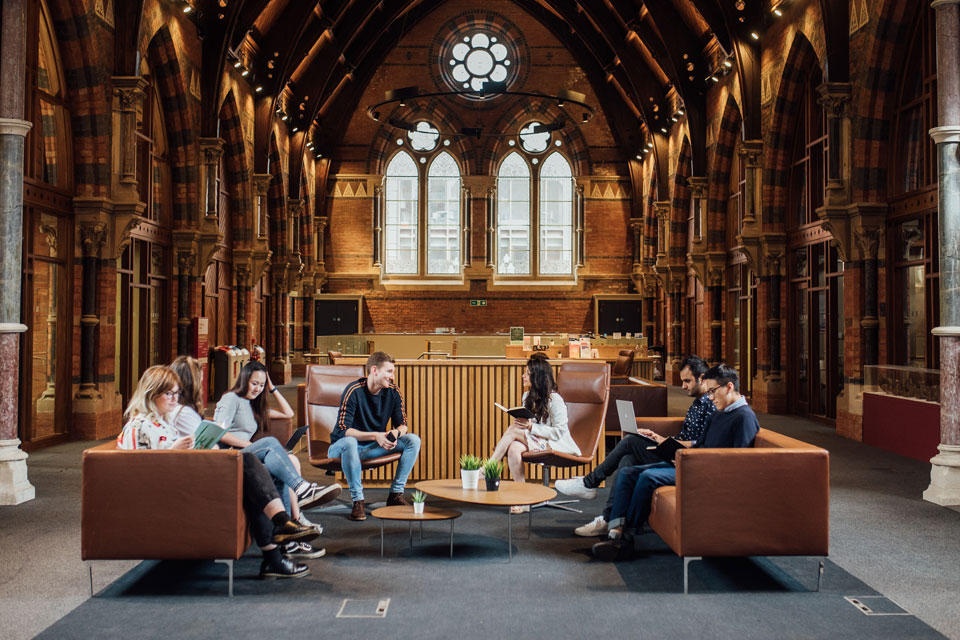
Geography embraces the study of human societies and their environment, and is one of the few subjects in which human and physical aspects of the environment are integrated. Our BSc Geography degree offers a distinctive pathway through our geography programmes that emphasises skills and techniques in scientific research, such as population data analysis, environmental modelling, and field surveys. Students are free to choose thematic modules from across the geography programme, which may include human and physical geography. These modules reflect our disciplinary expertise across three areas of geographical research: culture, space & power; population, economy & society; and geosciences.
92.3% of Geography students positive assessment of the quality of the Geography course (NSS 2025)
Course highlights
Global Opportunities
There are many exciting opportunities to study abroad, with options to spend one semester or one academic year in places such as continental Europe, the USA, Canada or Australia.
Our international field trips allow students to study geography in unique places such as Malta, Mallorca and Belgium.
Professional Accreditations
This programme has been accredited by the Royal Geographical Society (with IBG). Accredited degree programmes contain a solid academic foundation in geographical knowledge and skills, and prepare graduates to address the needs of the world beyond higher education. The accreditation criteria require evidence that graduates from accredited programmes meet defined sets of learning outcomes, including subject knowledge, technical ability and transferable skills.
Industry Links
We maintain links with a large number of employers including the NI Environment Agency, Ordnance Survey, National Trust and the Geological Survey of NI.
Students have the opportunity to work on collaborative client-led projects with local and national employers such as Belfast City Council and Habitat for Humanity.
Career Development
We offer a designated ‘Geography and Employability’ module that is run in collaboration with QUB’s Careers, Employability and Skills directorate. This includes employer workshops, job application skills development, and one-to-one meetings with tutors and careers professionals. Our Year 3 Civic Engagement module continues this with focussed, placement style research in Year 3.
World Class Facilities
The Elmwood Building, home of Geography at Queen’s, houses a state-of-the-art lecture theatre, refurbished and adaptable teaching spaces, the Centre for GIS and Geomatics, an extensive Map Library, the GeoArc Laboratory for analysing water and sediment samples, and a furnished student resource room.
Internationally Renowned Experts
Geography at Queen’s is home to a community of world- leading experts in geographical research, including in Environmental Science, Climate Change, Cultural and Historical Geography, Geopolitics, GIS and Population Geography.
https://www.qub.ac.uk/schools/NBE/Disciplines/Geography/
Student Experience
Field Trips
Second-year students have the opportunity to select from a range of international fieldtrips, which currently includes ‘Mitigating Environmental Hazards’ (Belgium), ‘Exploring Dynamic Environments’ (Mallorca), and ‘Space, Culture & Mobility’ (Malta).
We also offer a number of domestic fieldtrips throughout the degree programme, such as to Tollymore (Newcastle), Scrabo (Newtownards) and Mount Stewart (Co. Down).
Geography Community
Our aim is to build and maintain a vibrant on-campus community of academic staff, technical and support staff, undergraduate and postgraduate students. Students are encouraged to join the Geography Society, which hosts social events throughout the academic year, and are invited to contribute to, and join the editorial team, of our in-house student journal The Graticule.
- Start Date
- September 2027
- Duration
- 3 years (Full-time)
- Places Available
- 120 (Full Time)
Course Structure
0
Introduction
Our degree provides fundamental skills and knowledge in geography while allowing students to tailor their degree according to their interests and ambitions.
Year 1
Students take our core geography modules in their first year. These include two physical geography modules, two human geography modules, and one hybrid module titles, The Climate Crisis.
Students also select one module from outside Geography, typically from Anthropology, Archaeology and Palaeoecology, Biological Sciences, Planning, or Politics.
Year 2
Students must take three core modules:
• Contemporary Approaches to Geographical Enquiry
• Geographical Research Skills
• Landscapes and Geographical Information Systems (GIS)
Students must then take a further three modules. Typical options include:
• Cultural and Political Geography
• Geographies of Economic Restructuring and Social Change
• Geomorphology
• Global Environmental Change
• International Fieldwork (e.g. Mallorca, Malta, Belgium)
Students may alternatively select two of the above optional modules and select up to one module from outside Geography.
Year 3
Students undertake one (double-weighted) core module. One of these involves an extended piece of independent research under staff supervision (a dissertation). The other supports a civic engagement research project (or work placement) working with partner organisations outside of the university.
Students select a further four modules from a wide range of options. One of these can be a module outside of Geography.
-
People Teaching You
Director of Undergraduate Programmes in Geography
Natural and Built Environment
Dr. Sturm is a Reader in Human Geography specialising in cultural and political geography. His teaching includes introductory human geography (colonialism, climate change, landscape, geopolitics), cultural geography (apocalypse, conspiracies, nationalism), the Malta field course, and a third-year optional module on concerning environmental geopolitics. -
Contact Teaching Hours
Large Group Teaching
6 (hours maximum)
Lectures per weekPersonal Study
30 (hours maximum)
Studying in your own time, including preparing for tutorials and seminars, working on assignments, group project work and self-guided study using curated learning resources.Medium Group Teaching
2 (hours maximum)
2 seminars, workshops, practical classes, laboratory sessions or field work per weekSmall Group Teaching/Personal Tutorial
1 (hours maximum)
Tutorials (including, in final year, project supervision) per week -
Learning and Teaching
At Queen’s, we cultivate a high-quality learning environment that embeds intellectual curiosity, innovation and best practice in learning, teaching and student support to enable students to achieve their full academic potential.
Within Geography we do this by providing learning experiences which enable our students to engage with subject experts, while developing attributes and perspectives that enhance their development as independent, lifelong learners.
Examples of the opportunities provided for learning on this course are:Fieldwork
Fieldwork is an essential part of studying geography at Queen’s, learning about unique places through embedded experience. Fieldwork involves specific research skills such as participant observation, survey work and interacting with local people. During the first semester of Year 1, all students attend a field course in Fermanagh, Newcastle, or Strangford Lough. During Year 2, residential field classes take place in European destinations such as Belgium, Malta or Mallorca. These courses focus on either physical geography, human geography, or a combination of both. Shorter field classes are also embedded in a number of optional modules throughout the degree programme.
Lectures
Lectures are a traditional method of teaching at University, and involve medium-sized or large groups of students, sometimes the entire year-group. As well as providing essential summaries of key concepts and case studies, lectures are intended to provide a spark to intellectual curiosity and to encourage independent research through recommended reading. They typically include interactive and multimedia elements such as short reflective activities, audio-visual content and presentations of up-to-date scientific data. Our state-of-the-art Elmwood Lecture Theatre is the home of lectures in Geography at Queen’s.
Online
Our virtual learning environment, Canvas, is where tutors provide subject-specific material and interactive content to support the learning objectives of each module. This includes lecture slides, reading lists and assessment briefings, and is the hub for module announcements and discussion forums. MS Teams is our video-conferencing software, and can be used for remote student supervisions, other virtual meetings and group-work.
Practicals
Practicals are an important part of a wide range of geography modules. Here, students develop their technical and observational skills in our range of laboratories and teaching suites. This includes the use of ArcGIS software in our designated GIS Laboratory, the use of specialist scientific equipment in our newly-renovated GeoArc Teaching Laboratory, and the analysis of historic OS maps in the Geography Map Library.
Self-directed study
This is an essential part of life as a Queen’s student, when reading, engaging with online resources, reflecting on feedback, and assignment research and writing is carried out.
Seminars and academic tutorials
Significant amounts of teaching are carried out in small groups (typically 5-10 students). These provide an opportunity for students to engage with academic staff who have specialist knowledge of the topic, to ask questions of them and to assess their own progress and understanding with the support of peers. Students should also expect to make presentations and other contributions to these groups
Supervised projects
In final year, students will be expected to carry out a significant piece of research on a topic that they have chosen. They will receive support from a supervisor who will guide them in terms of how to carry out research and who will provide feedback during the write up stage
Tutorials
Students are allocated a Personal Tutor who meets with them on several occasions during the year to support their academic development. This is an important way in which students are taught to improve their core academic skills, as well as being an opportunity for subject-specific discussion and debate in small groups.
-
Assessment
Details of assessments associated with this course are outlined below:
- The ways in which students are assessed varies according to the learning objectives of each module. Some modules are assessed solely through project work or written assignments. Others are assessed through a combination of coursework and end-of-term examinations. Details of how each module is assessed are shown in the Student Handbook which is provided to all students during their first-year induction.
Modules
The information provided in this Course Finder reflects the module details for the current year of study (2025/26). Please note that modules are subject to annual review and changes may occur in response to various factors, including student feedback and academic developments. Prospective students will be notified of any significant changes to module offerings before the start of the new academic year.
Entrance requirements
A level requirements
BBB normally including A-level Geography + GCSE Mathematics grade C/4
Note: for applicants who have not studied A-level Geography then AS-level Geography (grade B) would be acceptable in lieu of A-level Geography.
A maximum of one BTEC/OCR Single Award or AQA Extended Certificate will be accepted as part of an applicant's portfolio of qualifications with a Distinction* being equated to a grade A at A-level and a Distinction being equated to a grade B at A-level.
Irish leaving certificate requirements
H3H3H3H3H4H4/H3H3H3H3H3 normally including Higher Level grade H3 in Geography + if not offered at Higher Level then Ordinary Level grade O4 in Mathematics
Access Course
Successful completion of Access Course with an average of 65% normally including 65% in Geography (Physical and Human). GCSE Mathematics grade C/4 or equivalent in Access Course required.
International Baccalaureate Diploma
32 points overall, including 6,5,5 at Higher Level (normally including Geography at Higher Level) + If not offered at Higher Level/GCSE, then Standard Level grade 4 in Mathematics.
BTEC Level 3 Extended/National Extended Diploma
QCF BTEC Extended Diploma (180 credits at Level 3) with overall grades DDD + GCSE Mathematics grade C/4.
RQF BTEC National Extended Diploma (1080 GLH at Level 3) with overall grades DDD + GCSE Mathematics grade C/4.
Extended Diploma/National Extended Diploma must be relevant
Graduate
A minimum of a 2:2 Honours Degree, provided any subject requirements are also met.
All applicants
Applicants not offering A-level Geography will be considered on an individual basis and will be required to have another appropriate subject at A-level. Please contact the Admissions and Access Service for further advice (admissions@qub.ac.uk).
Note
All applicants must have GCSE English Language grade C/4 or an equivalent qualification acceptable to the University.
-
How we choose our students
Applications are dealt with centrally by the Admissions and Access Service rather than by the School of Natural and Built Environment. Once your on-line form has been processed by UCAS and forwarded to Queen's, an acknowledgement is normally sent within two weeks of its receipt at the University.
Selection is on the basis of the information provided on your UCAS form. Decisions are made on an ongoing basis and will be notified to you via UCAS.
For entry last year, applicants for this degree must have had, or been able to achieve, a minimum of five GCSE passes at grade C/4 or better (to include English Language and Mathematics), though this profile may change from year to year depending on the demand for places. The Selector also checks that any specific entry requirements in terms of GCSE and/or A-level subjects can be fulfilled.
For applicants offering Irish Leaving Certificate, please note that performance at Irish Junior Certificate (IJC) is taken into account. For last year’s entry applicants for this degree must have had, a minimum of 5 IJC grades C/Merit. The Selector also checks that any specific entry requirements in terms of Leaving Certificate subjects can be satisfied.
Offers are normally made on the basis of three A-levels. Two subjects at A-level plus two at AS would also be considered. The minimum acceptable is two subjects at A-level plus one at AS though applicants offering this combination will be considered on an individual basis depending on the degree for which they have applied. The offer for repeat candidates may be one grade higher than for first time applicants. Grades may be held from the previous year.
Applicants offering two A-levels and one BTEC Subsidiary Diploma/National Extended Certificate (or equivalent qualification), or one A-level and a BTEC Diploma/National Diploma (or equivalent qualification) will also be considered. Offers will be made in terms of the overall BTEC grade(s) awarded. Please note that a maximum of one BTEC Subsidiary Diploma/National Extended Certificate (or equivalent) will be counted as part of an applicant’s portfolio of qualifications. The normal GCSE profile will be expected and any subject requirements must be met.
Applicants offering other qualifications will also be considered. The same GCSE (or equivalent) profile is usually expected of those applicants offering other qualifications.
Those offering a relevant Higher National Certificate (HNC) or Diploma (HND) are considered individually on their own merits for entry to Stage 1. For applicants offering a HNC, the current requirements are successful completion of the HNC with 1 Distinction and remainder Merits. For those offering a HND, at least one first year unit must be at Merit grade. Where offers are made students would be expected to achieve Merits in all units assessed in final year. For those offering a HNC or HND, some flexibility may be allowed in terms of GCSE profile.
The information provided in the personal statement section and the academic reference together with predicted grades are noted but, in the case of degree courses in the School of Natural and Built Environment, these are not the final deciding factors in whether or not a conditional offer can be made. However, they may be reconsidered in a tie break situation in August.
A-level General Studies and A-level Critical Thinking would not normally be considered as part of a three A-level offer and, although they may be excluded where an applicant is taking four A-level subjects, the grade achieved could be taken into account if necessary in August/September.
Applicants are not normally asked to attend for interview.
If you are made an offer then you may be invited to a Faculty/School Visit Day, which is usually held in the second semester. This will allow you the opportunity to visit the University and to find out more about the degree programme of your choice and the facilities on offer. It also gives you a flavour of the academic and social life at Queen's.
If you cannot find the information you need here, please contact the University Admissions and Access Service (admissions@qub.ac.uk), giving full details of your qualifications and educational background. -
International Students
Our country/region pages include information on entry requirements, tuition fees, scholarships, student profiles, upcoming events and contacts for your country/region. Use the dropdown list below for specific information for your country/region.
International students wishing to apply to Queen's University Belfast (and for whom English is not their first language), must be able to demonstrate their proficiency in English in order to benefit fully from their course of study or research. Non-EEA nationals must also satisfy UK Visas and Immigration (UKVI) immigration requirements for English language for visa purposes.
For more information on English Language requirements for EEA and non-EEA nationals see: www.qub.ac.uk/EnglishLanguageReqs.
If you need to improve your English language skills before you enter this degree programme, Queen's University Belfast International Study Centre offers a range of English language courses. These intensive and flexible courses are designed to improve your English ability for admission to this degree.
- Academic English: an intensive English language and study skills course for successful university study at degree level
- Pre-sessional English: a short intensive academic English course for students starting a degree programme at Queen's University Belfast and who need to improve their English.
- Foundation
The progression course suited to this programme is
https://qubisc.com/en/courses/international-foundation-for-science-and-engineering.
Fees and funding
All tuition fees quoted relate to a single year of study unless stated otherwise. Tuition fees will be subject to an annual inflationary increase, unless explicitly stated otherwise.
Northern Ireland (NI) 1
£4,985
Republic of Ireland (ROI) 2
£4,985
England, Scotland or Wales (GB) 1
£9,535
EU Other 3
£26,600
1EU citizens in the EU Settlement Scheme, with settled status, will be charged the NI or GB tuition fee based on where they are ordinarily resident. Students who are ROI nationals resident in GB will be charged the GB fee.
2 EU students who are ROI nationals resident in ROI are eligible for NI tuition fees.
3 EU Other students (excludes Republic of Ireland nationals living in GB, NI or ROI) are charged tuition fees in line with international fees.
-
Additional course costs
In Year 2 students have an opportunity to take an optional field-based module. Students who enrol in these modules are liable to pay additional costs to cover flights, accommodation and local transport. The cost is typically between £400-500.
In Year 2 students have an opportunity to take an optional field-based module. Students who enrol in these modules are liable to pay additional costs to cover flights, accommodation and local transport. The cost is typically between £400-500.All Students
Depending on the programme of study, there may be extra costs which are not covered by tuition fees, which students will need to consider when planning their studies.
Students can borrow books and access online learning resources from any Queen's library. If students wish to purchase recommended texts, rather than borrow them from the University Library, prices per text can range from £30 to £100. Students should also budget between £30 to £75 per year for photocopying, memory sticks and printing charges.
Students undertaking a period of work placement or study abroad, as either a compulsory or optional part of their programme, should be aware that they will have to fund additional travel and living costs.
If a programme includes a major project or dissertation, there may be costs associated with transport, accommodation and/or materials. The amount will depend on the project chosen. There may also be additional costs for printing and binding.
Students may wish to consider purchasing an electronic device; costs will vary depending on the specification of the model chosen.
There are also additional charges for graduation ceremonies, examination resits and library fines.
-
How do I fund my study?
The Department for the Economy will provide a tuition fee loan of up to £6,500 per NI / EU student for postgraduate study. Tuition fee loan information.
A postgraduate loans system in the UK offers government-backed student loans of up to £11,836 for taught and research Masters courses in all subject areas (excluding Initial Teacher Education/PGCE, where undergraduate student finance is available). Criteria, eligibility, repayment and application information are available on the UK government website.
More information on funding options and financial assistance - please check this link regularly, even after you have submitted an application, as new scholarships may become available to you.
-
International Scholarships
Information on scholarships for international students, is available at www.qub.ac.uk/Study/international-students/international-scholarships.
Why study at Queen's?
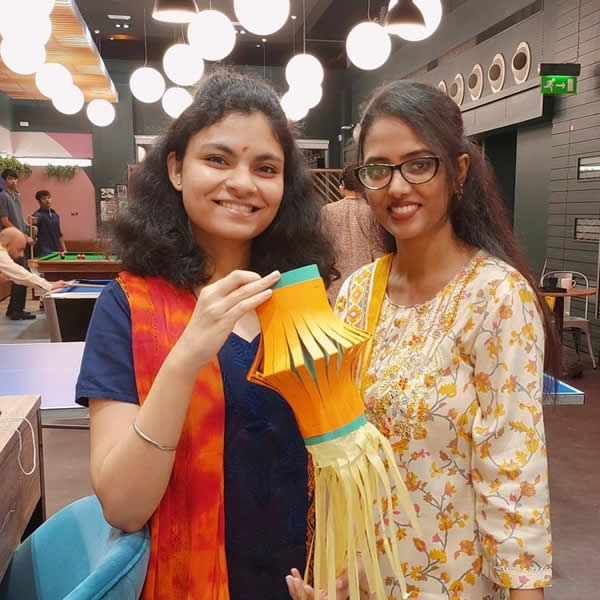
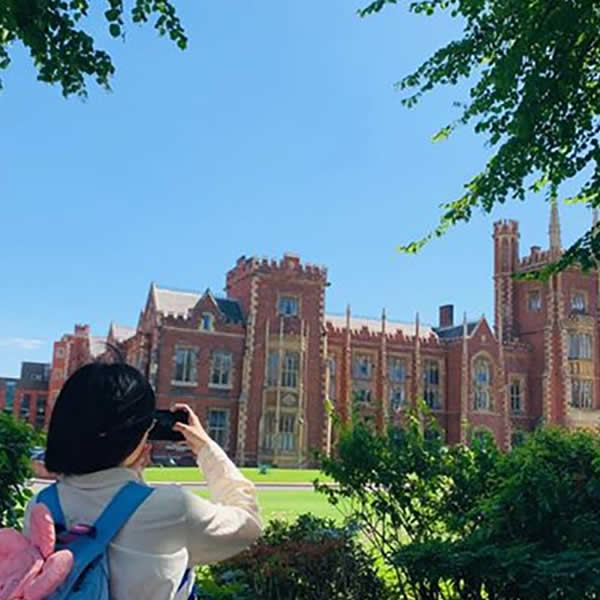
Hear what our students love about living here and tips on what to bring, what you can expect and how to make friends.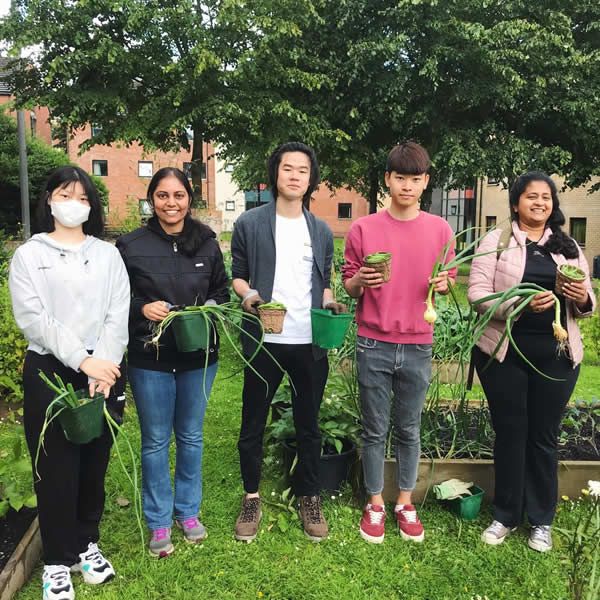




Careers
Career Prospects
Introduction
Studying for a Geography degree at Queen’s develops core skills and employment-related experiences that are valued by employers, professional organisations and academic institutions.
Some graduates pursue careers in geography-related areas such as urban and rural planning, environmental conservation and management, careers in GIS and teaching. A significant number develop careers in a wide range of other sectors, e.g. management, marketing, NGOs, financial services, the civil service (especially land and property, environment, and development agencies), computing (especially using geographic data). Our two postgraduate degrees, MA Geopolitics and MSc Climate Change, are popular with geography graduates.
We regularly consult and develop links with a large number of employers including the NI Environment Agency, Ordnance Survey, the National Trust, Land and Property Services and the Geological Survey of NI (GSNI), who provide advice on our programmes and in-depth careers sessions on their work.
We offer a designated ‘Geography and Employability’ module that is run in collaboration with QUB’s Careers, Employability and Skills directorate. This includes employer workshops, job application skills development, and one-to-one meetings with tutors and careers professionals.
At level 3, students are given the option to take a year long Civic Engagement module where students are given an opportunity via a placement to apply the knowledge, experience and skills you have acquired in your studies to an issue facing a government agency or non-profit organisation. Students then gain valuable experience collaborating with a range of organisations.
Prizes and Awards
Prizes are available for student attainment, e.g. for best academic performance in Year 1, 2, and best dissertation at Year 3. Final-year dissertations of exceptional quality are submitted to competitions organised by the Royal Geographical Society.
">
How to Apply
Apply using our online Queen's Portal and follow the step-by-step instructions on how to apply.
Terms and Conditions
The terms and conditions that apply when you accept an offer of a place at the University on a taught programme of study.
Queen's University Belfast Terms and Conditions.