- professional-nursing-adult-nursing-bsc-b74a
- anthropology-sociology-ba
- chemistry-study-abroad-mchem-f106
- irish-history-ba-qv51
- professional-nursing-children-young-people-bsc-b73a
- dentistry-bds-a200
- midwifery-bsc-b720
- professional-nursing-learning-disabilities-nursing-bsc-b761
- professional-nursing-mental-health-nursing-bsc-b760
- professional-nursing-children-young-people-bsc-b730
- professional-nursing-adult-nursing-bsc-b740
- medicine-mb-a100
- computer-science-meng-g402
- business-information-technology-incl-professional-experience-bsc-gn51
- software-engineering-placement-meng-g605
- computer-science-incl-professional-experience-meng-g405
- software-engineering-meng-g602
- data-science-year-professional-experience-bsc-g420
- software-engineering-placement-beng-g604
- modern-languages-business-ba
- social-work-relevant-degree-entry-bsw-l501
- social-work-bsw-l500
- criminology-sociology-ba-ml93
- psychology-bsc-c800
- spanish-ba-r410
- spanish-portuguese-ba-rr45
- criminology-ba-m900
- social-policy-sociology-ba-ll43
- sociology-ba-l300
- criminology-social-policy-ba-ml94
- pharmaceutical-biotechnology-sandwich-bsc-b213
- pharmaceutical-sciences-sandwich-bsc-b211
- pharmaceutical-biotechnology-bsc-b212
- pharmacy-mpharm-b230
- politics-sociology-ba-ll23
- politics-philosophy-economics-ba-lv00
- politics-spanish-ba-lr24
- politics-ba-l200
- pharmaceutical-sciences-bsc-b210
- accounting-major-french-bsc-n4r1
- accounting-major-spanish-bsc-n4r4
- actuarial-science-risk-management-bsc-n323
- advanced-accounting-placement-macc-n400
- aerospace-engineering-beng-h400
- aerospace-engineering-meng-h402
- aerospace-engineering-sandwich-beng-h404
- aerospace-engineering-sandwich-meng-h405
- agricultural-sciences-bsc-d700
- agricultural-sciences-bsc-d704
- anthropology-archaeology-ba-lv64
- anthropology-ba-l600
- anthropology-english-ba-ql36
- anthropology-french-ba-rl16
- anthropology-history-ba-vl16
- anthropology-international-relations-ba-ll6f
- anthropology-irish-ba-ql56
- anthropology-philosophy-ba-lv65
- anthropology-politics-ba-ll62
- anthropology-spanish-ba-lr64
- applied-mathematics-physics-bsc-gf13
- applied-mathematics-physics-msci-gfc3
- archaeology-ba-v402
- archaeology-french-ba-v4r1
- archaeology-history-ba-vv41
- archaeology-irish-ba-vq45
- archaeology-portuguese-ba-v4r5
- archaeology-spanish-ba-v4r4
- archaeologypalaeoecology-bsc-v400
- archaeologypalaeoecology-geography-bsc-vf48
- architecture-bsc-k100
- audio-engineering-bsc-j930
- biochemistry-bsc-c700
- biochemistry-bsc-c704
- biochemistry-msci-c702
- biochemistry-msci-c705
- biological-sciences-bsc-c100
- biological-sciences-bsc-c104
- biological-sciences-msci-c102
- biological-sciences-msci-c105
- biomedical-science-bsc-b940
- business-economics-bsc-l110
- business-management-placement-bsc-n202
- chemical-engineering-beng-h800
- chemical-engineering-meng-h802
- chemical-engineering-year-industry-meng-h805
- chemistry-bsc-f100
- chemistry-mchem-f105
- chemistry-year-industry-bsc-f104
- chemistry-year-industry-mchem-f107
- civil-engineering-beng-h200
- civil-engineering-meng-h202
- civil-engineering-year-industry-beng-h204
- civil-engineering-year-industry-meng-h205
- computer-engineering-beng-gh6p
- computer-engineering-meng-gh6q
- computer-engineering-year-industry-beng-gh67
- computer-engineering-year-industry-meng-gh68
- computer-science-professional-experience-bsc-g400
- computing-information-technology-incl-professional-experience-bsc-gg45
- drama-ba-w400
- drama-english-ba-wq43
- economics-accounting-bsc-ln14
- economics-bsc-l100
- economics-major-finance-bsc-l1n3
- economics-major-french-bsc-l1r1
- economics-major-spanish-bsc-l1r4
- education-studies-ba-x200
- education-studies-social-policy-ba-xl24
- education-studies-sociology-ba-xl23
- electrical-electronic-engineering-beng-h600
- electrical-electronic-engineering-meng-h602
- electrical-electronic-engineering-sandwich-beng-h604
- electrical-electronic-engineering-sandwich-meng-h605
- english-ba-q300
- english-creative-writing-ba-q3w8
- english-film-studies-ba-qw36
- english-french-ba-qr31
- english-history-ba-qv31
- english-irish-ba-qq53
- english-linguistics-ba-qq31
- english-philosophy-ba-qv35
- english-politics-ba-ql32
- english-sociology-ba-ql33
- english-spanish-ba-qr34
- environmental-civil-engineering-meng-h252
- environmental-civil-engineering-year-industry-meng-h255
- environmental-management-bsc-f850
- environmental-management-bsc-f854
- european-planning-mplan-k490
- film-studies-production-ba-w600
- film-theatre-making-ba-ww65
- finance-year-industry-bsc-n300
- financial-risk-management-year-industry-bsc-n390
- food-science-nutrition-bsc-bdk6
- food-science-nutrition-bsc-db6k
- food-science-nutrition-msci-bd46
- food-science-nutrition-msci-db64
- french-ba-r120
- french-history-ba-rv11
- french-international-relations-ba-rlc2
- french-irish-ba-qr51
- french-politics-ba-rl12
- french-portuguese-ba-rr15
- french-spanish-ba-rr14
- games-technologies-bsc-g455
- geography-ba-l800
- geography-bsc-f800
- geography-language-bsc-f8rx
- history-ba-v140
- history-international-relations-ba-lv21
- history-philosophy-ba-vv1m
- history-politics-ba-vl12
- history-sociology-ba-vl13
- history-spanish-ba-rv41
- human-biology-bsc-b100
- international-business-major-french-bsc-n1r1
- international-business-major-german-bsc-n2r2
- international-business-major-mandarin-bsc-n1r9
- international-business-major-portuguese-bsc-n2r5
- international-business-major-spanish-bsc-n1r4
- international-relations-conflict-studies-ba-l253
- international-relations-irish-ba-lqf5
- international-relations-politics-ba-l290
- international-relations-spanish-ba-lrf4
- irish-ba-q504
- irish-broadcast-production-ba-qp53
- irish-politics-ba-ql52
- irish-portuguese-ba-qr55
- irish-spanish-ba-qr54
- law-llb-m100
- law-major-french-llb-m2r1
- law-major-irish-llb-m2q5
- law-major-politics-llb-m1l2
- law-major-spanish-llb-m2r4
- law-senior-status-llb-m101
- liberal-arts-blibarts-y301
- liberal-arts-mlibarts-y300
- marine-biology-bsc-c160
- marine-biology-bsc-c164
- marine-biology-msci-c162
- marine-biology-msci-c165
- mathematics-bsc-g100
- mathematics-computer-science-bsc-gg41
- mathematics-computer-science-msci-ggk1
- mathematics-finance-bsc-g1n3
- mathematics-french-bsc-g1r1
- mathematics-mmath-g103
- mathematics-spanish-bsc-g1r4
- mathematics-statistics-op-research-bsc-gg13
- mathematics-statistics-op-research-mmath-ggc3
- mechanical-engineering-beng-h300
- mechanical-engineering-meng-h303
- mechanical-engineering-sandwich-beng-h304
- mechanical-engineering-sandwich-meng-h305
- media-broadcast-production-ba-p310
- medicinal-chemistry-bsc-f150
- medicinal-chemistry-mchem-f15a
- medicinal-chemistry-year-industry-bsc-f154
- medicinal-chemistry-year-industry-mchem-f15c
- microbiology-bsc-c500
- microbiology-bsc-c504
- microbiology-msci-c502
- microbiology-msci-c505
- music-audio-production-ba-w374
- music-bmus-w302
- music-performance-ba-w310
- music-sound-design-ba-w371
- philosophy-ba-v500
- philosophy-politics-ba-vlm2
- physics-astrophysics-bsc-f3f5
- physics-astrophysics-mphys-f3fm
- physics-bsc-f300
- physics-french-bsc-f3r1
- physics-french-mphys-f3rc
- physics-medical-applications-bsc-f3b9
- physics-medical-applications-mphys-f3bx
- physics-mphys-f303
- physics-spanish-bsc-f3r4
- physics-spanish-mphys-f3rq
- planning-environment-development-bsc-k430
- structural-engineering-architecture-meng-h2k1
- structural-engineering-architecture-year-industry-meng-h2kc
- theoretical-physics-bsc-f340
- theoretical-physics-mphys-f344
- veterinary-biosciences-bsc-d300
- veterinary-biosciences-bsc-d304
- veterinary-biosciences-msci-d302
- veterinary-biosciences-msci-d305
- zoology-bsc-c300
- zoology-bsc-c301
- zoology-msci-c302
- zoology-msci-c305
MEng | Postgraduate Taught
Computer Science
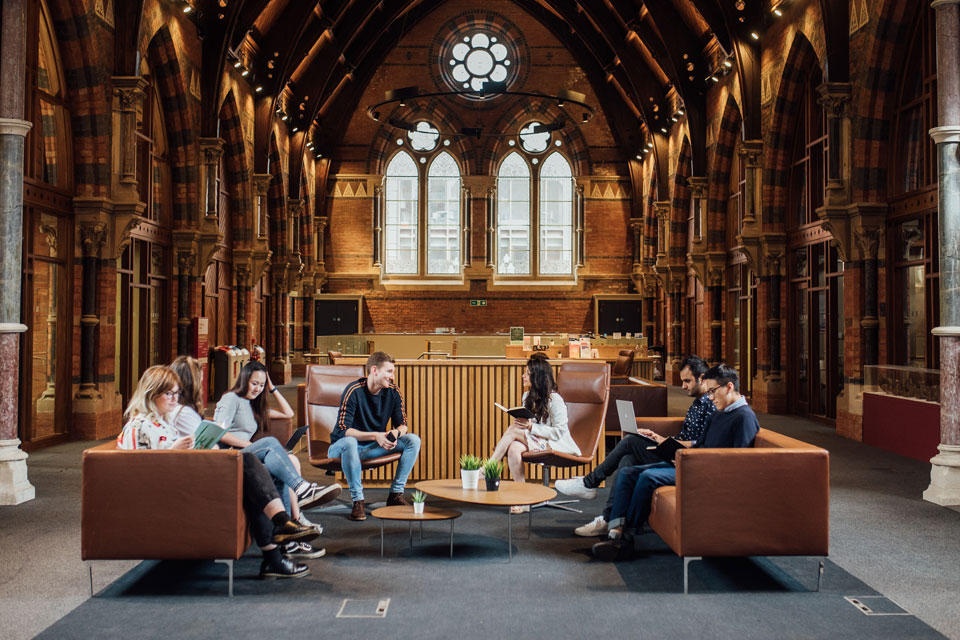
From driving cancer research forward to accurately predicting the weather, Computer Scientists are powering progress. In fact everything from social care to cybersecurity or even space travel, relies on the talents of Computer Science graduates. We would say the sky is the limit, but we’re already well beyond that!
A degree in Computer Science teaches you to approach technical problems creatively. It also gives you the information and understanding to find ground-breaking solutions to the world’s emerging problems. The course will also equip you with the practical skills to approach the specification, design, construction and use of computer systems.
In an ever changing technological climate, the Computer Science degree programme is constantly evolving to anticipate emerging digital breakthroughs. You will cover topics like machine learning, augmented reality and data analytics, but also receive a grounding in skills like hardware architecture, software engineering and simulation & modelling too.
Employer experience is paramount in this this course, from day one you will learn from prospective employers about ‘real world’ challenges. Industry placements, company sponsored hackathons and project based learning form a core part of the curriculum and vastly improve our graduate employability rates.
Course highlights
Internationally Renowned Experts
The School has a number of very strong research groups engaged in leading edge technology. Major new research centres have been established in Secure Information Technologies (the UK Centre of Excellence), Electronics, Telecommunications and Information Technology (ECIT), e-Science and in Sonic Arts.
Student Experience
Due to the high demand for Computer Science graduates, some 15–20 scholarships are available, including some sponsored by Civica, Citi and Liberty IT, worth up to £25k. All provide for a cash stipend each academic year, a guaranteed industrial placement, an opportunity for additional
part-time work during the academic year, plus the opportunity of a permanent position on graduation.
(For further information on these and other scholarships available, see the School Website.)
Niamh Cassidy (Computer Science)
Attraction to QUB
Originally, I used all my UCAS choices to apply to different courses, at different universities. Then my school brought us to Queen’s for an open day and I was impressed by the beautiful Lanyon, Student’s Union and the overall buzz of a city campus. Even when I attended interviews elsewhere, I was never won over as much as I was at Queen’s. A few months before exams I declined all my UCAS offers and used their ‘Extra’ service to apply to one more course. I had no backup option so thankfully I got accepted!
Positive Experience during studies
Joining the Queen’s Computing Society committee! I have had so many positive experiences because I joined this society, from being able to organise hackathons and formals, to meeting some of my closest friends! One incredibly positive experience I had was being elected their Vice President in second year.
Placement
I’m currently in the middle of my placement with Oracle, Belfast. So far, it’s been a great experience! Gaining an insight into how a large technology corporation operates on a global scale, has been really interesting and given me the opportunity to work with people from different countries and backgrounds. Being able to expand on what I studied at university, in a professional context, has been invaluable and has definitely boosted my confidence before returning to final year.
Engaging in extracurricular activities
Besides Queen’s Computing Society, I’ve also taken part in the Code First Girls web development course, undertaken Leadership training, explored Smart Tech with the Lego Lab and Virtual Reality through Experience Computing nights. I also enjoy attending the Careers and Go Global fairs, which is how I ended up working in the USA last summer as a 3D Printing instructor.
One piece of advice to potential EEECS applicants
Be open to every opportunity and get involved outside of your course. Make the most out of your time at university! Whether that’s through joining a club or society, applying for a summer scheme, or attending events. Demonstrating an interest in computing outside of your course is also beneficial for future interviews as well.
Going Forward
After placement, I want to make the most out of my final year and graduate with the best grade I can. After that, I don’t think I’ve decided! Fortunately, Computer Science has opened so many doors for me, there are lots of routes to go down. At the minute, I'm considering returning to my placement company as a Graduate, or applying to Software Engineering positions within the UK and further afield.
If you had a time machine, and could go back to your first day at Queen’s, what would you do differently? (if anything!)
Not much! I think I would just enjoy doing it all again!
- Start Date
- September 2027
- Duration
- 4 years (Full-time)
- Places Available
- tbc (Full Time)
Course Structure
0
Introduction
These degrees aim to teach the fundamental principles of Computer Science, together with the necessary skills, tools and techniques to enable our graduates to embark on careers as professional software engineers, or to become suitably qualified to undertake research in Computer Science. As with all of our courses, industrial engagement forms an integral part, balancing academic theory with practical learning.
Single Honours BEng/BSc students spend a year on a paid, full-time placement - the School has links with over 500 local, national and international employers, eg BT, Liberty IT, Asidua, Kainos (Belfast), IBM (England), Microsoft, Sun Microsystems (Dublin), Fujitsu (Japan) and Siemens (Germany), and students are assisted in obtaining placements.
The programme contains the following themes which may change due to the nature of the IT Industry and keeping up with industrial trends.
Stage 1
The first year gives solid foundational knowledge around core topics in computer science, topics covered may include:
Reasons for Problem Solving
Introduction to Software Engineering
Foundations of Computing Systems
Databases
Programming
Stage 2
In the second year you will continue to build on more knowledge and take modules which will expand into more in depth topics such as:
Professional Computing Practice
Architecture and Networks
Data Structures Algorithms and Programming Languages
Information Modelling
Software Development
Theory of Computation
Stage 3
At stage 3 you will have some choice on topics as you begin to specialise in your chosen interests. Some of the topic areas which may be available include:
Formal Methods
Artificial Intelligence
Concurrent Programming
Cloud Computing
Stage 4
This is a four-year extended degree, established to provide a supply of particularly well-qualified graduates who will become industry leaders. It contains a blend of Computer Science knowledge and skills and business practice and management, as well as skills in conducting state-of-the-art research. Students have the option of a year's professional experience in industry.
The first two years and much of Year 3 are common with the BSc/BEng degree. Transfer to the MEng is possible for selected students at the end of Stage 2, subject to performance.
In the final (MEng stage 4 year) you will be studying advanced modules which cover technical issues to a deep level of detail alongside completing a large independent project. Such specialisms are constantly under review but example topics available may include:
Advanced Software Engineering
High Performance Computing
Advanced Computer Engineering
-
People Teaching You
-
Contact Teaching Hours
Large Group Teaching
9 (hours maximum)
9 hours of lectures -
Learning and Teaching
The School has a world class reputation for research and provides excellent facilities, including access to major new research centres in Secure Information Technologies, Electronics, Communications and Information Technology and Sonic Arts. A number of modules on the course are closely linked to the research expertise of these centres and evolve and change rapidly to reflect some of the current, emerging and exciting developments in the field.
At Queen’s, we aim to deliver a high quality learning environment that embeds intellectual curiosity, innovation and best practice in learning, teaching and student support to enable student to achieve their full academic potential.
The MEng in Computer Science provides a range of learning experiences which enable students to engage with subject experts, develop attributes and perspectives that will equip them for life and work in a global society and make use of innovative technologies and a world class library that enhances their development as independent, lifelong learners. Examples of the opportunities provided for learning on this course are:Additional Information
Students have access to a wide range of computers in world class laboratories (equipped with several hundred PCs) and specialised software packages. Networks link the School and university computers to powerful machines in Great Britain.
-
Assessment
Details of assessments associated with this course are outlined below:
- The way in which you are assessed will vary according to the Learning objectives of each module. Some modules are assessed solely through project work or written assignments. Others are assessed through a combination of coursework and end of semester examinations. Details of how each module is assessed are shown in the Student Handbook which is provided to all students during their first year induction.

Modules
The information provided in this Course Finder reflects the module details for the current year of study (2025/26). Please note that modules are subject to annual review and changes may occur in response to various factors, including student feedback and academic developments. Prospective students will be notified of any significant changes to module offerings before the start of the new academic year.
Entrance requirements
A-level
AAB including at least one preferred A-level (see list below) + GCSE Mathematics grade C/4
OR
AAA including at least one relevant A-level (see list below) + GCSE Mathematics grade C/4
A maximum of one BTEC/OCR Single Award or AQA Extended Certificate will be accepted as part of an applicant's portfolio of qualifications with a Distinction* being equated to a grade A at A-level and a Distinction being equated to a grade B at A-level.
Irish Leaving Certificate
H2H3H3H3H3H3 including at least one preferred Leaving Certificate subject at grade H3 (see list below) + Ordinary Level grade O4 in Mathematics if not offered at Higher Level
OR
H2H2H3H3H3H3 including at least one relevant Leaving Certificate subject at grade H3 (see list below) + Ordinary Level grade O4 in Mathematics
International Baccalaureate Diploma
34 points overall including 6,6,5 at Higher Level to include at least one preferred Higher Level subject (see list below)
OR
36 points overall including 6,6,6 at Higher Level to include at least one relevant Higher Level subject (see list below)
If not offered at Higher Level/GCSE then Standard Level grade 4 in English and Mathematics would be accepted.
BTEC Level 3 Extended/National Extended Diploma
A relevant computing QCF Level 3 BTEC Extended Diploma (180 credits), with D*D*D + GCSE Mathematics grade C/4.
OR
A relevant computing RQF Level 3 BTEC National Extended Diploma (1080 Guided Learning Hours (GLH)), with D*D*D + GCSE Mathematics grade C/4.
OR
A relevant engineering or scientific QCF Level 3 BTEC Extended Diploma (180 credits), with D*D*D* + GCSE Mathematics grade C/4.
OR
A relevant engineering or scientific RQF Level 3 BTEC National Extended Diploma (1080 Guided Learning Hours (GLH)), with D*D*D* + GCSE Mathematics grade C/4.
Graduate
A minimum of a 2:1 Honours Degree, provided that subject specific requirements are met
Note
All applicants must have GCSE English Language grade C/4 or an equivalent qualification acceptable to the University.
Computer Science, Computing Information Technology and Software Engineering share a common core of modules in the first year, so students may therefore transfer between these degrees at the end of first year, subject to meeting the normal progression requirements.
Preferred subjects: Mathematics, Computing or Software Systems Development
Relevant subjects: Chemistry, Digital Technology, ICT, Physics, Technology and Design or Double Award Applied ICT
Further information
Applicants for the MEng degree will automatically be considered for admission to the BSc degree if they are not eligible for entry to the MEng degree both at initial offer making stage and when results are received.
-
How we choose our students
In addition, to the entrance requirements above, it is essential that you read our guidance below on 'How we choose our students' prior to submitting your UCAS application.
Applications are dealt with centrally by the Admissions and Access Service rather than by the School of Electronics, Electrical Engineering and Computer Science. Once your application has been processed by UCAS and forwarded to Queen's, an acknowledgement is normally sent within two weeks of its receipt at the University.
Selection is on the basis of the information provided on your UCAS form, which is considered by a member of administrative staff from the Admissions and Access Service and, if appropriate, the Selector from the School. Decisions are made on an ongoing basis and will be notified to you via UCAS. These decisions can only be made on the basis of the information given and applicants must show due care and diligence when completing their applications. In particular, full details must be included about qualifications completed or still to be completed.
For entry last year, applicants must have had, or been able to achieve, a minimum of six GCSE passes at grade B/6 or better though this profile may change from year to year depending on the demand for places. Applicants must have GCSE passes at grade C/4 or better in English Language and Mathematics. The Selector also checks that any specific entry requirements in terms of GCSE and/or A-level subjects can be fulfilled.
Offers are normally made on the basis of three A-levels. Two subjects at A-level plus two at AS would also be considered.
The offer for repeat candidates is normally the same as the offer for first time applicants. For repeat applicants acceptable grades may be held from the previous year.
A-level General Studies and A-level Critical Thinking are not normally considered as part of a three A-level offer and, although they may be excluded where an applicant is taking 4 A-level subjects, the grade achieved could be taken into account if necessary in August/September.
Applicants offering other qualifications, such as the International Baccalaureate, BTEC Extended Diploma or Irish Leaving Certificate, will also be considered. The same GCSE profile is usually expected of those candidates offering other qualifications.
The information provided in the personal statement section and the academic reference together with predicted grades are noted but these are not the final deciding factors in whether or not a conditional offer can be made. However, they may be reconsidered in a tie break situation in August.
Applicants are not normally asked to attend for interview.
Applicants who apply for the MEng degree will automatically be reconsidered for the BSc course if they are not eligible for entry to the MEng degree, both at initial offer-making stage and when results are received. Applicants will be offered a place on the BSc course, provided that they satisfy the normal entry requirements for admission to the BSc course.
If you are made an offer then you may be invited to an Open Day, which is usually held during the second semester. This will allow you the opportunity to visit the University and to find out more about the degree programme of your choice; the facilities on offer. It also gives you a flavour of the academic and social life at Queen's.
If you cannot find the information you need here, please contact the University Admissions and Access Service (admissions@qub.ac.uk), giving full details of your qualifications and educational background. -
International Students
Our country/region pages include information on entry requirements, tuition fees, scholarships, student profiles, upcoming events and contacts for your country/region. Use the dropdown list below for specific information for your country/region.
International students wishing to apply to Queen's University Belfast (and for whom English is not their first language), must be able to demonstrate their proficiency in English in order to benefit fully from their course of study or research. Non-EEA nationals must also satisfy UK Visas and Immigration (UKVI) immigration requirements for English language for visa purposes.
For more information on English Language requirements for EEA and non-EEA nationals see: www.qub.ac.uk/EnglishLanguageReqs.
If you need to improve your English language skills before you enter this degree programme, Queen's University Belfast International Study Centre offers a range of English language courses. These intensive and flexible courses are designed to improve your English ability for admission to this degree.
- Academic English: an intensive English language and study skills course for successful university study at degree level
- Pre-sessional English: a short intensive academic English course for students starting a degree programme at Queen's University Belfast and who need to improve their English.
Fees and funding
All tuition fees quoted relate to a single year of study unless stated otherwise. Tuition fees will be subject to an annual inflationary increase, unless explicitly stated otherwise.
Northern Ireland (NI) 1
£4,985
Republic of Ireland (ROI) 2
£4,985
England, Scotland or Wales (GB) 1
£9,535
EU Other 3
£26,600
1EU citizens in the EU Settlement Scheme, with settled status, will be charged the NI or GB tuition fee based on where they are ordinarily resident. Students who are ROI nationals resident in GB will be charged the GB fee.
2 EU students who are ROI nationals resident in ROI are eligible for NI tuition fees.
3 EU Other students (excludes Republic of Ireland nationals living in GB, NI or ROI) are charged tuition fees in line with international fees.
-
Additional course costs
All Students
Depending on the programme of study, there may be extra costs which are not covered by tuition fees, which students will need to consider when planning their studies.
Students can borrow books and access online learning resources from any Queen's library. If students wish to purchase recommended texts, rather than borrow them from the University Library, prices per text can range from £30 to £100. Students should also budget between £30 to £75 per year for photocopying, memory sticks and printing charges.
Students undertaking a period of work placement or study abroad, as either a compulsory or optional part of their programme, should be aware that they will have to fund additional travel and living costs.
If a programme includes a major project or dissertation, there may be costs associated with transport, accommodation and/or materials. The amount will depend on the project chosen. There may also be additional costs for printing and binding.
Students may wish to consider purchasing an electronic device; costs will vary depending on the specification of the model chosen.
There are also additional charges for graduation ceremonies, examination resits and library fines.
-
How do I fund my study?
The Department for the Economy will provide a tuition fee loan of up to £6,500 per NI / EU student for postgraduate study. Tuition fee loan information.
A postgraduate loans system in the UK offers government-backed student loans of up to £11,836 for taught and research Masters courses in all subject areas (excluding Initial Teacher Education/PGCE, where undergraduate student finance is available). Criteria, eligibility, repayment and application information are available on the UK government website.
More information on funding options and financial assistance - please check this link regularly, even after you have submitted an application, as new scholarships may become available to you.
-
International Scholarships
Information on scholarships for international students, is available at www.qub.ac.uk/Study/international-students/international-scholarships.
Why study at Queen's?
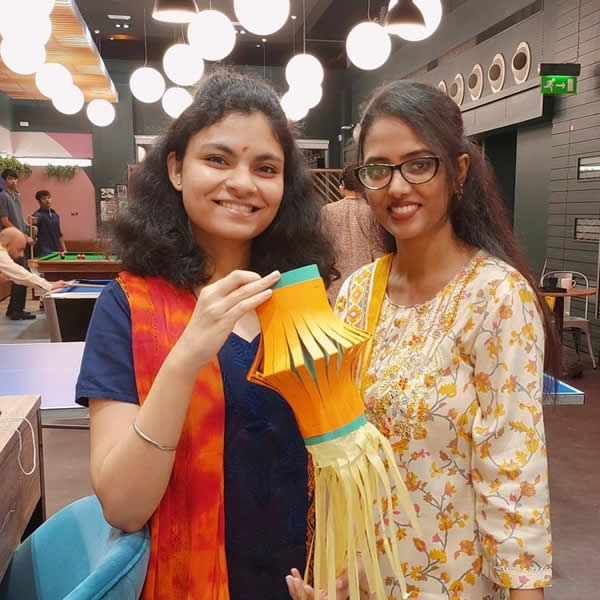
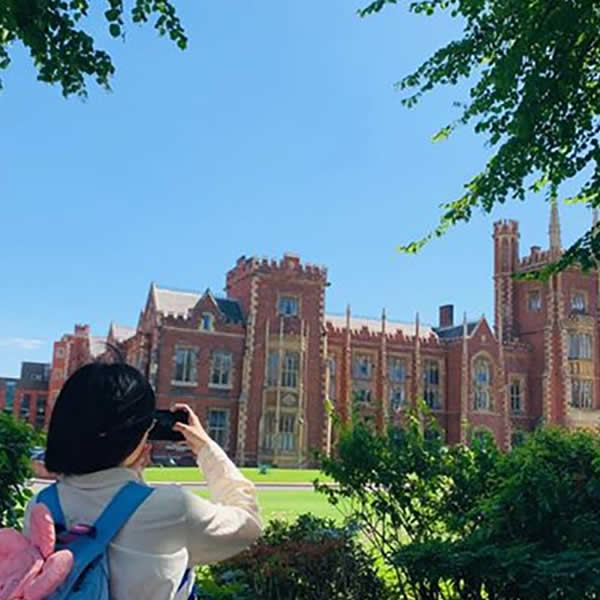
Hear what our students love about living here and tips on what to bring, what you can expect and how to make friends.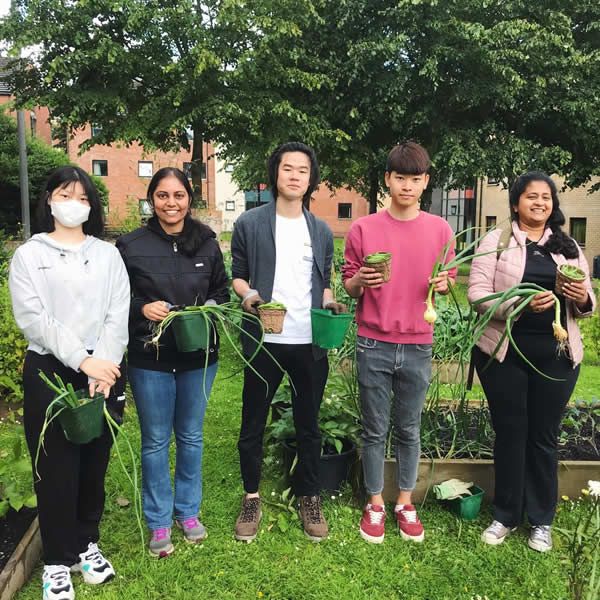




Careers
Career Prospects
Introduction
Studying for a Computer Science degree at Queen’s will assist you in developing the core skills and employment-related experiences that are valued by employers, professional organisations and academic institutions. Graduates from this degree at Queen’s are well regarded by employers (local, national and international).
Consultations
We regularly consult and develop links with a large number of employers including, for example, Liberty IT and Asidua who provide sponsorship for our Computer Science degree as well as Citi and Kainos who are members of the employer liaison panel for the course.
Employer Links
The School has links with over 500 IT companies both here and abroad. We benefit from the fact that there are more software companies located in N Ireland than any other part of the UK, outside of London. This offers benefits on many levels for our students, from industrial input to the content of our courses, through to year long and summer placements as well as activities such as competitions organised by the companies etc.
You should also take a look at www.prospects.ac.uk for further information concerning the types of jobs that attract Computer Science Graduates.
Further study is also an option open to Computer Science graduates. Students can choose from a wide range of Masters programmes as well as a comprehensive list of research topics, see the School website www.qub.ac.uk/eeecs for more information.
Northern Ireland has an excellent international reputation for the quality and supply of its software engineers. Indeed many companies, both national and international, have opted for Northern Ireland as a base for their computing divisions in recognition of the high quality of graduates produced by the local universities.
Given this situation, it is not surprising that our graduates have had unparalleled job opportunities over the years, both locally and internationally. Because of the achievements of Queen's graduates already in the software engineering profession, a Computer Science degree from Queen's is a highly respected qualification. A good Honours degree in Computer Science from Queen's is of great benefit in seeking the best jobs.
Employers, from large multinational firms to small local organisations, actively target our students, recognising that Queen's Computer Science graduates are equipped with the skills they need. On graduating the majority of graduates take up posts associated with software design and implementation. Opportunities exist in fields as diverse as finance, games, pharmaceuticals, healthcare, research, consumer products, and public services - virtually all areas of business. Some of the employers include BT, Liberty IT, Kainos, Accenture, Citi, Wombat Financial Software.
The types of career open to Computer Science graduates include: Software Engineer; Systems Analyst; Web Designer; Games Developer; Systems Developer; IT Consultant; Project Manager.
Other Career-related information
Queen’s is a member of the Russell Group and, therefore, one of the 20 universities most-targeted by leading graduate employers. Queen’s students will be advised and guided about career choice and, through the Degree Plusinitiative, will have an opportunity to seek accreditation for skills development and experience gained through the wide range of extra-curricular activities on offer. See Queen’s University Belfast fullEmployability Statementfor further information.
Degree Plus and other related initiatives
Recognising student diversity, as well as promoting employability enhancements and other interests, is part of the developmental experience at Queen’s. Students are encouraged to plan and build their own, personal skill and experiential profile through a range of activities including; recognised Queen’s Certificates, placements and other work experiences (at home or overseas), Erasmus study options elsewhere in Europe, learning development opportunities and involvement in wider university life through activities, such as clubs, societies, and sports.
Queen’s actively encourages this type of activity by offering students an additional qualification, the Degree Plus Award (and the related Researcher Plus Award for PhD and MPhil students). Degree Plus accredits wider experiential and skill development gained through extra-curricular activities that promote the enhancement of academic, career management, personal and employability skills in a variety of contexts. As part of the Award, students are also trained on how to reflect on the experience(s) and make the link between academic achievement, extracurricular activities, transferable skills and graduate employment. Participating students will also be trained in how to reflect on their skills and experiences and can gain an understanding of how to articulate the significance of these to others, e.g. employers.
Overall, these initiatives, and Degree Plus in particular, reward the energy, drive, determination and enthusiasm shown by students engaging in activities over-and-above the requirements of their academic studies. These qualities are amongst those valued highly by graduate employers.
www.prospects.ac.uk
“Every year, Liberty IT employs about 20 placement students, many of whom come from Queen’s. The standard of these students is very high, which is evidenced by the conversion rate to Graduate Software Engineers within the company once they graduate – this year it was 100%.”
Liberty IT
">
How to Apply
Apply using our online Queen's Portal and follow the step-by-step instructions on how to apply.
Terms and Conditions
The terms and conditions that apply when you accept an offer of a place at the University on a taught programme of study.
Queen's University Belfast Terms and Conditions.