- professional-nursing-adult-nursing-bsc-b74a
- anthropology-sociology-ba
- chemistry-study-abroad-mchem-f106
- irish-history-ba-qv51
- professional-nursing-children-young-people-bsc-b73a
- dentistry-bds-a200
- midwifery-bsc-b720
- professional-nursing-learning-disabilities-nursing-bsc-b761
- professional-nursing-mental-health-nursing-bsc-b760
- professional-nursing-children-young-people-bsc-b730
- professional-nursing-adult-nursing-bsc-b740
- medicine-mb-a100
- computer-science-meng-g402
- business-information-technology-incl-professional-experience-bsc-gn51
- software-engineering-placement-meng-g605
- computer-science-incl-professional-experience-meng-g405
- software-engineering-meng-g602
- data-science-year-professional-experience-bsc-g420
- software-engineering-placement-beng-g604
- modern-languages-business-ba
- social-work-relevant-degree-entry-bsw-l501
- social-work-bsw-l500
- criminology-sociology-ba-ml93
- psychology-bsc-c800
- spanish-ba-r410
- spanish-portuguese-ba-rr45
- criminology-ba-m900
- social-policy-sociology-ba-ll43
- sociology-ba-l300
- criminology-social-policy-ba-ml94
- pharmaceutical-biotechnology-sandwich-bsc-b213
- pharmaceutical-sciences-sandwich-bsc-b211
- pharmaceutical-biotechnology-bsc-b212
- pharmacy-mpharm-b230
- politics-sociology-ba-ll23
- politics-philosophy-economics-ba-lv00
- politics-spanish-ba-lr24
- politics-ba-l200
- pharmaceutical-sciences-bsc-b210
- accounting-major-french-bsc-n4r1
- accounting-major-spanish-bsc-n4r4
- actuarial-science-risk-management-bsc-n323
- advanced-accounting-placement-macc-n400
- aerospace-engineering-beng-h400
- aerospace-engineering-meng-h402
- aerospace-engineering-sandwich-beng-h404
- aerospace-engineering-sandwich-meng-h405
- agricultural-sciences-bsc-d700
- agricultural-sciences-bsc-d704
- anthropology-archaeology-ba-lv64
- anthropology-ba-l600
- anthropology-english-ba-ql36
- anthropology-french-ba-rl16
- anthropology-history-ba-vl16
- anthropology-international-relations-ba-ll6f
- anthropology-irish-ba-ql56
- anthropology-philosophy-ba-lv65
- anthropology-politics-ba-ll62
- anthropology-spanish-ba-lr64
- applied-mathematics-physics-bsc-gf13
- applied-mathematics-physics-msci-gfc3
- archaeology-ba-v402
- archaeology-french-ba-v4r1
- archaeology-history-ba-vv41
- archaeology-irish-ba-vq45
- archaeology-portuguese-ba-v4r5
- archaeology-spanish-ba-v4r4
- archaeologypalaeoecology-bsc-v400
- archaeologypalaeoecology-geography-bsc-vf48
- architecture-bsc-k100
- audio-engineering-bsc-j930
- biochemistry-bsc-c700
- biochemistry-bsc-c704
- biochemistry-msci-c702
- biochemistry-msci-c705
- biological-sciences-bsc-c100
- biological-sciences-bsc-c104
- biological-sciences-msci-c102
- biological-sciences-msci-c105
- biomedical-science-bsc-b940
- business-economics-bsc-l110
- business-management-placement-bsc-n202
- chemical-engineering-beng-h800
- chemical-engineering-meng-h802
- chemical-engineering-year-industry-meng-h805
- chemistry-bsc-f100
- chemistry-mchem-f105
- chemistry-year-industry-bsc-f104
- chemistry-year-industry-mchem-f107
- civil-engineering-beng-h200
- civil-engineering-meng-h202
- civil-engineering-year-industry-beng-h204
- civil-engineering-year-industry-meng-h205
- computer-engineering-beng-gh6p
- computer-engineering-meng-gh6q
- computer-engineering-year-industry-beng-gh67
- computer-engineering-year-industry-meng-gh68
- computer-science-professional-experience-bsc-g400
- computing-information-technology-incl-professional-experience-bsc-gg45
- drama-ba-w400
- drama-english-ba-wq43
- economics-accounting-bsc-ln14
- economics-bsc-l100
- economics-major-finance-bsc-l1n3
- economics-major-french-bsc-l1r1
- economics-major-spanish-bsc-l1r4
- education-studies-ba-x200
- education-studies-social-policy-ba-xl24
- education-studies-sociology-ba-xl23
- electrical-electronic-engineering-beng-h600
- electrical-electronic-engineering-meng-h602
- electrical-electronic-engineering-sandwich-beng-h604
- electrical-electronic-engineering-sandwich-meng-h605
- english-ba-q300
- english-creative-writing-ba-q3w8
- english-film-studies-ba-qw36
- english-french-ba-qr31
- english-history-ba-qv31
- english-irish-ba-qq53
- english-linguistics-ba-qq31
- english-philosophy-ba-qv35
- english-politics-ba-ql32
- english-sociology-ba-ql33
- english-spanish-ba-qr34
- environmental-civil-engineering-meng-h252
- environmental-civil-engineering-year-industry-meng-h255
- environmental-management-bsc-f850
- environmental-management-bsc-f854
- european-planning-mplan-k490
- film-studies-production-ba-w600
- film-theatre-making-ba-ww65
- finance-year-industry-bsc-n300
- financial-risk-management-year-industry-bsc-n390
- food-science-nutrition-bsc-bdk6
- food-science-nutrition-bsc-db6k
- food-science-nutrition-msci-bd46
- food-science-nutrition-msci-db64
- french-ba-r120
- french-history-ba-rv11
- french-international-relations-ba-rlc2
- french-irish-ba-qr51
- french-politics-ba-rl12
- french-portuguese-ba-rr15
- french-spanish-ba-rr14
- games-technologies-bsc-g455
- geography-ba-l800
- geography-bsc-f800
- geography-language-bsc-f8rx
- history-ba-v140
- history-international-relations-ba-lv21
- history-philosophy-ba-vv1m
- history-politics-ba-vl12
- history-sociology-ba-vl13
- history-spanish-ba-rv41
- human-biology-bsc-b100
- international-business-major-french-bsc-n1r1
- international-business-major-german-bsc-n2r2
- international-business-major-mandarin-bsc-n1r9
- international-business-major-portuguese-bsc-n2r5
- international-business-major-spanish-bsc-n1r4
- international-relations-conflict-studies-ba-l253
- international-relations-irish-ba-lqf5
- international-relations-politics-ba-l290
- international-relations-spanish-ba-lrf4
- irish-ba-q504
- irish-broadcast-production-ba-qp53
- irish-politics-ba-ql52
- irish-portuguese-ba-qr55
- irish-spanish-ba-qr54
- law-llb-m100
- law-major-french-llb-m2r1
- law-major-irish-llb-m2q5
- law-major-politics-llb-m1l2
- law-major-spanish-llb-m2r4
- law-senior-status-llb-m101
- liberal-arts-blibarts-y301
- liberal-arts-mlibarts-y300
- marine-biology-bsc-c160
- marine-biology-bsc-c164
- marine-biology-msci-c162
- marine-biology-msci-c165
- mathematics-bsc-g100
- mathematics-computer-science-bsc-gg41
- mathematics-computer-science-msci-ggk1
- mathematics-finance-bsc-g1n3
- mathematics-french-bsc-g1r1
- mathematics-mmath-g103
- mathematics-spanish-bsc-g1r4
- mathematics-statistics-op-research-bsc-gg13
- mathematics-statistics-op-research-mmath-ggc3
- mechanical-engineering-beng-h300
- mechanical-engineering-meng-h303
- mechanical-engineering-sandwich-beng-h304
- mechanical-engineering-sandwich-meng-h305
- media-broadcast-production-ba-p310
- medicinal-chemistry-bsc-f150
- medicinal-chemistry-mchem-f15a
- medicinal-chemistry-year-industry-bsc-f154
- medicinal-chemistry-year-industry-mchem-f15c
- microbiology-bsc-c500
- microbiology-bsc-c504
- microbiology-msci-c502
- microbiology-msci-c505
- music-audio-production-ba-w374
- music-bmus-w302
- music-performance-ba-w310
- music-sound-design-ba-w371
- philosophy-ba-v500
- philosophy-politics-ba-vlm2
- physics-astrophysics-bsc-f3f5
- physics-astrophysics-mphys-f3fm
- physics-bsc-f300
- physics-french-bsc-f3r1
- physics-french-mphys-f3rc
- physics-medical-applications-bsc-f3b9
- physics-medical-applications-mphys-f3bx
- physics-mphys-f303
- physics-spanish-bsc-f3r4
- physics-spanish-mphys-f3rq
- planning-environment-development-bsc-k430
- structural-engineering-architecture-meng-h2k1
- structural-engineering-architecture-year-industry-meng-h2kc
- theoretical-physics-bsc-f340
- theoretical-physics-mphys-f344
- veterinary-biosciences-bsc-d300
- veterinary-biosciences-bsc-d304
- veterinary-biosciences-msci-d302
- veterinary-biosciences-msci-d305
- zoology-bsc-c300
- zoology-bsc-c301
- zoology-msci-c302
- zoology-msci-c305
MEng | Postgraduate Taught
Civil Engineering
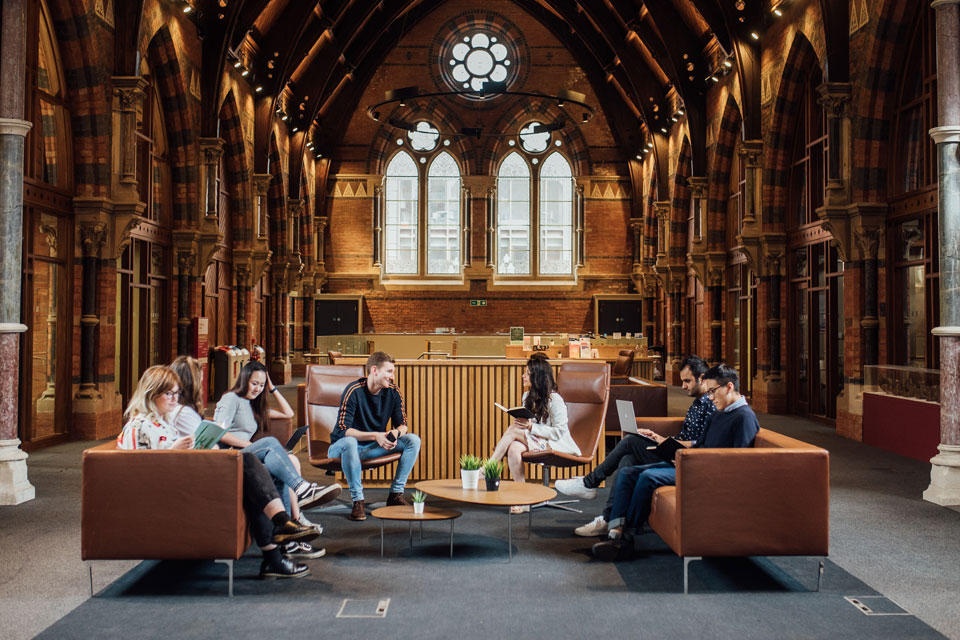
Civil Engineering at Queen’s concerns the planning, design, sustainability and management of our society’s infrastructure. It is a broad discipline taught by staff engaged in high quality industry-linked research rooted in environmental impact considerations. Fields of study include structures, foundations, water engineering and project management. You’ll be tackling some of the biggest challenges of the modern world, such as achieving sustainable living in an increasingly urbanised society. As the demands on resources like water, energy and land increase, there is a strong need for qualified Civil Engineers with the relevant technical skills but who also possess an ethical awareness of the social and environmental context of their work.
The programme produces engineering graduates equipped for professional roles in industry, the professions and public service. It meets the requirements of the Engineering Council's UK-SPEC for MEng degrees and the QAA Engineering Benchmark Statement as part of the academic requirements for Chartered Engineer status.
Civil Engineering also ranks 5th in the UK for Graduate Prospects (Complete University Guide 2026).
Course highlights
Professional Accreditations
Civil Engineering at Queens is an Academic Partner of the Institution of Civil Engineers and we have one of the highest graduate employment rates in the Russell Group of Universities.
This degree is accredited by the Joint Board of Moderators (JBM) comprising the Institution of Civil Engineers, Institution of Structural Engineers, Institute of Highway Engineers, the Chartered Institution of Highways and Transportation and the Permanent Way Institution on behalf of the Engineering Council for the purposes of fully meeting the academic requirement for registration as a Chartered Engineer (CEng). See https://www.jbm.org.uk/ for further information.
Industry Links
Our strong links with employers gives you access to a range of opportunities, for example the opportunity for sponsorship through the national QUEST Scholarship Scheme. We also have a Civil Engineering Industry Advisory Board, which includes members from the major employers.
Career Development
All of our Civil Engineering degrees come with the option of a placement year in industry. You can spend up to 12 months getting hands on experience of a real engineering environment with a relevant company. Students have gained work placements with organisations such as Arup, AECOM, Design ID, WYG, Mott MacDonald, Jacobs, Keystone, McLaughlin & Harvey, Farrans, Graham, and BSG Civil Engineering.
Our graduates can not only choose from a range of rewarding and challenging careers in civil engineering, but are also sought after in accountancy, commerce, education and research.
Internationally Renowned Experts
Queen’s is a leader in civil engineering research, and our
exceptional teaching is informed by the latest research into global challenges like environmentally sustainable urban development and prosperity, and technological innovation. You’ll learn from staff and guest lecturers who are engaged in international, award winning research and practice.
https://www.qub.ac.uk/schools/NBE/Disciplines/civil-and-structural-engineering/
Student Experience
Our pathway options offer you the flexibility to choose the right direction for your future career and include Civil/Environmental/Structural Engineering with a Year in Industry, which incorporates a placement year with a top employer.
There are further opportunities to work or study abroad through the International Association for the Exchange of Students for Technical Experience (IAESTE).
I studied maths, physics and geography at A-Level and thought a degree in engineering would allow me to increase and adapt my core knowledge into a career path. I chose Civil Engineering to make a tangible difference in people’s lives and seek international travel opportunities. The Civil Engineering department was encouraging and thought-provoking, connecting lecturers on the forefront of research and innovation with an active student body.
Adam Ewart, Geoman Ltd.
- Start Date
- September 2027
- Duration
- 4 years (Full-time)
- Places Available
- tbc (Full Time)
Course Structure
0
Introduction
This degree is designed to provide students with a good basis for a professional career as a chartered Civil Engineer. Emphasis is placed on the practical application of theory through design and laboratory work. The degrees contain an element of modular choice, but all students are required to take modules which will equip them with the technical, management and professional skills needed for a career in civil engineering.
Stage 1
Students study the fundamentals of civil engineering theory and practice. This forms the transition from the basic mathematics and sciences studied at secondary level to engineering applications.
Stage 1 courses provide a foundation in engineering mathematics, construction materials, fluids mechanics, structural behaviour, surveying, and engineering design.
Stage 2
This is a very important year of study, when the major knowledge of civil engineering subjects and their application within design are developed.
Students following the sandwich degree will take an Industrial Placement Year between Stages 2 and 3 for both BEng and MEng students, or between Stages 3 and 4 for MEng students.
Stage 2 courses develop students’ understanding of the core areas of geotechnics, structures, project management and coding, and design. Students specialise in civil engineering by taking hydraulics and infrastructure.
Stage 3
Theory is applied in a professional context in Stage 3.
All students undertake a major individual research project.
Stage 3 courses extend students’ understanding of the core areas of geotechnics, structures, and design. Students specialise in civil engineering by taking hydraulics.
Stage 4
The MEng is an Integrated Masters programme, therefore Stage 4 is set at Masters level.
In this year students develop knowledge of building construction and business management. They work in teams on large integrated designs, which form a substantial part of their studies. They broaden their knowledge through a wide choice of modules, while being required to take relevant core civil engineering subjects to advanced level.
Stage 4 courses focus on design and construction management, and deepens students understanding of geotechnics, hydraulics and structures.
-
People Teaching You
Civil Engineering Subject Lead
Natural and Built Environment
-
Contact Teaching Hours
Medium Group Teaching
5 (hours maximum)
typically 5 hours of practical classes, workshops or seminars each week.Small Group Teaching/Personal Tutorial
5 (hours maximum)
typically 5 hours of tutorials (or later, project supervision) each week.Large Group Teaching
15 (hours maximum)
typically 15 hours of lectures.Personal Study
15 (hours maximum)
typically 15 hours studying and revising in your own time each week, including some guided study using handouts, online activities etc. -
Learning and Teaching
At Queen’s, we aim to deliver a high quality learning environment that embeds intellectual curiosity, innovation and best practice in learning, teaching and student support to enable student to achieve their full academic potential.
In Civil Engineering we do this by providing a range of learning experiences which enable our students to engage with subject experts, develop attributes and perspectives that will equip them for life and work in a global society and make use of innovative technologies and a world class library that enhances their development as independent, lifelong learners. Examples of the opportunities provided for learning on this course are:E-Learning technologies
Information associated with lectures and assignments is often communicated via a Virtual Learning Environment (VLE) called Canvas. A range of e-learning experiences are also embedded in the degree through, for example: interactive group workshops in a flexible learning space; IT and statistics modules; podcasts and interactive web-based learning activities; opportunities to use specialist IT programmes associated with design in practicals and project- based work etc.
Lectures
Introduce basic information about new topics as a starting point for further self-directed private study/reading. Lectures also provide opportunities to ask questions, gain some feedback and advice on assessments (normally delivered in large groups to all year group peers).
Personal Tutor
Undergraduates are allocated a Personal Tutor during Stage 1 and 2 who meets with them on several occasions during the year to support their academic development.
Practicals
Where you will have opportunities to develop technical skills and apply theoretical principles to real-life or practical contexts. You will be expected to attend a number of practicals per week depending on your year of study. These are designed to reinforce the core subjects you are studying.
Self-directed study
This is an essential part of life as a Queen’s student when important private reading, engagement with e-learning resources, reflection on feedback to date and assignment research and preparation work is carried out.
Seminars/tutorials
Significant amounts of teaching are carried out in small groups (typically 10-20 students). These provide an opportunity for students to engage with academic staff who have specialist knowledge of the topic, to ask questions of them and to assess their own progress and understanding with the support of peers. You should also expect to make presentations and other contributions to these groups.
Supervised projects
In Stage 3, you will be expected to carry out a significant piece of research on a topic or practical methodology that you have chosen. You will receive support from a supervisor who will guide you in terms of how to carry out your research and will provide feedback to you on at least 2 occasions during the write up stage.
Work placements
Students may opt to undertake a vacation work-placement after Stage 2. This is a significant learning and employability enhancement opportunity and is accredited by the University.
-
Assessment
Details of assessments associated with this course are outlined below:
- The way in which you are assessed will vary according to the Learning objectives of each module. Some modules are assessed solely through project work or written assignments. Others are assessed through a combination of coursework and end of semester examinations. Details of how each module is assessed are shown in the Student Handbook which is provided to all students during their first year induction.
Modules
The information provided in this Course Finder reflects the module details for the current year of study (2025/26). Please note that modules are subject to annual review and changes may occur in response to various factors, including student feedback and academic developments. Prospective students will be notified of any significant changes to module offerings before the start of the new academic year.
Entrance requirements
A level requirements
AAB including Mathematics and at least one from Biology, Chemistry, Computing, Computer Science, Digital Technology, Environmental Technology, Geography, ICT (not Applied ICT), IT, Physics, Software Systems Development or Technology and Design.
A maximum of one BTEC/OCR Single Award or AQA Extended Certificate will be accepted as part of an applicant's portfolio of qualifications with a Distinction* being equated to a grade A at A-level.
Irish leaving certificate requirements
H2H3H3H3H3H3 including Higher Level grades H2 and H3 in Mathematics and a Science subject (see list under A-level list requirements)
International Baccalaureate Diploma
34 points overall, including 6,6,5 at Higher Level, including Mathematics and a Science subject (see list under A-level requirements).
Graduate
A minimum of a 2:2 Honours Degree, provided any subject requirement is also met.
Access/Foundation Course
Not considered. Applicants should apply for the BEng Civil Engineering degree.
Note
All applicants must have GCSE English Language grade C/4 or an equivalent qualification acceptable to the University.
Applicants not offering Physics at A-level should have a minimum of a grade B/6 in GCSE Physics or GCSE Double Award Science grades BB/66.
Further information
Applicants for the MEng degree will automatically be considered for admission to the BEng degree if they are not eligible for entry to the MEng degree both at initial offer making stage and when results are received.
Option to transfer
Transfers between BEng and MEng may be possible at the end of Stage 2 depending on performance.
-
How we choose our students
Applications are dealt with centrally by the Admissions and Access Service rather than by the School of Natural and Built Environment. Once your application has been processed by UCAS and forwarded to Queen's, an acknowledgement is normally sent within two weeks of its receipt at the University.
Selection is on the basis of the information provided on your UCAS form, which is considered by an Admissions Manager/Officer from the Admissions and Access Service and, if appropriate, the Selector from the School. Decisions are made on an ongoing basis and will be notified to you via UCAS.
Applicants for MEng Honours Degrees in Civil Engineering, Environmental and Civil Engineering and Structural Engineering with Architecture must be able to satisfy the University's General Entrance Requirement; it should be noted that a strong performance at GCSE is essential. For last year's entry, applicants for this MEng programme must have had, or been able to achieve, a minimum of 6 GCSE passes at grade B/6 or better (to include Mathematics and Physics/Double Award Science). Selectors will also check that any specific subject and grade requirements in terms of A-level can be fulfilled (see Entry Requirements).
Offers are normally made on the basis of 3 A-levels. Applicants repeating A-levels require BBC at the first attempt and offers will be made in terms of A-level grades AAA including Mathematics plus a relevant Science (see entry requirements). Applicants are not normally asked to attend for interview.
Applicants offering two A-levels including Mathematics plus a relevant Science (see entry requirements) and one BTEC Subsidiary Diploma/National Extended Certificate (or equivalent qualification) will also be considered. Offers will be made in terms of the overall BTEC grade(s) awarded. Please note that a maximum of one BTEC Subsidiary Diploma/National Extended Certificate (or equivalent) will be counted as part of an applicant’s portfolio of qualifications. The normal GCSE profile will be expected.
A-level General Studies and A-level Critical Thinking are not normally considered as part of a three A-level offer and, although they may be excluded where an applicant is taking 4 A-level subjects, the grade achieved could be taken into account if necessary in August/September.
For applicants offering the Irish Leaving Certificate, please note that performance at Irish Junior Certificate (IJC) is taken into account. For last year’s entry, applicants for this degree must have had a minimum of 6 IJC grades B/Higher Merit including Mathematics and Science. The Selector also checks that any specific entry requirements in terms of Leaving Certificate subjects can be satisfied.
Applicants offering other qualifications, such as the International Baccalaureate will also be considered.
Applicants offering BTEC Extended Diplomas/National Extended Diplomas, Higher National Certificates and Higher National Diplomas are not normally considered for MEng entry but, if eligible, will be made a change course offer for the corresponding BEng programme. Subject to satisfactory academic performance during the first two years of the BEng course, it may be possible for students to transfer to the MEng programme in Civil Engineering, Environmental and Civil Engineering or Structural Engineering with Architecture at the end of Stage 2.
Access course qualifications are not considered for entry to the MEng degree and applicants should apply for the BEng Civil Engineering programme.
Subject to satisfactory academic performance during the first two years of the BEng Civil Engineering it may be possible for students to transfer to the relevant MEng programme at the end of Stage 2.
The information provided in the personal statement section and the academic reference together with predicted grades are noted but these are not the final deciding factors in whether or not a conditional offer can be made. However, they may be reconsidered in a tiebreak situation in August.
If you are made an offer then you may be invited to an Open Day, which is usually held during the second semester. This will allow you the opportunity to visit the University and to find out more about the degree programme of your choice; the facilities on offer. It also gives you a flavour of the academic and social life at Queen's.
If you cannot find the information you need here, please contact the University Admissions and Access Service (admissions@qub.ac.uk), giving full details of your qualifications and educational background. -
International Students
Our country/region pages include information on entry requirements, tuition fees, scholarships, student profiles, upcoming events and contacts for your country/region. Use the dropdown list below for specific information for your country/region.
International students wishing to apply to Queen's University Belfast (and for whom English is not their first language), must be able to demonstrate their proficiency in English in order to benefit fully from their course of study or research. Non-EEA nationals must also satisfy UK Visas and Immigration (UKVI) immigration requirements for English language for visa purposes.
For more information on English Language requirements for EEA and non-EEA nationals see: www.qub.ac.uk/EnglishLanguageReqs.
If you need to improve your English language skills before you enter this degree programme, Queen's University Belfast International Study Centre offers a range of English language courses. These intensive and flexible courses are designed to improve your English ability for admission to this degree.
- Academic English: an intensive English language and study skills course for successful university study at degree level
- Pre-sessional English: a short intensive academic English course for students starting a degree programme at Queen's University Belfast and who need to improve their English.
- Foundation
The progression course suited to this programme is
https://qubisc.com/en/courses/international-foundation-for-science-and-engineering. - International Year One
The progression course suited to this programme is
https://qubisc.com/en/courses/international-year-one-in-engineering.
Fees and funding
All tuition fees quoted relate to a single year of study unless stated otherwise. Tuition fees will be subject to an annual inflationary increase, unless explicitly stated otherwise.
Northern Ireland (NI) 1
£4,985
Republic of Ireland (ROI) 2
£4,985
England, Scotland or Wales (GB) 1
£9,535
EU Other 3
£26,600
1EU citizens in the EU Settlement Scheme, with settled status, will be charged the NI or GB tuition fee based on where they are ordinarily resident. Students who are ROI nationals resident in GB will be charged the GB fee.
2 EU students who are ROI nationals resident in ROI are eligible for NI tuition fees.
3 EU Other students (excludes Republic of Ireland nationals living in GB, NI or ROI) are charged tuition fees in line with international fees.
-
Additional course costs
In year 1 students are required to buy safety boots, basic boots start at £10.
There is a residential field trip at the end of year 1 which is a compulsory part of the Surveying Module, costs are currently £220.All Students
Depending on the programme of study, there may be extra costs which are not covered by tuition fees, which students will need to consider when planning their studies.
Students can borrow books and access online learning resources from any Queen's library. If students wish to purchase recommended texts, rather than borrow them from the University Library, prices per text can range from £30 to £100. Students should also budget between £30 to £75 per year for photocopying, memory sticks and printing charges.
Students undertaking a period of work placement or study abroad, as either a compulsory or optional part of their programme, should be aware that they will have to fund additional travel and living costs.
If a programme includes a major project or dissertation, there may be costs associated with transport, accommodation and/or materials. The amount will depend on the project chosen. There may also be additional costs for printing and binding.
Students may wish to consider purchasing an electronic device; costs will vary depending on the specification of the model chosen.
There are also additional charges for graduation ceremonies, examination resits and library fines.
-
How do I fund my study?
The Department for the Economy will provide a tuition fee loan of up to £6,500 per NI / EU student for postgraduate study. Tuition fee loan information.
A postgraduate loans system in the UK offers government-backed student loans of up to £11,836 for taught and research Masters courses in all subject areas (excluding Initial Teacher Education/PGCE, where undergraduate student finance is available). Criteria, eligibility, repayment and application information are available on the UK government website.
More information on funding options and financial assistance - please check this link regularly, even after you have submitted an application, as new scholarships may become available to you.
-
International Scholarships
Information on scholarships for international students, is available at www.qub.ac.uk/Study/international-students/international-scholarships.
Why study at Queen's?
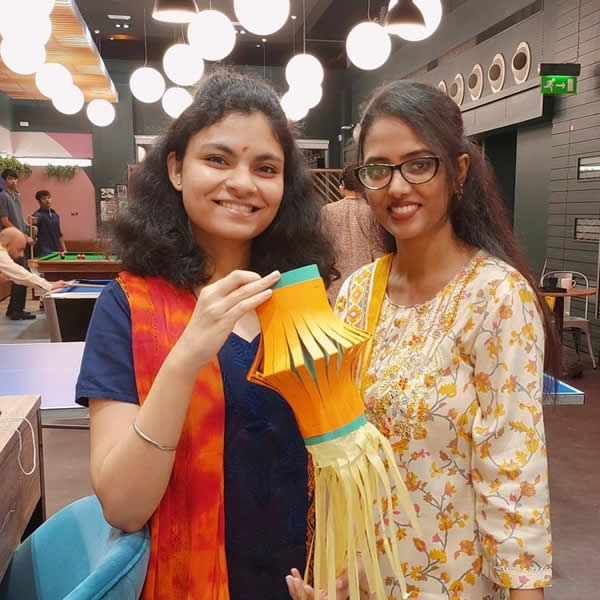
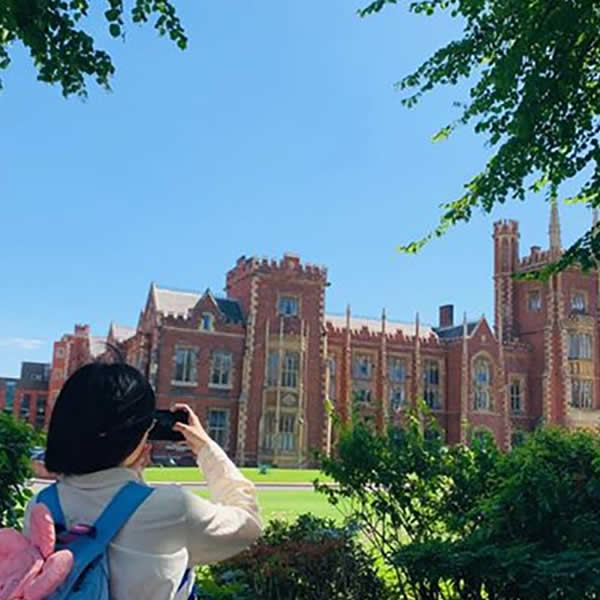
Hear what our students love about living here and tips on what to bring, what you can expect and how to make friends.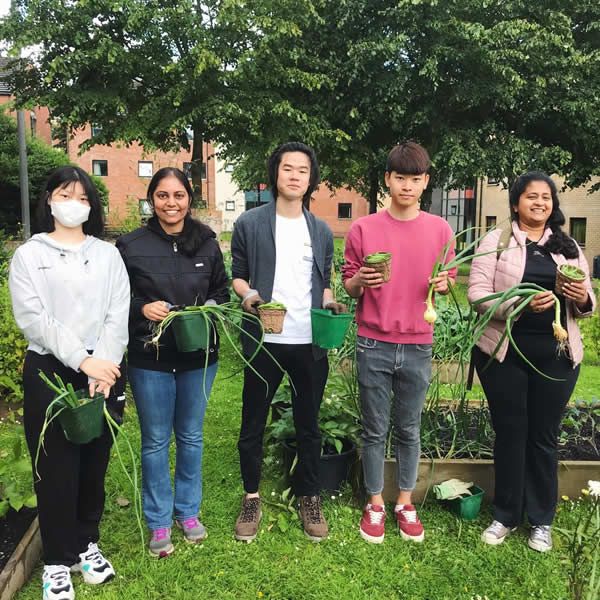




Careers
Career Prospects
Introduction
On graduating with an Honours degree, students are able to choose from a range of rewarding and challenging careers in Civil Engineering and are also sought after in accountancy, commerce, education and research. The majority of graduates take up posts associated with design and construction. Some embark on management, accountancy and finance careers, while others go into teaching and research. Employment in consulting engineers' offices and in the public sector will centre on feasibility, planning and detailed design. Alternatively, work with a contracting company will provide extensive experience on site where management skills are important in addition to technical knowledge. Our engineering graduates are also to be found in many other areas of employment where the skills and discipline of evaluating facts, decision making and management have provided them with the basis for rewarding and interesting careers.
Studying for a civil engineering degree at Queen’s will assist you in developing the core skills and employment-related experiences that are valued by employers, professional organisations and academic institutions. Graduates from this degree at Queen’s are well regarded by many employers (local, national and international) and over half of all graduate jobs are now open to graduates of any discipline, including Civil Engineering.
Although the majority of our graduates are interested in pursuing careers in Civil Engineering significant numbers develop careers in a wide range of other sectors.
Employment Links
We regularly consult and develop links with a large number of local, national and international employers, some of who provide sponsorship through the national QUEST Scholarship Scheme. Queen’s is among the top universities in the number of scholarships gained. In addition, we have a Civil Engineering Industry Advisory Board including members from the major employer sectors. This board forms the benchmark for the UK Civil Engineering Accrediting body, the Joint Board of Moderators.
Placement Employers
Many of our students have also gained international work placement through organisations such as the International Association for the Exchange of Students for Technical Experience.
">
How to Apply
Apply using our online Queen's Portal and follow the step-by-step instructions on how to apply.
Terms and Conditions
The terms and conditions that apply when you accept an offer of a place at the University on a taught programme of study.
Queen's University Belfast Terms and Conditions.