- anthropology-sociology-ba
- software-engineering-higher-level-apprenticeship-beng
- professional-nursing-adult-nursing-bsc-b74a
- professional-nursing-children-young-people-bsc-b73a
- law-senior-status-llb-m101
- biomedical-sciences-fd-b94a
- modern-languages-business-ba
- veterinary-biosciences-msci-d305
- veterinary-biosciences-bsc-d300
- liberal-arts-blibarts-y301
- agricultural-sciences-bsc-d704
- agricultural-sciences-bsc-d700
- irish-broadcast-production-ba-qp53
- veterinary-biosciences-bsc-d304
- veterinary-biosciences-msci-d302
- law-major-irish-llb-m2q5
- midwifery-bsc-b720
- education-studies-social-policy-ba-xl24
- politics-sociology-ba-ll23
- music-sound-design-ba-w371
- games-technologies-bsc-g455
- professional-nursing-children-young-people-bsc-b730
- professional-nursing-adult-nursing-bsc-b740
- professional-nursing-mental-health-nursing-bsc-b760
- professional-nursing-learning-disabilities-nursing-bsc-b761
- accounting-major-french-bsc-n4r1
- accounting-major-spanish-bsc-n4r4
- actuarial-science-risk-management-bsc-n323
- advanced-accounting-placement-macc-n400
- aerospace-engineering-beng-h400
- aerospace-engineering-meng-h402
- aerospace-engineering-sandwich-beng-h404
- aerospace-engineering-sandwich-meng-h405
- anthropology-archaeology-ba-lv64
- anthropology-ba-l600
- anthropology-english-ba-ql36
- anthropology-french-ba-rl16
- anthropology-history-ba-vl16
- anthropology-international-relations-ba-ll6f
- anthropology-irish-ba-ql56
- anthropology-philosophy-ba-lv65
- anthropology-politics-ba-ll62
- anthropology-spanish-ba-lr64
- applied-mathematics-physics-bsc-gf13
- applied-mathematics-physics-msci-gfc3
- archaeology-ba-v402
- archaeology-french-ba-v4r1
- archaeology-history-ba-vv41
- archaeology-irish-ba-vq45
- archaeology-portuguese-ba-v4r5
- archaeology-spanish-ba-v4r4
- archaeologypalaeoecology-bsc-v400
- archaeologypalaeoecology-geography-bsc-vf48
- architecture-bsc-k100
- audio-engineering-bsc-j930
- biochemistry-bsc-c700
- biochemistry-bsc-c704
- biochemistry-msci-c702
- biochemistry-msci-c705
- biological-sciences-bsc-c100
- biological-sciences-bsc-c104
- biological-sciences-fd-c101
- biological-sciences-msci-c102
- biological-sciences-msci-c105
- biomedical-science-bsc-b940
- business-economics-bsc-l110
- business-information-technology-incl-professional-experience-bsc-gn51
- business-management-placement-bsc-n202
- chemical-engineering-beng-h800
- chemical-engineering-meng-h802
- chemical-engineering-year-industry-beng-h804
- chemical-engineering-year-industry-meng-h805
- chemistry-bsc-f100
- chemistry-mchem-f105
- chemistry-study-abroad-mchem-f106
- chemistry-year-industry-bsc-f104
- chemistry-year-industry-mchem-f107
- civil-engineering-beng-h200
- civil-engineering-higher-level-apprenticeship-beng
- civil-engineering-meng-h202
- civil-engineering-year-industry-beng-h204
- civil-engineering-year-industry-meng-h205
- computer-engineering-beng-gh6p
- computer-engineering-meng-gh6q
- computer-engineering-year-industry-beng-gh67
- computer-engineering-year-industry-meng-gh68
- computer-science-incl-professional-experience-meng-g405
- computer-science-meng-g402
- computer-science-professional-experience-bsc-g400
- computing-information-technology-incl-professional-experience-bsc-gg45
- criminology-ba-m900
- criminology-social-policy-ba-ml94
- criminology-sociology-ba-ml93
- data-science-year-professional-experience-bsc-g420
- dentistry-bds-a200
- drama-ba-w400
- drama-english-ba-wq43
- economics-accounting-bsc-ln14
- economics-bsc-l100
- economics-major-finance-bsc-l1n3
- economics-major-french-bsc-l1r1
- economics-major-spanish-bsc-l1r4
- education-studies-ba-x200
- education-studies-sociology-ba-xl23
- electrical-electronic-engineering-beng-h600
- electrical-electronic-engineering-meng-h602
- electrical-electronic-engineering-sandwich-beng-h604
- electrical-electronic-engineering-sandwich-meng-h605
- english-ba-q300
- english-creative-writing-ba-q3w8
- english-film-studies-ba-qw36
- english-french-ba-qr31
- english-history-ba-qv31
- english-irish-ba-qq53
- english-linguistics-ba-qq31
- english-philosophy-ba-qv35
- english-politics-ba-ql32
- english-sociology-ba-ql33
- english-spanish-ba-qr34
- environmental-civil-engineering-meng-h252
- environmental-civil-engineering-year-industry-meng-h255
- environmental-management-bsc-f850
- environmental-management-bsc-f854
- european-planning-mplan-k490
- film-studies-production-ba-w600
- film-theatre-making-ba-ww65
- finance-year-industry-bsc-n300
- financial-risk-management-year-industry-bsc-n390
- food-science-nutrition-bsc-bdk6
- food-science-nutrition-bsc-db6k
- food-science-nutrition-msci-bd46
- food-science-nutrition-msci-db64
- french-ba-r120
- french-history-ba-rv11
- french-international-relations-ba-rlc2
- french-irish-ba-qr51
- french-politics-ba-rl12
- french-portuguese-ba-rr15
- french-spanish-ba-rr14
- geography-ba-l800
- geography-bsc-f800
- geography-language-bsc-f8rx
- history-ba-v140
- history-international-relations-ba-lv21
- history-philosophy-ba-vv1m
- history-politics-ba-vl12
- history-sociology-ba-vl13
- history-spanish-ba-rv41
- human-biology-bsc-b100
- international-business-major-french-bsc-n1r1
- international-business-major-german-bsc-n2r2
- international-business-major-mandarin-bsc-n1r9
- international-business-major-portuguese-bsc-n2r5
- international-business-major-spanish-bsc-n1r4
- international-relations-conflict-studies-ba-l253
- international-relations-irish-ba-lqf5
- international-relations-politics-ba-l290
- international-relations-spanish-ba-lrf4
- irish-ba-q504
- irish-history-ba-qv51
- irish-politics-ba-ql52
- irish-portuguese-ba-qr55
- irish-spanish-ba-qr54
- law-llb-m100
- law-major-french-llb-m2r1
- law-major-politics-llb-m1l2
- law-major-spanish-llb-m2r4
- liberal-arts-mlibarts-y300
- marine-biology-bsc-c160
- marine-biology-bsc-c164
- marine-biology-msci-c162
- marine-biology-msci-c165
- mathematics-bsc-g100
- mathematics-computer-science-bsc-gg41
- mathematics-computer-science-msci-ggk1
- mathematics-finance-bsc-g1n3
- mathematics-french-bsc-g1r1
- mathematics-mmath-g103
- mathematics-spanish-bsc-g1r4
- mathematics-statistics-op-research-bsc-gg13
- mathematics-statistics-op-research-mmath-ggc3
- mechanical-engineering-beng-h300
- mechanical-engineering-fd-h302
- mechanical-engineering-meng-h303
- mechanical-engineering-sandwich-beng-h304
- mechanical-engineering-sandwich-meng-h305
- media-broadcast-production-ba-p310
- medicinal-chemistry-bsc-f150
- medicinal-chemistry-mchem-f15a
- medicinal-chemistry-year-industry-bsc-f154
- medicinal-chemistry-year-industry-mchem-f15c
- medicine-mb-a100
- microbiology-bsc-c500
- microbiology-bsc-c504
- microbiology-msci-c502
- microbiology-msci-c505
- music-audio-production-ba-w374
- music-bmus-w302
- music-performance-ba-w310
- pharmaceutical-biotechnology-bsc-b212
- pharmaceutical-biotechnology-sandwich-bsc-b213
- pharmaceutical-sciences-bsc-b210
- pharmaceutical-sciences-sandwich-bsc-b211
- pharmacy-mpharm-b230
- philosophy-ba-v500
- philosophy-politics-ba-vlm2
- physics-astrophysics-bsc-f3f5
- physics-astrophysics-mphys-f3fm
- physics-bsc-f300
- physics-french-bsc-f3r1
- physics-french-mphys-f3rc
- physics-medical-applications-bsc-f3b9
- physics-medical-applications-mphys-f3bx
- physics-mphys-f303
- physics-spanish-bsc-f3r4
- physics-spanish-mphys-f3rq
- planning-environment-development-bsc-k430
- politics-ba-l200
- politics-philosophy-economics-ba-lv00
- politics-spanish-ba-lr24
- psychology-bsc-c800
- social-policy-sociology-ba-ll43
- social-work-bsw-l500
- social-work-relevant-degree-entry-bsw-l501
- sociology-ba-l300
- software-engineering-meng-g602
- software-engineering-placement-beng-g604
- software-engineering-placement-meng-g605
- spanish-ba-r410
- spanish-portuguese-ba-rr45
- structural-engineering-architecture-meng-h2k1
- structural-engineering-architecture-year-industry-meng-h2kc
- theoretical-physics-bsc-f340
- theoretical-physics-mphys-f344
- zoology-bsc-c300
- zoology-bsc-c301
- zoology-msci-c302
- zoology-msci-c305
MEng | Postgraduate Taught
Electrical and Electronic Engineering
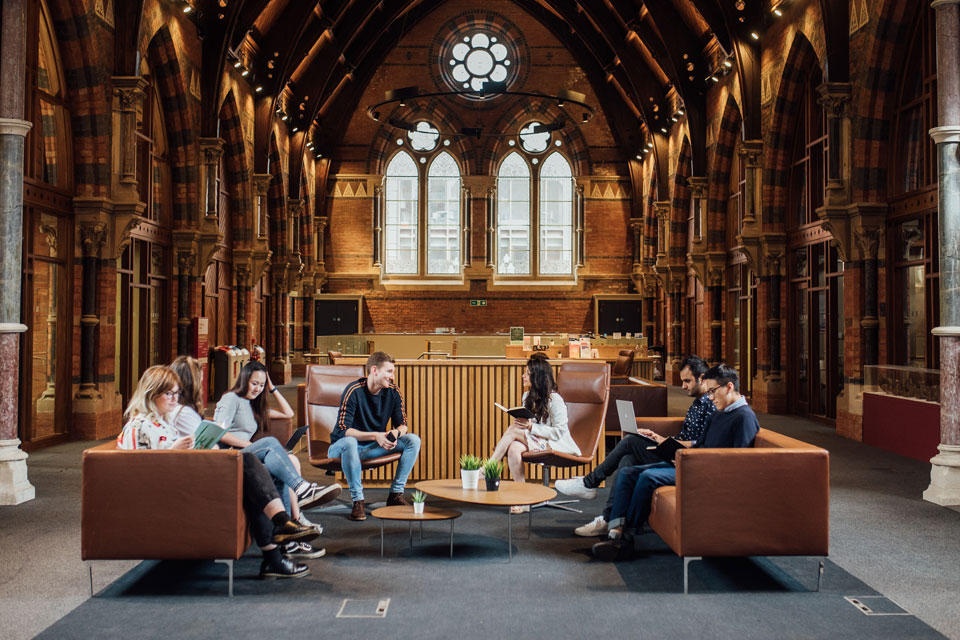
In a world where sustainable energy, smart home technology, the Internet of Things and even self-driving cars are a reality, studying Electrical and Electronic Engineering offers students immeasurable potential opportunities. The advances in Electrical and Electronic Engineering are so great that every part of 21st Century life is improved by them.
As a result, Electrical and Electronic Engineering is one of the broadest and impactful exciting engineering disciplines on offer at Queen’s University. The degree programme covers a wide spectrum of topics, from micro-electronic chip design and manufacturing to power generation and distribution. Rapid advances in fields such as telecommunications, computer firmware, hardware and networking, medical electronics, security, control and robotics and renewable energy systems are also reflected in the course structure.
Globally there is a critical shortage of experienced and talented engineers. This means that Electronics and Electrical Engineering graduates have excellent career prospects across a broad range of sectors.
At Queen’s we work closely with future employers to enhance these career prospects and placement experiences are embedded into the course. This allows students to engage with and learn from real world challenges from day one. This combination of academic theory and application forms a core part of the curriculum and vastly improves our graduate employability rates.
Electrical and Electronic Engineering at Queen’s is ranked in the top 10 in the UK for research (REF 2014)
Course highlights
Career Development
Students may undertake a year’s paid placement in industry and there are currently lots of companies to choose from. Examples of companies where our students have spent their placements include BT, Sensata Technologies, Andor Technology, NIE Networks, BAE Systems, Atkins, Microsoft and Seagate. Students may also gain summer work experience through the IAESTE international exchange programme. Canada, Croatia, Hong Kong, Thailand and Malaysia are just some of the countries where our students have been to through this Scheme.
Internationally Renowned Experts
Electrical and Electronic Engineering at Queen’s is ranked in the Top 5 in the UK for research, with 93 per cent of research rated as either 'World-leading' or 'Internationally Excellent' (REF 2014). Students therefore benefit from research-led education and the opportunity to undertake final year projects related to cutting edge technologies.
Student Experience
Queen's is one of only nine UK universities involved in the prestigious IET 'Power Academy' scholarship scheme, which each year provides scholarships from the fourteen industrial partners to students on the BEng and MEng degrees. The industrial partners involved in the Power Academy Scheme – examples include NIE Networks, Rolls Royce, National Grid, Network Rail, London Underground, Mitsubishi Electric and BAE Systems. Other companies, such as Sensata, Civica and Caterpillar, also sponsor students on these courses. For further information, visit the School Website.
http://www.qub.ac.uk/Study/Course-Finder/UG/ElectricalandElectronicEngineering/H602/
Attraction to QUB
I always knew I wanted to study at Queen’s not only because it’s in Northern Ireland but Queen’s University has such a great reputation - it’s facilities, teaching and research are world class and are highly ranked in the UK and globally. QUB is also part of the Russell Group and is one of only nine universities partners in the UK who offer the IET Power Academy Scholarship. This was another benefit of studying engineering at Queen’s.
Having been to the open days I was able to meet the lectures, see the facilities and talk to current students asking them questions about QUB and the course. Everyone was so friendly, approachable and informative and it really helped to confirm my decision that I wanted to study EEE at Queen’s.
Positive Experience during studies
I have thoroughly enjoyed my time at Queen's, having met some fantastic people and completing my degree. I would have to say my highlight has been obtaining a scholarship with NIE Networks. This has provided me a great platform to meet so many new people and develop a wide range of skills. It has given my the chance to
get involved in a variety of projects throughout my summer placements and year out.
In addition, I have also had the opportunity to get involved in outreach programs within both primary and secondary schools such as First Lego League, Sentinus R&D, Young Innovators and Bee Safe. The main aim of all of this is to promote STEM subjects, studying at QUB, and careers in engineering in the hope to create awareness of the great career opportunities available and inspire future engineers.
Placement
I completed my placement year with NIE Networks in the Asset Management department based in Fortwilliam House, Belfast. I absolutely loved my placement year and would definitely recommend doing a placement! The department I was in within NIE Networks was responsible for managing all of the Assets and equipment on the electricity network.
My role had a great balance of being in the office and out on site. I had the opportunity to work on a variety projects from carrying out equipment failure investigations, writing policy documents to data analysis and much more. This provided me the chance to develop skills such as communication, leadership and project management.
By completing my year out I found that I had a better awareness and appreciation of what an engineer actually does within a company.
I feel that my placement year was of great benefit when I returned to university as it really helped to put into perspective some of the theory that I had learnt in class. It also give me the ability to apply this knowledge to solve real life engineering problems. I was also able to use the skills that I developed on placement in my university studies such as time management, adaptability and teamwork.
Engaging in School’s extracurricular activities?
I was involved in a number of extracurricular activities throughout my time at Queen’s and would recommend getting involved in some type of extracurricular activity.
I got involved in the Peer Mentoring Scheme where I was a Lead Mentor. The scheme itself is ran by students and is aimed at helping students from first year right up to final year. It’s a great way to meet and get to know other people on the course over a cup of tea and some biscuits. It also provides the opportunity to get help or ask questions that you might feel more comfortable asking another student as we’ve all been through it ourselves.
I was part of the IET On Campus group where I was Chairperson. This was a Engineering society which organised a variety of events such as industrial tours, workshops and social networking activities.
Additionally, I was a Class Representative for the MEng EEE course. This involved representing the class at SSCC (Staff Student Consultative Committee) meeting which give me the opportunity to provide feedback to University Staff as well as raise any issues. It was a great forum to discuss the course itself and help make improvements for future students.
I was also involved in various EEECS and outreach events representing the university and school on many occasions including Open Days, Fairs and Talks just to name a few.
One piece of advice to potential EEECS applicants
My advice would be to do your research on courses available, go to open days, see the facilities, talk to lectures and students, and don’t be afraid to ask questions - it’s your future!
Going forward
Going forward I hope to get a graduate job with NIE Networks. Through studying EEE at Queen’s I really enjoyed the power modules and I know that I want to work in the electrical power sector of engineering. Having worked with NIE Networks on various placements throughout my time at QUB I have gained a better understanding of the various parts of the business and, meet some wonderful people and so I would love to work in the company full time.
If you had a time machine, and could go back to your first day at Queen’s, what would you do differently? (If anything!)
If I had a time machine and could go back to my first day at Queen’s I don’t think that I would actually do anything differently or change anything. I would just go back and enjoy reliving the whole university experience again. It goes by far too quickly, so just make the most of it!
Margaret Taggart (Electrical and Electronic Engineering)
- Start Date
- September 2026
- Duration
- 4 years (Full-time)
- Places Available
- TBC (Full Time)
Course Structure
0
Introduction
This four-year extended engineering degree has been established to provide a good supply of well-qualified engineers with an appropriate blend of engineering knowledge and skills in business practice and management. There is a core component of entrepreneurship, giving key insights into company creation. All of the material in the first two years is common with the BEng degree.
The programme contains the following themes which may change due to technology and industry needs:
Stage 1
May include topics such as:-
Embedded Systems
Mathematics 1
Electronics 1
Computer Programming
Electrical Engineering
Stage 2
May include topics such as:-
Electric Circuits
Analogue Circuit Design
Embedded Systems
Professional Engineering Practice
Digital Electronics
Electrical Power
Signals & Systems
Control
Communications Systems
Mathematics
Stage 3
May include topics such as:-
Engineering Entrepreneurship
Advanced Electronics
Power Electronics
Electrical Power & Energy
High Frequency System Techniques
Networks & Communication Protocols
Control Systems Engineering
Signal Processing
Communications Systems Engineering
Connected Health
Stage 4
May include topics such as:-
Individual Technical Project
MEMS Devices and Technology
Wireless Communications Systems
Intelligent Systems
Cyber-Physical Systems
Sustainable Energy Systems
Wireless Sensor Systems
Custom Computer Engineering
- People Teaching You
-
Learning and Teaching
The School has a world class reputation for research and provides excellent facilities, including access to major new research centres in Secure Information Technologies, Electronics, Communications and Information Technology and Sonic Arts. A number of modules on the course are closely linked to the research expertise of these centres and evolve and change rapidly to reflect some of the current, emerging and exciting developments in the field.
At Queen’s, we aim to deliver a high quality learning environment that embeds intellectual curiosity, innovation and best practice in learning, teaching and student support to enable student to achieve their full academic potential.
On the degree in Electrical and Electronic Engineering we do this by providing a range of learning experiences which enable our students to engage with subject experts, develop attributes and perspectives that will equip them for life and work in a global society and make use of innovative technologies and a world class library that enhances their development as independent, lifelong learners. Examples of the opportunities provided for learning on this course are:E-Learning technologies
Information associated with lectures and assignments is often communicated via a Virtual Learning Environment (VLE) called Queen’s Online. A range of e-learning experiences are also embedded in the degree through, for example: interactive group workshops in a flexible learning space; IT and statistics modules; podcasts and interactive web-based learning activities; opportunities to use IT programmes associated with design in practicals and project- based work etc.
Lectures
Introduce basic information about new topics as a starting point for further self-directed private study/reading. Lectures also provide opportunities to ask questions, gain some feedback and advice on assessments (normally delivered in large groups to all year group peers).
Personal Tutor
Undergraduates are allocated a Personal Tutor who meets with them on several occasions during the year to support their academic development.
Practicals
Where you will have opportunities to develop technical skills and apply theoretical principles to real-life or practical contexts. You will be expected to attend these in most modules.
Self-directed study
This is an essential part of life as a Queen’s student when important private reading, engagement with e-learning resources, reflection on feedback to date and assignment research and preparation work is carried out.
Seminars/tutorials
Significant amounts of teaching are carried out in small groups (typically 10-20 students). These provide an opportunity for students to engage with academic staff who have specialist knowledge of the topic, to ask questions of them and to assess their own progress and understanding with the support of peers. You should also expect to make presentations and other contributions to these groups.
Supervised projects
In final year, you will be expected to carry out a significant piece of research on a topic or practical methodology that you have chosen. You will receive support from a supervisor who will guide you in terms of how to carry out your research and will provide feedback to you on at least 2 occasions during the write up stage
Work placements
Students taking Electrical and Electronic Engineering have the option of undertaking a work-placement after Stage 2. This is a significant learning and employability enhancement opportunity
-
Assessment
Details of assessments associated with this course are outlined below:
- The way in which you are assessed will vary according to the Learning objectives of each module. Some modules are assessed solely through project work or written assignments. Others are assessed through a combination of coursework and end of semester examinations. Details of how each module is assessed are shown in the Student Handbook which is provided to all students during their first year induction

Modules
The information provided in this Course Finder reflects the module details for the current year of study (2025/26). Please note that modules are subject to annual review and changes may occur in response to various factors, including student feedback and academic developments. Prospective students will be notified of any significant changes to module offerings before the start of the new academic year.
Entrance requirements
A level requirements
AAA including Mathematics and at least one from Physics (preferred), Biology, Chemistry, Electronics, Further Mathematics or Technology and Design.
A maximum of one BTEC/OCR Single Award or AQA Extended Certificate will be accepted as part of an applicant's portfolio of qualifications with a Distinction* being equated to a grade A at A-level.
Irish leaving certificate requirements
H2H2H3H3H3H3 including Higher Level grade H2 in Mathematics and at least one from Physics (preferred), Biology or Chemistry
International Baccalaureate Diploma
36 points overall, including 6,6,6 at Higher Level, including Mathematics and Physics (preferred), Biology or Chemistry
Graduate
A minimum of a 2:2 Honours Degree, provided any subject requirements are also met
Note
All applicants must have GCSE English Language grade C/4 or an equivalent qualification acceptable to the University.
Applicants not offering Physics at A-level should have a minimum of a grade B/6 in GCSE Physics or GCSE Double Award Science grades BB/6,6.
Further information
Applicants for the MEng degree will automatically be considered for admission to the BEng degree if they are not eligible for entry to the MEng degree both at initial offer making stage and when results are received.
Option to transfer
Transfers between BEng and MEng may be possible at the end of Stage 2.
-
How we choose our students
Applications are dealt with centrally by the Admissions and Access Service rather than by the School of Electronics, Electrical Engineering and Computer Science. Once your application has been processed by UCAS and forwarded to Queen's, an acknowledgement is normally sent within two weeks of its receipt at the University.
Selection is on the basis of the information provided on your UCAS form. Decisions are made on an ongoing basis and will be notified to you via UCAS.
For last year’s intake, applicants for the MEng Honours in Electrical and Electronic Engineering offering A-level/BTEC Level 3 qualifications must have had, or be able to achieve, a minimum of six GCSE passes at grade B/6 or better to include Mathematics (minimum grade C/4 required in GCSE English Language). However, this profile may change from year to year depending on the demand for places. Candidates not offering Physics at A-level require GCSE Physics/Double Award Science at grade B/6 or above. Selectors will also check that any specific entry requirements in terms of A-level subjects can be fulfilled.
Offers are normally made on the basis of three A-levels. Applicants repeating A-levels require BBC at the first attempt. Candidates are not normally asked to attend for interview.
Applicants offering two A-levels and one BTEC Subsidiary Diploma/National Extended Certificate (or equivalent qualification) will also be considered. Offers will be made in terms of the overall BTEC grade awarded. Please note that a maximum of one BTEC Subsidiary Diploma/National Extended Certificate (or equivalent) will be counted as part of an applicant’s portfolio of qualifications. The normal GCSE profile will be expected.
For applicants offering the Irish Leaving Certificate, please note that performance at Irish Junior Certificate (IJC) is taken into account. For last year’s entry, applicants for this degree must have had a minimum of 6 IJC grades B/Higher Merit, including Mathematics. The Selector also checks that any specific entry requirements in terms of Leaving Certificate subjects can be satisfied.
Applicants offering BTEC Extended/National Extended Diplomas, Higher National Certificates and Higher National Diplomas are not normally considered for MEng entry but, if eligible, will be made a change course offer for the corresponding BEng programme.
Access course qualifications are not considered for entry to the MEng degree and applicants should apply for the corresponding BEng programme.
Subject to satisfactory academic performance during the first two years of the BEng course, it may be possible for students to transfer to the MEng programme at the end of Stage 2.
The information provided in the personal statement section and the academic reference together with predicted grades are noted but these are not the final deciding factors in whether or not a conditional offer can be made. However, they may be reconsidered in a tie break situation in August.
A-level General Studies and A-level Critical Thinking are not normally considered as part of a three A-level offer and, although they may be excluded where an applicant is taking four A-level subjects, the grade achieved could be taken into account if necessary in August/September.
If you are made an offer then you may be invited to a Faculty/School Visit Day, which is usually held during the second semester. This will allow you the opportunity to visit the University and to find out more about the degree programme of your choice; the facilities on offer. It also gives you a flavour of the academic and social life at Queen's.
If you cannot find the information you need here, please contact the University Admissions and Access Service (admissions@qub.ac.uk), giving full details of your qualifications and educational background. -
International Students
Our country/region pages include information on entry requirements, tuition fees, scholarships, student profiles, upcoming events and contacts for your country/region. Use the dropdown list below for specific information for your country/region.
International students wishing to apply to Queen's University Belfast (and for whom English is not their first language), must be able to demonstrate their proficiency in English in order to benefit fully from their course of study or research. Non-EEA nationals must also satisfy UK Visas and Immigration (UKVI) immigration requirements for English language for visa purposes.
For more information on English Language requirements for EEA and non-EEA nationals see: www.qub.ac.uk/EnglishLanguageReqs.
If you need to improve your English language skills before you enter this degree programme, Queen's University Belfast International Study Centre offers a range of English language courses. These intensive and flexible courses are designed to improve your English ability for admission to this degree.
- Academic English: an intensive English language and study skills course for successful university study at degree level
- Pre-sessional English: a short intensive academic English course for students starting a degree programme at Queen's University Belfast and who need to improve their English.
- Foundation
The progression course suited to this programme is
https://qubisc.com/en/courses/international-foundation-for-science-and-engineering. - International Year One
The progression course suited to this programme is
https://qubisc.com/en/courses/international-year-one-in-engineering.
Fees and funding
All tuition fees quoted relate to a single year of study unless stated otherwise. Tuition fees will be subject to an annual inflationary increase, unless explicitly stated otherwise.
Northern Ireland (NI) 1
£4,985
Republic of Ireland (ROI) 2
£4,985
England, Scotland or Wales (GB) 1
£9,535
EU Other 3
£26,600
1EU citizens in the EU Settlement Scheme, with settled status, will be charged the NI or GB tuition fee based on where they are ordinarily resident. Students who are ROI nationals resident in GB will be charged the GB fee.
2 EU students who are ROI nationals resident in ROI are eligible for NI tuition fees.
3 EU Other students (excludes Republic of Ireland nationals living in GB, NI or ROI) are charged tuition fees in line with international fees.
-
Additional course costs
Students may wish to become a student member of BCS - The Chartered Institute for IT - at an annual cost of £20, or £30 for four years (subject to change).
All Students
Depending on the programme of study, there may be extra costs which are not covered by tuition fees, which students will need to consider when planning their studies.
Students can borrow books and access online learning resources from any Queen's library. If students wish to purchase recommended texts, rather than borrow them from the University Library, prices per text can range from £30 to £100. Students should also budget between £30 to £75 per year for photocopying, memory sticks and printing charges.
Students undertaking a period of work placement or study abroad, as either a compulsory or optional part of their programme, should be aware that they will have to fund additional travel and living costs.
If a programme includes a major project or dissertation, there may be costs associated with transport, accommodation and/or materials. The amount will depend on the project chosen. There may also be additional costs for printing and binding.
Students may wish to consider purchasing an electronic device; costs will vary depending on the specification of the model chosen.
There are also additional charges for graduation ceremonies, examination resits and library fines.
-
How do I fund my study?
The Department for the Economy will provide a tuition fee loan of up to £6,500 per NI / EU student for postgraduate study. Tuition fee loan information.
A postgraduate loans system in the UK offers government-backed student loans of up to £11,836 for taught and research Masters courses in all subject areas (excluding Initial Teacher Education/PGCE, where undergraduate student finance is available). Criteria, eligibility, repayment and application information are available on the UK government website.
More information on funding options and financial assistance - please check this link regularly, even after you have submitted an application, as new scholarships may become available to you.
-
International Scholarships
Information on scholarships for international students, is available at www.qub.ac.uk/Study/international-students/international-scholarships.
Why study at Queen's?
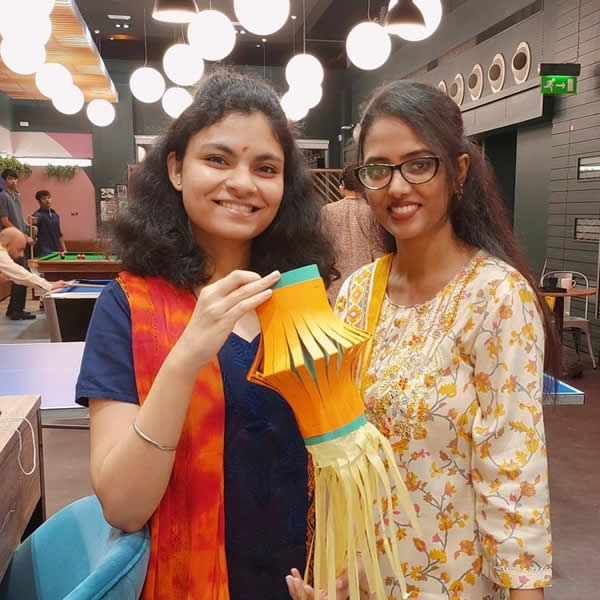
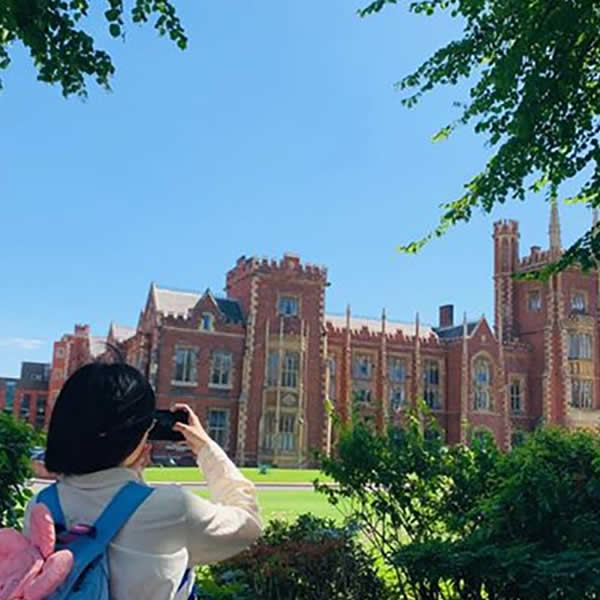
Hear what our students love about living here and tips on what to bring, what you can expect and how to make friends.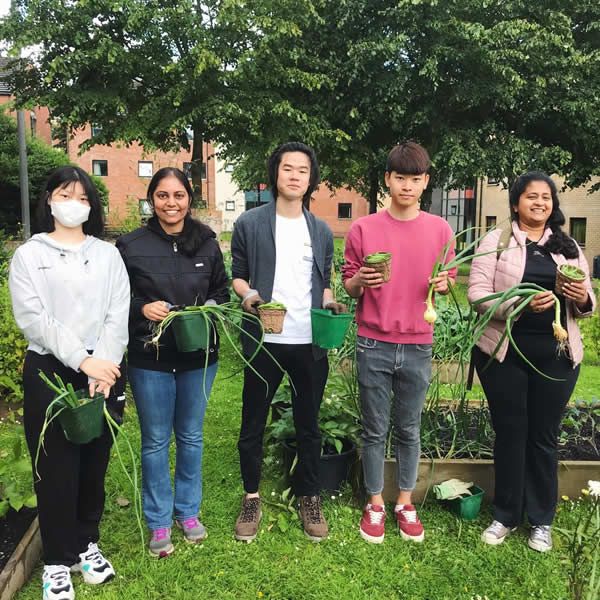




Careers
Career Prospects
Employment after the Course
There is a shortage of electrical and electronic engineers, not only locally in Northern Ireland and the rest of the UK, but worldwide, so employment prospects are excellent. The employment rate for graduates of this degree from Queen's (2013) was 100% (percentage employed in a graduate level job within 6 months of graduating).
Overview
Studying for an Electrical and Electronic Engineering degree at Queen’s will assist you in developing the core skills and employment-related experiences that are valued by employers, professional organisations and academic institutions. Graduates from this degree at Queen’s are well regarded by many employers (local, national and international) and over half of all graduate jobs are now open to graduates of any discipline, including Electrical and Electronic Engineering.
Although the majority of our graduates are interested in pursuing careers in engineering significant numbers develop careers in a wide range of other sectors. The following is a list of the major career sectors (and some starting salaries) that have attracted our graduates in recent years:
Management Consultancy - £26-38,000;
Investment Banking - £34K
Accountancy - £30K
Fast Stream Civil Service - £26,500
Varied graduate programmes (Times Top 100 Graduate Recruiters/AGR, Association of Graduate Recruiters UK)
Employment Links
The School has links with a large number of employers, providing opportunities for summer and year-long placements, as well as projects. Currently there are more companies offering placement opportunities than there are students seeking placements, with the result that opportunities for placements and employment in Electrical and Electronic Engineering are excellent.
We are highly committed to the renewal of engineering talent in Northern Ireland and through our engagement with QUB we have had the opportunity to engage with the highest calibre of students. Our talent pool is predominantly sourced from the Electrical and Electronic Engineering programme with recent graduates able to apply their university learning to practical, real-life projects from the outset, bringing a new level of skills to our workforce.
Northern Ireland Electricity
">
How to Apply
Apply using our online Queen's Portal and follow the step-by-step instructions on how to apply.
Terms and Conditions
The terms and conditions that apply when you accept an offer of a place at the University on a taught programme of study.
Queen's University Belfast Terms and Conditions.