- anthropology-sociology-ba
- software-engineering-higher-level-apprenticeship-beng
- professional-nursing-adult-nursing-bsc-b74a
- professional-nursing-children-young-people-bsc-b73a
- law-senior-status-llb-m101
- biomedical-sciences-fd-b94a
- modern-languages-business-ba
- veterinary-biosciences-msci-d305
- veterinary-biosciences-bsc-d300
- liberal-arts-blibarts-y301
- agricultural-sciences-bsc-d704
- agricultural-sciences-bsc-d700
- irish-broadcast-production-ba-qp53
- veterinary-biosciences-bsc-d304
- veterinary-biosciences-msci-d302
- law-major-irish-llb-m2q5
- midwifery-bsc-b720
- education-studies-social-policy-ba-xl24
- politics-sociology-ba-ll23
- music-sound-design-ba-w371
- games-technologies-bsc-g455
- professional-nursing-children-young-people-bsc-b730
- professional-nursing-adult-nursing-bsc-b740
- professional-nursing-mental-health-nursing-bsc-b760
- professional-nursing-learning-disabilities-nursing-bsc-b761
- accounting-major-french-bsc-n4r1
- accounting-major-spanish-bsc-n4r4
- actuarial-science-risk-management-bsc-n323
- advanced-accounting-placement-macc-n400
- aerospace-engineering-beng-h400
- aerospace-engineering-meng-h402
- aerospace-engineering-sandwich-beng-h404
- aerospace-engineering-sandwich-meng-h405
- anthropology-archaeology-ba-lv64
- anthropology-ba-l600
- anthropology-english-ba-ql36
- anthropology-french-ba-rl16
- anthropology-history-ba-vl16
- anthropology-international-relations-ba-ll6f
- anthropology-irish-ba-ql56
- anthropology-philosophy-ba-lv65
- anthropology-politics-ba-ll62
- anthropology-spanish-ba-lr64
- applied-mathematics-physics-bsc-gf13
- applied-mathematics-physics-msci-gfc3
- archaeology-ba-v402
- archaeology-french-ba-v4r1
- archaeology-history-ba-vv41
- archaeology-irish-ba-vq45
- archaeology-portuguese-ba-v4r5
- archaeology-spanish-ba-v4r4
- archaeologypalaeoecology-bsc-v400
- archaeologypalaeoecology-geography-bsc-vf48
- architecture-bsc-k100
- audio-engineering-bsc-j930
- biochemistry-bsc-c700
- biochemistry-bsc-c704
- biochemistry-msci-c702
- biochemistry-msci-c705
- biological-sciences-bsc-c100
- biological-sciences-bsc-c104
- biological-sciences-fd-c101
- biological-sciences-msci-c102
- biological-sciences-msci-c105
- biomedical-science-bsc-b940
- business-economics-bsc-l110
- business-information-technology-incl-professional-experience-bsc-gn51
- business-management-placement-bsc-n202
- chemical-engineering-beng-h800
- chemical-engineering-meng-h802
- chemical-engineering-year-industry-beng-h804
- chemical-engineering-year-industry-meng-h805
- chemistry-bsc-f100
- chemistry-mchem-f105
- chemistry-study-abroad-mchem-f106
- chemistry-year-industry-bsc-f104
- chemistry-year-industry-mchem-f107
- civil-engineering-beng-h200
- civil-engineering-higher-level-apprenticeship-beng
- civil-engineering-meng-h202
- civil-engineering-year-industry-beng-h204
- civil-engineering-year-industry-meng-h205
- computer-engineering-beng-gh6p
- computer-engineering-meng-gh6q
- computer-engineering-year-industry-beng-gh67
- computer-engineering-year-industry-meng-gh68
- computer-science-incl-professional-experience-meng-g405
- computer-science-meng-g402
- computer-science-professional-experience-bsc-g400
- computing-information-technology-incl-professional-experience-bsc-gg45
- criminology-ba-m900
- criminology-social-policy-ba-ml94
- criminology-sociology-ba-ml93
- data-science-year-professional-experience-bsc-g420
- dentistry-bds-a200
- drama-ba-w400
- drama-english-ba-wq43
- economics-accounting-bsc-ln14
- economics-bsc-l100
- economics-major-finance-bsc-l1n3
- economics-major-french-bsc-l1r1
- economics-major-spanish-bsc-l1r4
- education-studies-ba-x200
- education-studies-sociology-ba-xl23
- electrical-electronic-engineering-beng-h600
- electrical-electronic-engineering-meng-h602
- electrical-electronic-engineering-sandwich-beng-h604
- electrical-electronic-engineering-sandwich-meng-h605
- english-ba-q300
- english-creative-writing-ba-q3w8
- english-film-studies-ba-qw36
- english-french-ba-qr31
- english-history-ba-qv31
- english-irish-ba-qq53
- english-linguistics-ba-qq31
- english-philosophy-ba-qv35
- english-politics-ba-ql32
- english-sociology-ba-ql33
- english-spanish-ba-qr34
- environmental-civil-engineering-meng-h252
- environmental-civil-engineering-year-industry-meng-h255
- environmental-management-bsc-f850
- environmental-management-bsc-f854
- european-planning-mplan-k490
- film-studies-production-ba-w600
- film-theatre-making-ba-ww65
- finance-year-industry-bsc-n300
- financial-risk-management-year-industry-bsc-n390
- food-science-nutrition-bsc-bdk6
- food-science-nutrition-bsc-db6k
- food-science-nutrition-msci-bd46
- food-science-nutrition-msci-db64
- french-ba-r120
- french-history-ba-rv11
- french-international-relations-ba-rlc2
- french-irish-ba-qr51
- french-politics-ba-rl12
- french-portuguese-ba-rr15
- french-spanish-ba-rr14
- geography-ba-l800
- geography-bsc-f800
- geography-language-bsc-f8rx
- history-ba-v140
- history-international-relations-ba-lv21
- history-philosophy-ba-vv1m
- history-politics-ba-vl12
- history-sociology-ba-vl13
- history-spanish-ba-rv41
- human-biology-bsc-b100
- international-business-major-french-bsc-n1r1
- international-business-major-german-bsc-n2r2
- international-business-major-mandarin-bsc-n1r9
- international-business-major-portuguese-bsc-n2r5
- international-business-major-spanish-bsc-n1r4
- international-relations-conflict-studies-ba-l253
- international-relations-irish-ba-lqf5
- international-relations-politics-ba-l290
- international-relations-spanish-ba-lrf4
- irish-ba-q504
- irish-history-ba-qv51
- irish-politics-ba-ql52
- irish-portuguese-ba-qr55
- irish-spanish-ba-qr54
- law-llb-m100
- law-major-french-llb-m2r1
- law-major-politics-llb-m1l2
- law-major-spanish-llb-m2r4
- liberal-arts-mlibarts-y300
- marine-biology-bsc-c160
- marine-biology-bsc-c164
- marine-biology-msci-c162
- marine-biology-msci-c165
- mathematics-bsc-g100
- mathematics-computer-science-bsc-gg41
- mathematics-computer-science-msci-ggk1
- mathematics-finance-bsc-g1n3
- mathematics-french-bsc-g1r1
- mathematics-mmath-g103
- mathematics-spanish-bsc-g1r4
- mathematics-statistics-op-research-bsc-gg13
- mathematics-statistics-op-research-mmath-ggc3
- mechanical-engineering-beng-h300
- mechanical-engineering-fd-h302
- mechanical-engineering-meng-h303
- mechanical-engineering-sandwich-beng-h304
- mechanical-engineering-sandwich-meng-h305
- media-broadcast-production-ba-p310
- medicinal-chemistry-bsc-f150
- medicinal-chemistry-mchem-f15a
- medicinal-chemistry-year-industry-bsc-f154
- medicinal-chemistry-year-industry-mchem-f15c
- medicine-mb-a100
- microbiology-bsc-c500
- microbiology-bsc-c504
- microbiology-msci-c502
- microbiology-msci-c505
- music-audio-production-ba-w374
- music-bmus-w302
- music-performance-ba-w310
- pharmaceutical-biotechnology-bsc-b212
- pharmaceutical-biotechnology-sandwich-bsc-b213
- pharmaceutical-sciences-bsc-b210
- pharmaceutical-sciences-sandwich-bsc-b211
- pharmacy-mpharm-b230
- philosophy-ba-v500
- philosophy-politics-ba-vlm2
- physics-astrophysics-bsc-f3f5
- physics-astrophysics-mphys-f3fm
- physics-bsc-f300
- physics-french-bsc-f3r1
- physics-french-mphys-f3rc
- physics-medical-applications-bsc-f3b9
- physics-medical-applications-mphys-f3bx
- physics-mphys-f303
- physics-spanish-bsc-f3r4
- physics-spanish-mphys-f3rq
- planning-environment-development-bsc-k430
- politics-ba-l200
- politics-philosophy-economics-ba-lv00
- politics-spanish-ba-lr24
- psychology-bsc-c800
- social-policy-sociology-ba-ll43
- social-work-bsw-l500
- social-work-relevant-degree-entry-bsw-l501
- sociology-ba-l300
- software-engineering-meng-g602
- software-engineering-placement-beng-g604
- software-engineering-placement-meng-g605
- spanish-ba-r410
- spanish-portuguese-ba-rr45
- structural-engineering-architecture-meng-h2k1
- structural-engineering-architecture-year-industry-meng-h2kc
- theoretical-physics-bsc-f340
- theoretical-physics-mphys-f344
- zoology-bsc-c300
- zoology-bsc-c301
- zoology-msci-c302
- zoology-msci-c305
MEng | Postgraduate Taught
Aerospace Engineering
Aerospace Engineering is at the cutting edge of technology, understanding and applying scientific principles to the design, development and service of some of the most technologically advanced engineering products in the world, ranging from commercial aeroplanes and helicopters to spacecraft and Unmanned Aerial Vehicles (UAVs). Aerospace engineers will be pivotal in addressing the future challenges of the aerospace industry related to the environment (e.g. minimising noise and pollution) and sustainability. With the ability to succeed in diverse and challenging situations, aerospace engineers are naturally versatile, opening up a wide range of career opportunities, and our graduates can be found in leading private and public sector companies worldwide.
We put emphasis on hands on, project based learning, and invest heavily in our state-of-the-art facilities and flexible project spaces to support this activity.
Course highlights
Global Opportunities
The School offers extensive opportunities to gain valuable overseas experience, either during the summer vacation or by taking a year out from the degree programme. We participate in the IAESTE and Turing Student Exchange programmes, which enables students to obtain work experience in companies or study at universities throughout the world. The Study USA Initiative offers students after Stage 2 the possibility of studying for a year at a college in the USA, providing an excellent opportunity to gain familiarity with international business techniques. Our employability programme supports these activities as well as providing help and advice with preparation of CVs, interview skills and acting as a point of contact for the duration of placements.
Professional Accreditations
Accredited by the Royal Aeronautical Society
Industry Links
The School has strong links with industry in the form of collaborative projects and student placements. The curriculum is heavily informed by industry representatives who sit on an advisory board within the School.
Career Development
Students have the opportunity to gain a place on the Engineering Leadership Programme and a range of Employability Development workshops.
All of Aerospace Engineering degrees come with the option of a sandwich year in industry. You can spend up to 12 months getting hands on experience of a real engineering environment with a relevant aerospace company.
World Class Facilities
The School has a wide range of experimental facilities to support aerodynamics, structures, materials and manufacturing teaching. It also operates a flight simulator and runs a week long annual flight laboratory course.
Internationally Renowned Experts
The School has an international reputation for its contributions to the development of engineering education by playing a leading role in the Conceive, Design, Implement Operate (CDIO) initiative.
All staff are international renowned experts in their field of research enabling students to learn about state of the art developments in topics such as composites, simulation, renewable energy, biomaterials and manufacturing.
All staff are international renowned experts in their field of research enabling students to learn about state of the art developments in topics such as composites, simulation, renewable energy, biomaterials and manufacturing.
Student Experience
Northern Ireland has a vibrant aerospace industry, and as part of the MEng Aerospace Engineering degree programme, students will undertake a number of visits to aerospace companies across Northern Ireland to understand what the role of a practicing Aerospace Engineer is in industry, and to relate module content to a real-life work environment.
- Start Date
- September 2026
- Duration
- 4 years (Full-time)
- Places Available
- NA (Full Time)
Course Structure
0
Introduction
The MEng degree extends study to in-depth specialist topics, with the aim of producing future engineering leaders.
Stage 1
Students are introduced to core engineering principles and mathematics, and they undertake a team-based project, designed to introduce them to the concept of professional engineering practice. This is supported with a module in engineering design where students are introduced to Engineering CAD (Computer-Aided Design) software.
Stage 2
Stage 2 builds on the knowledge already gained with a series of more advanced engineering science subjects including dynamics, thermodynamics, fluid mechanics and strength of materials.
The group design exercises allow students to demonstrate their technical ability in a team environment.
A dedicated laboratory programme enables students to conduct practical experiments to reinforce the theoretical knowledge developed in the engineering science modules.
Stage 3
Students expand their engineering knowledge through a range of core courses in engineering science and professional studies along with chosen optional modules. They also undertake a major group design project, working within teams to conceive, design, build and fly an aircraft, enhancing aerospace engineering design and engineering skills and developing professional presentational and team-working skills.
Stage 4
Students extend their knowledge of engineering applications through optional modules, and in advanced core skills and professional studies. The other major focus is the individual project, where students also apply their engineering skills to an area of cutting-edge technology. These projects are closely associated with industry and with the School's current research interests.
-
People Teaching You
Programme Director for Aerospace Engineering
SMAE
Dr Zafer Kazancı is a Senior Lecturer at Queen’s University Belfast, UK and Director of the Advanced Composites Research Group (ACRG). He is a recognised expert on the behaviour of composite structures under extreme loads and specialises in impact and blast loading. His research expertise also encompasses auxetic structures, crash and crush analysis, bird-strike certification, crashworthiness and ballistic impact. Dr. Kazancı was at Massachusetts Institute of Technology (MIT), K.J. Bathe's Finite Element Research Lab as a Research Scholar before becoming an Associate Professor at Turkish Air Force Academy. He was head of the Scientific Supervisory Board and also the Erasmus Institutional Coordinator of the Turkish Air Force Academy. He got numerous awards from the Air Force Administration for his outstanding academic performance in Aerospace Engineering Department including Best Professor, Superior Service and Academic Excellence Awards. Dr Kazancı was awarded the prestigious Royal Academy of Engineering Industrial Fellowship with Bombardier Aerospace where he was leading a programme of technology transfer to serve specific modelling and design capability needs of the industry partner. Dr Kazancı has also led (PI) and worked as co-investigator (CI) on several projects with collaborating international industrial partners, institutions/universities and governmental bodies. -
Contact Teaching Hours
Small Group Teaching/Personal Tutorial
1 (hours maximum)
1-2 hours of personal tutorial or individual project supervision per weekMedium Group Teaching
12 (hours maximum)
6-18 hours of tutorials/practical/design activities per week (varies by stage of study)Large Group Teaching
10 (hours maximum)
8-12 hours of lectures per week (varies by stage of study)Personal Study
17 (hours maximum)
14-20 hours studying and revising in your own time each week, including some guided study using handouts, online activities, tutorial sheets and others -
Learning and Teaching
The School of Mechanical and Aerospace Engineering plays a leading role in CDIO (Conceiving — Designing — Implementing — Operating), an international initiative to reform engineering education which involves well over 100 universities worldwide. Support for participation in this initiative was secured through funding to set up a Centre of Excellence in Active and Interactive Learning at Queen's. As a result, our degree programmes have many innovative features that enhance student learning.
Stage 1
The first year includes an introductory course focussed on developing important professional engineering skills, built up around a series of team-based design and build projects. Students are not only provided with the opportunity to learn about engineering practice, but also to engage with the other students within their class, helping to develop a strong sense of identity and community within the student body. In subsequent years, engineering knowledge is further developed through structured project work.
Stage 2
The group design exercises allow students to demonstrate their technical ability in a team environment.
Stage 3
Additional to their coursework, MEng students undertake a major group project named as Design-Build-Fly (DBF) linked to an international university design competition called the IMECHE UAS (Unmanned Aerial Systems) Challenge.
Stage 4
The individual research project provides opportunities for in-depth study and engagement with aerospace engineering design and development.
Through the programme, there is an emphasis placed on the development of a balanced set of personal, interpersonal and professional skills.
At Queen’s, we aim to deliver a high-quality learning environment that embeds intellectual curiosity, innovation and best practice in learning, teaching and student support to enable students to achieve their full academic potential. Students studying for the MEng in Aerospace Engineering are provided with a broad range of learning experiences to enable them to develop as individuals, to engage with subject experts from both academia and industry, and to develop an enquiring mind to enhance their development as independent, lifelong learners. Access to industry standard engineering tools, a world class library facility and courses taught by industrial experts provides a breadth of opportunity to develop students’ interests in the aerospace sector, supported by formal lectures and tutorials. There are a wide range of learning opportunities, including:E-Learning technologies
The Canvas Virtual Learning Environment provides access to a wealth of information and supporting learning information, including additional module resources, reading lists and message boards to communicate with class members.
Field Trips
Northern Ireland has a vibrant Aerospace industry, and as part of the MEng Aerospace Engineering degree programme, students will undertake a number of visits to Aerospace companies across Northern Ireland to understand what the role of a practicing Aerospace Engineer is in industry, and to relate module content to a real-life work environment.
Individual research projects
As part of the degree, students will undertake a research project in their final year in conjunction with an academic supervisor, looking in detail at a specialist topic in Aerospace Engineering. This will provide students the opportunity to engage with the aerospace engineering design and development process, while embedding core skills in project management, reporting and presentation skills.
Lectures
Formal lectures are timetabled to introduce basic information and concepts about key topics and themes in Aerospace engineering, and to provide a starting point to guide further self-directed private study. This provides an invaluable opportunity to both engage with academic subject experts and also to gain feedback and advice. Through the degree course, a number of lectures are also given by industrial subject matter experts, to ensure that students have the opportunity to discuss the industrial applications.
Personal Tutor
Undergraduates are allocated a Personal Tutor who meets with them during the year to support their academic development.
Practicals
A key aspect of any engineering degree is the ability to be able to competently transfer engineering scientific principles into practice. Students will be provided with numerous opportunities to develop core technical skills through practical laboratories and design exercises during your degree programme, and will become confident in the use of a wide range of industrial standard engineering design and analysis tools. For example, in Stage 2, students undertake two lab weeks and in Stage 3, this will rise to 6 hours per week of practical design-build-fly activities.
Self-directed study
This is an essential part of life as a Queen’s student when important private reading, engagement with e-learning resources, reflection on feedback to date and assignment research and preparation work is carried out.
Tutorials
The majority of lectures are supported through tutorial sessions, providing opportunities for discussion about problems posed in accompanying lectures. Tutorials provide valuable opportunities to engage with academic staff to obtain help and feedback outside of the formal lecture environment.
-
Assessment
Details of assessment procedures are outlined below:
- The way in which students are assessed will vary according to the learning objectives of each module. Most modules are assessed through a combination of coursework and end of semester examinations. Some modules [e.g. final year Honours Project module] are assessed solely through project work or written assignments. Details of how each module is assessed are shown in the Student Handbook which is provided to all students during their first year induction.
-
Facilities
The school offers a range of world class facilities to support student activity and project-based learning such as;
Student Design Studio
Teaching Laboratories
Engineering Workshop
Polymer and Composite Processing
Prototyping Studio
Manufacture and Assembly Automation
Material and Structural Testing
Composites manufacturing and testing
https://www.qub.ac.uk/schools/SchoolofMechanicalandAerospaceEngineering/Connect/Discover/Facilities/
Modules
The information provided in this Course Finder reflects the module details for the current year of study (2025/26). Please note that modules are subject to annual review and changes may occur in response to various factors, including student feedback and academic developments. Prospective students will be notified of any significant changes to module offerings before the start of the new academic year.
Entrance requirements
A level requirements
AAA including Mathematics and at least one from Physics (preferred), Biology, Chemistry, Further Mathematics or Technology and Design.
A maximum of one BTEC/OCR Single Award or AQA Extended Certificate will be accepted as part of an applicant's portfolio of qualifications with a Distinction* being equated to a grade A at A-level.
Irish leaving certificate requirements
H2H2H3H3H3H3 including Higher Level grade H2 in Mathematics and at least one from Physics (preferred), Biology or Chemistry
International Baccalaureate Diploma
36 points overall, including 6,6,6 at Higher Level, including Mathematics and Physics (preferred), Biology or Chemistry.
Graduate
A minimum of a 2:2 Honours Degree, provided any subject requirement is also met.
Access/Foundation Course
Not considered. Applicants should apply for the BEng Aerospace Engineering degree.
Note
All applicants must have GCSE English Language grade C/4 or an equivalent qualification acceptable to the University.
Applicants not offering Physics at A-level should have a minimum of a grade B/6 in GCSE Physics or GCSE Double Award Science grades BB/66.
Further information
Applicants for the MEng degree will automatically be considered for admission to the BEng degree if they are not eligible for entry to the MEng degree both at initial offer making stage and when results are received.
Option to transfer
Transfers between BEng and MEng may be possible at the end of Stage 2 depending on performance.
-
How we choose our students
Applications are dealt with centrally by the Admissions and Access Service rather than by the School of Mechanical and Aerospace Engineering. Once your application has been processed by UCAS and forwarded to Queen's, an acknowledgement is normally sent within two weeks of its receipt at the University.
Selection is on the basis of the information provided on your UCAS form, which is considered by an Admissions Manager/Officer from the Admissions and Access Service and, if appropriate, the Selector from the School. Decisions are made on an ongoing basis and will be notified to you via UCAS.
Applicants for the MEng Honours in Aerospace Engineering must be able to satisfy the University's General Entrance Requirement; it should be noted that a strong performance at GCSE is essential. For last year's entry, applicants for this MEng programme must have had, or been able to achieve, a minimum of 6 GCSE passes at grade B/6 or better (to include Mathematics and Physics/Double Award Science). Selectors will also check that any specific subject and grade requirements in terms of A-level can be fulfilled (see Entry Requirements).
Offers are normally made on the basis of 3 A-levels. Applicants repeating A-levels require BBC at the first attempt and offers will be made in terms of A-level grades AAA including Mathematics plus a relevant Science (see entry requirements). Applicants are not normally asked to attend for interview.
Applicants offering two A-levels including Mathematics plus one from Physics (preferred), Biology, Chemistry or Further Mathematics and one Level 3 BTEC Subsidiary Diploma/National Extended Certificate (or equivalent qualification) will also be considered. Offers will be made in terms of the overall BTEC grade(s) awarded. Please note that a maximum of one BTEC Subsidiary Diploma/National Extended Certificate (or equivalent) will be counted as part of an applicant’s portfolio of qualifications. The normal GCSE profile will be expected.
A-level General Studies and A-level Critical Thinking are not normally considered as part of a three A-level offer and, although they may be excluded where an applicant is taking 4 A-level subjects, the grade achieved could be taken into account if necessary in August/September.
Applicants offering other qualifications, such as the International Baccalaureate will also be considered.
For applicants offering the Irish Leaving Certificate, please note that performance at Irish Junior Certificate (IJC) is taken into account. For last year’s entry, applicants for this degree must have had a minimum of 6 IJC grades B/Higher Merit, including Mathematics. The Selector also checks that any specific entry requirements in terms of Leaving Certificate subjects can be satisfied.
Applicants offering BTEC Extended Diplomas/National Extended Diplomas, Higher National Certificates and Higher National Diplomas are not normally considered for MEng entry but, if eligible, will be made a change course offer for the corresponding BEng programme. Subject to satisfactory academic performance during the first two years of the BEng course, it may be possible for students to transfer to the MEng programme at the end of Stage 2.
Access course qualifications are not considered for entry to the MEng degree and applicants should apply for the corresponding BEng programme.
Subject to satisfactory academic performance during the first two years of the BEng course, it may be possible for students to transfer to the MEng programme at the end of Stage 2.
The information provided in the personal statement section and the academic reference together with predicted grades are noted but these are not the final deciding factors in whether or not a conditional offer can be made. However, they may be reconsidered in a tiebreak situation in August.
If you are made an offer then you will be invited to an Open Day, which is usually held on a Saturday in late February or early- mid March. This will allow you the opportunity to visit the University and to find out more about the degree programme of your choice; the facilities on offer. It also gives you a flavour of the academic and social life at Queen's.
If you cannot find the information you need here, please contact the University Admissions and Access Service (admissions@qub.ac.uk), giving full details of your qualifications and educational background. -
International Students
Our country/region pages include information on entry requirements, tuition fees, scholarships, student profiles, upcoming events and contacts for your country/region. Use the dropdown list below for specific information for your country/region.
International students wishing to apply to Queen's University Belfast (and for whom English is not their first language), must be able to demonstrate their proficiency in English in order to benefit fully from their course of study or research. Non-EEA nationals must also satisfy UK Visas and Immigration (UKVI) immigration requirements for English language for visa purposes.
For more information on English Language requirements for EEA and non-EEA nationals see: www.qub.ac.uk/EnglishLanguageReqs.
If you need to improve your English language skills before you enter this degree programme, Queen's University Belfast International Study Centre offers a range of English language courses. These intensive and flexible courses are designed to improve your English ability for admission to this degree.
- Academic English: an intensive English language and study skills course for successful university study at degree level
- Pre-sessional English: a short intensive academic English course for students starting a degree programme at Queen's University Belfast and who need to improve their English.
- Foundation
The progression course suited to this programme is
https://qubisc.com/en/courses/international-foundation-in-business-humanities-and-social-sciences. - International Year One
The progression course suited to this programme is
https://qubisc.com/en/courses/international-foundation-for-science-and-engineering.
Fees and funding
All tuition fees quoted relate to a single year of study unless stated otherwise. Tuition fees will be subject to an annual inflationary increase, unless explicitly stated otherwise.
Northern Ireland (NI) 1
£4,985
Republic of Ireland (ROI) 2
£4,985
England, Scotland or Wales (GB) 1
£9,535
EU Other 3
£26,600
1EU citizens in the EU Settlement Scheme, with settled status, will be charged the NI or GB tuition fee based on where they are ordinarily resident. Students who are ROI nationals resident in GB will be charged the GB fee.
2 EU students who are ROI nationals resident in ROI are eligible for NI tuition fees.
3 EU Other students (excludes Republic of Ireland nationals living in GB, NI or ROI) are charged tuition fees in line with international fees.
-
Additional course costs
All Students
Depending on the programme of study, there may be extra costs which are not covered by tuition fees, which students will need to consider when planning their studies.
Students can borrow books and access online learning resources from any Queen's library. If students wish to purchase recommended texts, rather than borrow them from the University Library, prices per text can range from £30 to £100. Students should also budget between £30 to £75 per year for photocopying, memory sticks and printing charges.
Students undertaking a period of work placement or study abroad, as either a compulsory or optional part of their programme, should be aware that they will have to fund additional travel and living costs.
If a programme includes a major project or dissertation, there may be costs associated with transport, accommodation and/or materials. The amount will depend on the project chosen. There may also be additional costs for printing and binding.
Students may wish to consider purchasing an electronic device; costs will vary depending on the specification of the model chosen.
There are also additional charges for graduation ceremonies, examination resits and library fines.
-
How do I fund my study?
The Department for the Economy will provide a tuition fee loan of up to £6,500 per NI / EU student for postgraduate study. Tuition fee loan information.
A postgraduate loans system in the UK offers government-backed student loans of up to £11,836 for taught and research Masters courses in all subject areas (excluding Initial Teacher Education/PGCE, where undergraduate student finance is available). Criteria, eligibility, repayment and application information are available on the UK government website.
More information on funding options and financial assistance - please check this link regularly, even after you have submitted an application, as new scholarships may become available to you.
-
International Scholarships
Information on scholarships for international students, is available at www.qub.ac.uk/Study/international-students/international-scholarships.
Why study at Queen's?
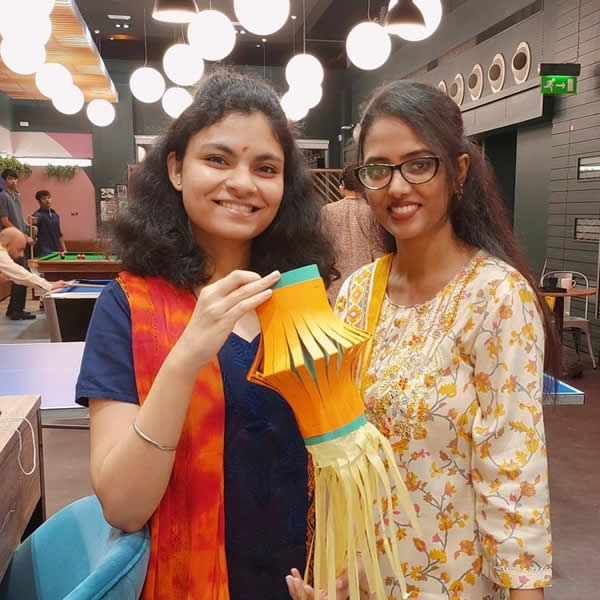
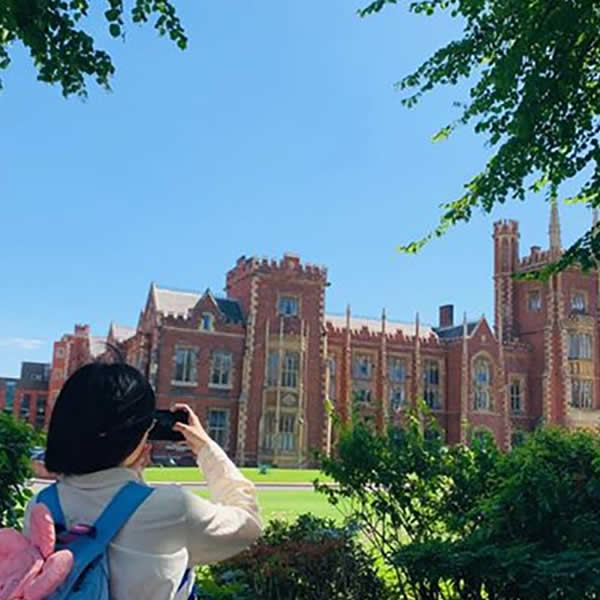
Hear what our students love about living here and tips on what to bring, what you can expect and how to make friends.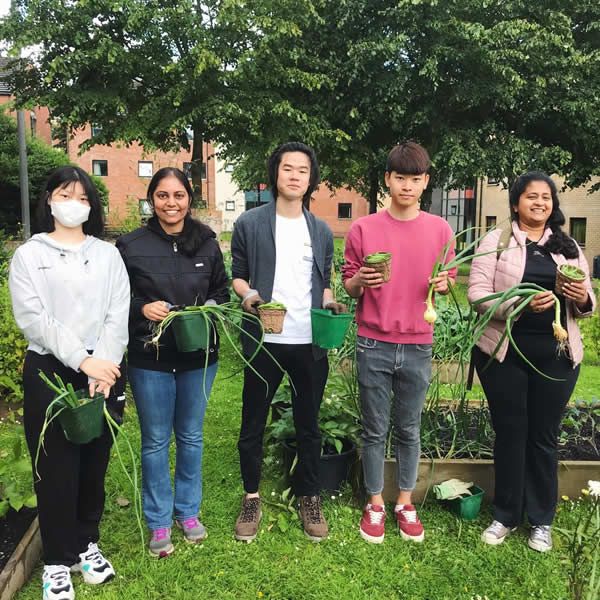




Careers
Career Prospects
Introduction
A degree in Aerospace Engineering from Queen’s will assist you in developing the core skills and employment-related experiences that are valued by employers, professional organisations and academic institutions alike. Our graduates are well regarded by many employers (local, national and international) and the versatility of Aerospace Engineering graduates makes them well suited for a wide range of future careers, both within engineering and in the wider graduate sector.
Although the majority of our graduates are interested in pursuing careers in Engineering, significant numbers develop careers in a wide range of other sectors.
£27,000 average starting salary for graduates from this School.
Queen’s University Belfast has strong links with both the local and international aerospace community, and we participate in regular consultations with local aerospace and wider engineering employers, including Spirit AeroSystems, Rolls Royce, Thales Air Defence, Rockwell Collins, and FG Wilson.
Our past students have also gained work placement with organisations such as:
Rolls Royce
Airbus UK
BAE Systems
FlyBE
Rockwell Collins
Alumni Success
Many of our former graduates have risen to the top of their fields and include many famous figures; for example:
Bernadette "Bernie" Collins: British Formula One Strategy Analyst for Sky Sports and F1TV and former F1 Strategy Engineer and Head of Race Strategy for the Aston Martin F1 team.
Katrina Thompson: Programme Director, Artemis Technologies.
Michael McKay: Former Flight Operations Director for ESA Mars and Lunar Missions, European Space
Agency.
Michael Ryan: Former Vice President and General Manager, Bombardier Aerospace, Belfast. Now General Manager of Spirit Aerosystems, Belfast.
Bob Bell: Former Chief Technical Officer, RenaultSport F1.
Air Commodore David Case: Royal Air Force.
Prizes and Awards
The School receives valued support from the business community and private sponsors. This enables us to award over 50 prizes and scholarships.
">
How to Apply
Apply using our online Queen's Portal and follow the step-by-step instructions on how to apply.
Terms and Conditions
The terms and conditions that apply when you accept an offer of a place at the University on a taught programme of study.
Queen's University Belfast Terms and Conditions.